As a veteran engineer in metal production, I know that choosing a roll forming machine with punching can make or break your line’s efficiency. For manufacturing rack uprights, C/Z purlins, or cable trays, precise hydraulic punching solutions for roll forming directly impact your assembly speed and your final profit margin. Let’s look at the best options for your factory.
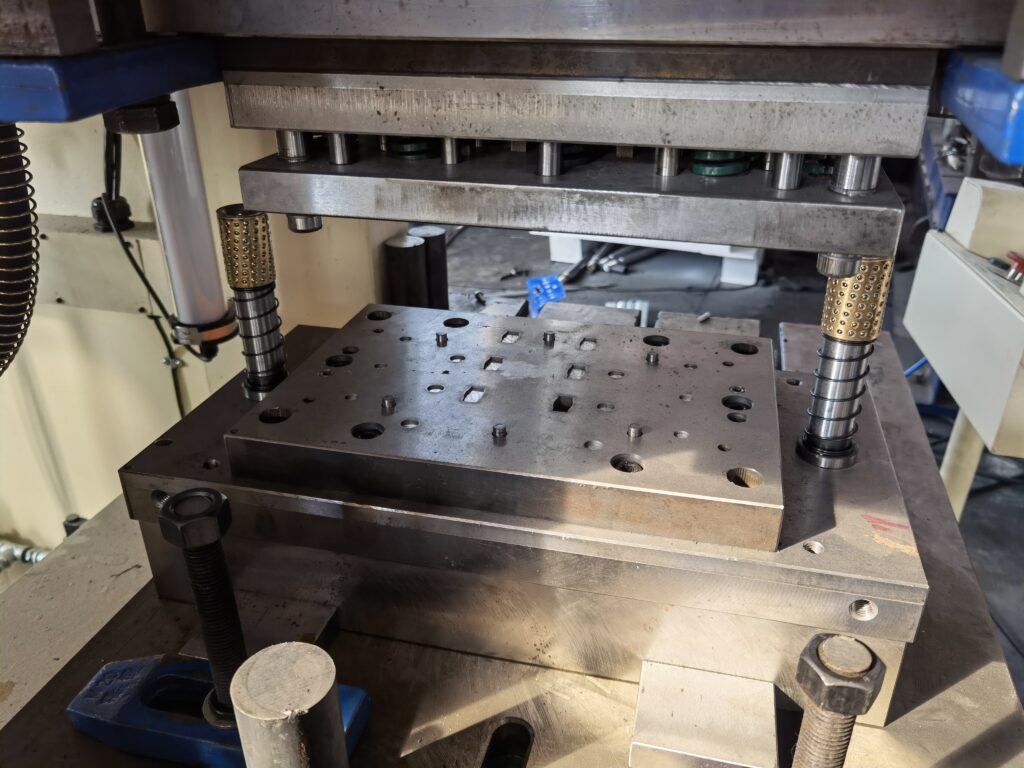
It affects assembly speed, product quality, and even the long-term maintenance of your roll forming machine. In this post, I want to share my professional insights into punching solutions for roll forming lines, explain the differences between pre-punching and post-punching, and give practical advice for choosing the right solution for your production needs.
1. Why Punching Matters in a Roll Forming Line
Punching is not just an optional feature; it’s an integral part of many roll forming lines. For construction profiles like purlins or cable trays, the punched holes are used for bolting, mounting, or assembly in the field.
Bad punching ruins your profiles. It wastes steel and slows down your factory. In my experience, a poorly matched punching solution can compromise the performance of an entire roll forming machine. On the other hand, a well-designed punching module ensures high throughput, minimal maintenance, and smooth integration with your forming rolling machines.
2. Punching Solutions Overview
Punching solutions can generally be categorized by location and equipment type:
- Pre-punching (before forming) vs Post-punching (after forming)
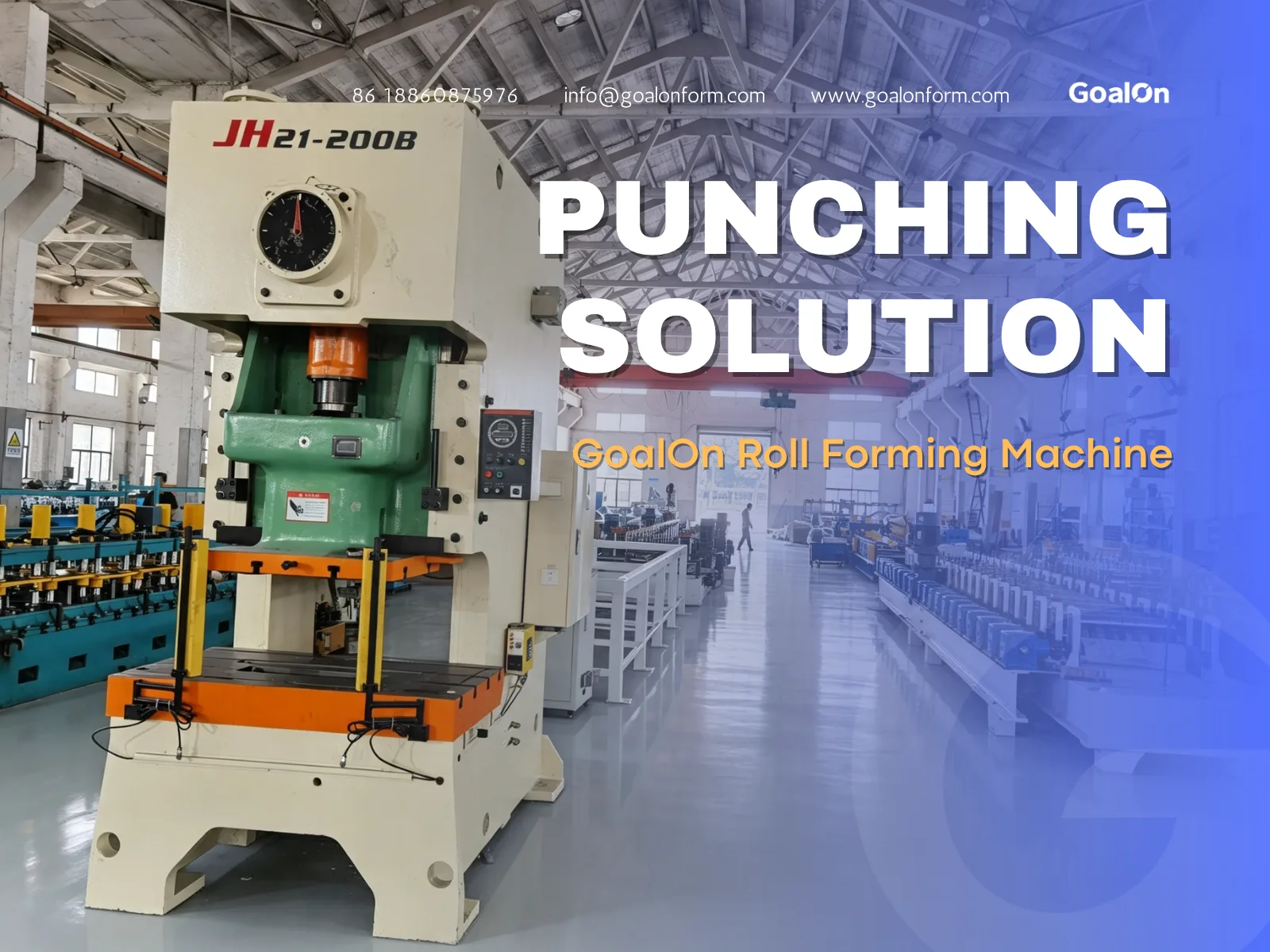
- Independent hydraulic punch press vs integrated punch module within the roll former
Why Use a Servo Feeder for Roll Forming Line in Pre-Punching? One key factor that many overlook is matching the punch with a servo feeding system. Without precise feeding, even the best punch will produce misaligned holes.
3. Pre-Punching Solutions: Best for High Precision
Pre-punching places the punching operation before the roll forming stage. This approach offers several advantages:
- High precision: The flat sheet allows accurate hole placement, even for complex patterns.
- Flexibility: Handles irregular hole shapes and multiple hole types on the same sheet.
Limitations include:
- Additional space requirement for the pre-punching module.
- Slight risk of sheet deformation during handling.
Best use cases: Thin steel purlins, complex rack upright profiles, or profiles that require multiple hole shapes and positions.
Practical tip: When integrating pre-punching into a roll forming line, I always check the servo feeder calibration to ensure hole spacing matches forming speed. This avoids costly adjustments later.
4. Pre Punching vs Post Punching in Roll Forming: Which is Better?
Post-punching occurs after the sheet has been formed by the roll former. Advantages of this setup include:
- Space-saving integration directly on the roll forming line.
- Synchronization with the forming process for efficient continuous production.
- Handles thicker sheets better than some pre-punch systems.
Limitations:
- Precision may be slightly lower due to formed sheet rigidity.
- Complex hole patterns may be difficult to achieve.
Best use cases: Regular cable trays, simple purlins, or high-speed continuous production where holes are mostly uniform.
Practical tip: Ensure that the punch module can move with the roll former or is accurately aligned to prevent misaligned holes, especially when producing long profiles.
5. Types of Hydraulic Punch Presses
When selecting a hydraulic punch for your roll forming machine, consider the following options:
- Independent hydraulic punch press:
- Suitable for high-volume holes or large hole diameters.
- Offers flexibility and easier maintenance.
- Integrated punch module (on roll former):
- Saves space and integrates well with forming rolling machines.
- Reduces material handling between modules.
Key parameters to check: Punching force, punching speed, maximum material thickness, and tool life.
5.1 Engineer’s Buying Guide: How to Avoid Costly Mistakes:
As a procurement manager or factory owner, buying a roll forming machine with punching is a major investment. In my years of engineering experience, a cheap punching system always costs more in the long run due to downtime.
Before you sign a contract with any roll former manufacturer, use this technical checklist to protect your investment:
Verify the Die Steel Grade: Ensure the punching dies are made of premium tool steel, such as SKD11, Cr12MoV, or D2. Cheap steel will wear out after a few thousand strokes, causing heavy burrs on your profiles.
Insist on Hydraulic Cooling Systems: Continuous punching generates massive heat. A reliable roll forming line must include an industrial oil cooler for the hydraulic station to prevent pressure drops during 8-hour shifts.
Look for Quick-Change Die Designs: Choosing a line that allows your operators to swap punching molds within 15–20 minutes will dramatically improve your production flexibility for different hole patterns.
💡Why Trust Goalon Machinery?
At Goalon, we don’t just assemble parts. Our engineering team tests every hydraulic punching solution with your specific coil thickness and material yield strength before shipment. We provide full material certificates for our punch dies, ensuring your line runs trouble-free from day one.
5.2 Real-World Case Study: 20% Efficiency Boost
Don’t just take our word for it. Here is how a custom punching solution transformed a real production facility:
- The Client’s Challenge: A leading racking and construction supplier was struggling with hole misalignment on their heavy-duty CZ purlin and rack upright profiles, resulting in a 7% material waste rate.
- Our Engineered Solution: We built a heavy-duty roll forming machine with punching that integrated a high-speed servo feeder for roll forming line right before the pre-punching station.
- The Results: By synchronizing the hydraulic punch press with a precise servo feed, the client achieved a 20% increase in production efficiency and slashed misaligned punch holes by 95%.
| Before Goalon Solution | After Goalon Solution |
| 7% Material scrap rate | Less than 0.5% scrap rate |
| Frequent alignment downtime | Continuous, automated high-speed runs |
| Short die lifespan (3-6 months) | Premium SKD11 dies lasting years |
6. Punch Accuracy and Roll Forming Line Matching
Punching precision depends heavily on your feed system and roll former design:
- Servo feed vs mechanical feed: Servo systems are far more precise and adjustable for different profile lengths.
- Forming speed synchronization: The punch must match the roll forming machine speed to prevent misalignment.
- Material handling considerations: Account for springback, warping, and thickness variations.
I always recommend simulating production conditions before finalizing a punch module to prevent costly errors during full production.
7. Die Design and Maintenance
A durable die is essential for consistent punching quality. Consider:
- Die material hardness and heat treatment.
- Quick-change die designs for minimizing downtime.
- Common problems: burrs, misaligned holes, and material tearing.
Engineer’s Maintenance Tip: Never skimp on punch die steel. Ensure your supplier uses premium tool steel (like Cr12MoV or D2). Regular lubrication and edge inspection will prevent burrs and extend your roll forming machine’s life by 3–5 years.
8. Cost and Procurement Considerations
When comparing pre-punching vs post-punching, and independent vs integrated hydraulic presses:
- Pre-punching: Higher initial investment, greater flexibility, slightly larger footprint.
- Post-punching: Cost-efficient, smaller footprint, slightly limited in hole complexity.
- Independent hydraulic press: Higher tool costs but easier to maintain.
- Integrated punch module: Lower material handling cost, less flexible for future product variations.
| Feature | Pre-Punching (Before Forming) | Post-Punching (After Forming) |
| Best For | Thin steel, complex hole patterns, high precision | Thicker materials, simple/uniform holes |
| Precision | Very High (Flat sheet feeding) | Moderate (Formed shape rigidity) |
| Feeding System | Requires a precise servo feeder | Synchronized with roll former speed |
| Footprint / Space | Takes more factory space | Compact, space-saving |
| Initial Cost | Higher investment | More budget-friendly |
I always evaluate total cost over machine lifetime, not just upfront price. Punch module efficiency directly affects roll forming line productivity and maintenance requirements.
9. Practical Advice from Experience
- Match the punching solution to your profile type, material thickness, and production volume.
- Prioritize precise feeding systems—servo-fed pre-punching often saves more time than it costs.
- Ensure punch speed and forming speed are compatible.
- Always consider future product expansions: a flexible punch module can accommodate new profiles without major upgrades.
Case study: On a CZ purlin roll forming line, integrating a pre-punch module with a servo feeder increased production efficiency by 20% and reduced misaligned holes by 95%.
10. Conclusion: Choosing the Right Punching Solution
Choosing the correct punching solution is critical for a high-performing roll forming line.
- Pre-punching excels with thin sheets, complex holes, and high precision requirements.
- Post-punching is ideal for continuous production of simpler profiles with thicker materials.
- Hydraulic punch type and proper servo feed integration determine long-term productivity and maintenance costs.
By understanding the technical differences and evaluating production requirements carefully, you can select a solution that maximizes efficiency, maintains precision, and reduces maintenance on your roll forming machine.
If you are looking to upgrade or purchase a roll forming machine with integrated punching capabilities, I recommend Goalon Machinery’s solutions. Their machines combine reliable forming rolling machines with flexible punch modules, helping manufacturers achieve higher production efficiency, lower maintenance, and consistent profile quality.
Ready to Upgrade Your Roll Forming Line?
Selecting the right roll forming machine with punching requires balancing precision, line speed, and tool life. Whether you need a high-speed servo feeder for roll forming line or customized hydraulic punching solutions for roll forming, Goalon Machinery has the engineering expertise to build it right.
Don’t guess your technical specifications. Tell our engineers your profile drawings and production goals, and we will design a highly efficient, turnkey solution for your factory.
👉 Get Your Free Technical Proposal & Factory Price List Now!