When I discuss a metal purlin roll forming machine with buyers, I notice one recurring misunderstanding. Many people invest heavily in the roll former itself but treat the auto stacker as an optional accessory. From an engineering and production standpoint, that approach often limits the real capacity of the entire roll forming machine line.
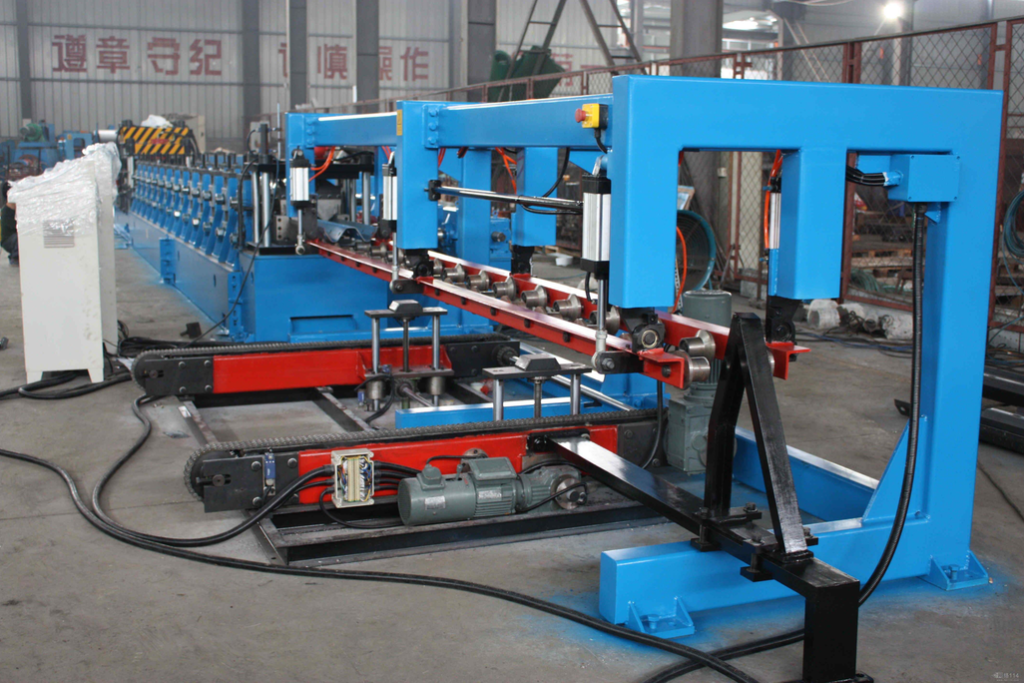
In this article, I explain how an auto stacker works in a metal purlin roll forming production line, what really matters when choosing one, and how buyers can avoid common mistakes that affect productivity, safety, and long-term return on investment.
1. Why Auto Stackers Matter in a Metal Purlin Roll Forming Line
Metal purlins such as C and Z profiles differ from roof sheets or wall panels. They are heavier, longer, and structurally asymmetric. Once a roll forming machine reaches a stable speed, manual stacking quickly becomes the weakest point in the production line.
I have seen production lines running at full forming speed while operators struggle at the discharge table. In those cases, the roll forming machine does its job well, but the output remains limited. An auto stacker solves this mismatch by synchronizing forming, cutting, and stacking into one continuous process.
2. Position of the Auto Stacker in a Roll Forming Production Line
In a standard metal purlin roll forming machine line, the process usually includes:
- Abwickelvorrichtung
- Leveling or leveling-integrated feeding
- Punching or pre-punching
- Walzprofiliermaschine
- Flying cut or stop cut
- Automatischer Stapler
The auto stacker sits directly after the cutting unit. It receives finished profiles at production speed and stacks them according to preset rules. Once integrated correctly, it allows the roll former to operate continuously without unnecessary stops.
3. Why Purlin Stacking Is More Challenging Than Other Profiles
From an engineering perspective, metal purlins create stacking challenges that flat or symmetric profiles do not.
C and Z purlins have offset centers of gravity. Long lengths introduce deflection. Flanges and lips tend to hook or slide during stacking. A generic stacking solution designed for light panels usually fails under real purlin conditions.
That is why a dedicated auto stacker designed for metal purlins performs far better than a general-purpose solution.
4. Common Types of Auto Stackers Used for Metal Purlins
In roll forming production lines, I typically see several stacking concepts used for purlins:
- Drop-type stackers for medium-speed lines
- Fork or arm-type stackers for long and heavy profiles
- Mechanical holding systems instead of magnetic lifting for galvanized steel
- Single-row or multi-row stacking depending on packaging needs
Each type serves a specific production scenario. There is no universal solution, and matching the stacker to the roll forming machine configuration matters more than the stacking method itself.
5. Key Technical Parameters Buyers Must Focus On
This is the section where many purchasing decisions go wrong. I always recommend evaluating an auto stacker based on real production parameters, not brochure descriptions.
- Profile Length Range
Metal purlin lengths often vary significantly. An auto stacker must handle both the shortest and longest profiles without manual adjustment. I always verify the maximum supported length under real load, not theoretical limits.
- Material Thickness and Weight
Purlins commonly range from 1.5 mm to 3.0 mm thickness. Thickness directly affects single-piece weight and total stack load. A stacker designed for light profiles will deform or lose accuracy under heavy loads.
- Maximum Stack Weight
Stack weight influences structural rigidity, lifting stability, and safety. Buyers should confirm how many purlins can be stacked per bundle without distortion.
- Synchronization with Cutting Method
Flying cut systems require precise timing. The auto stacker must match the cutting cycle of the roll forming machine. Poor synchronization causes misalignment, collisions, or emergency stops.
- Stacking Accuracy vs Production Speed
Higher speed always reduces stacking tolerance. A professional auto stacker balances speed with controlled movement. I advise buyers not to chase maximum speed at the cost of stability.
- PLC Communication and Line Control
A modern roll forming machine line requires full PLC integration. The stacker should communicate directly with the roll former to maintain consistent rhythm. Independent control systems often introduce hidden risks at high speed.
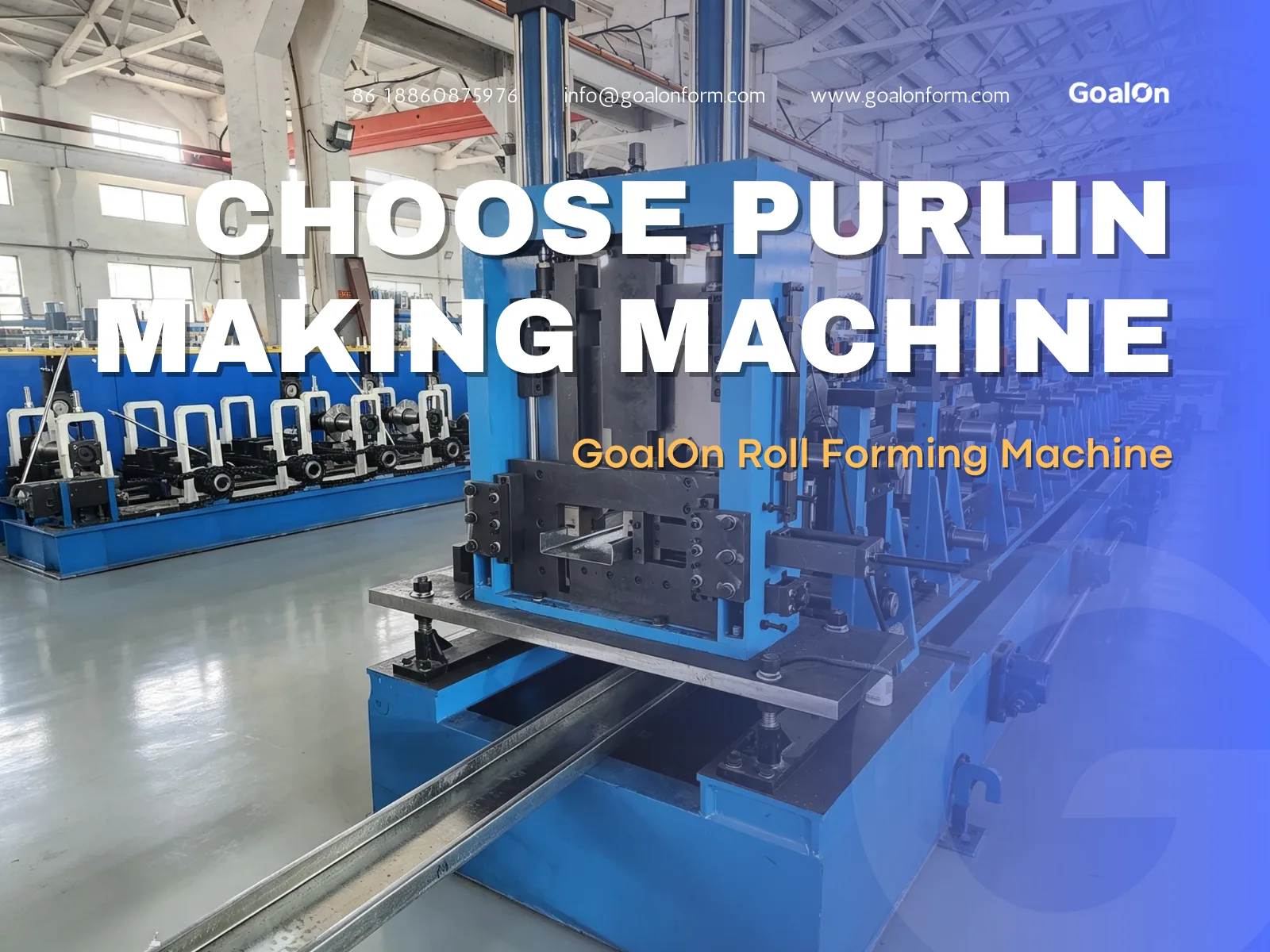
6. Integration with C/Z Purlin Roll Forming Machines
C/Z purlin roll forming machines often include width adjustment or profile change functions. The auto stacker must accommodate these variations.
I always check:
- Whether stacking width adjusts automatically
- Whether the stacker supports both C and Z profiles
- How profile height changes affect stacking alignment
Poor integration forces operators to intervene manually, which defeats the purpose of automation.
7. Labor Cost, Safety, and ROI
Manual stacking of metal purlins increases labor cost and safety risk. Heavy profiles combined with repetitive lifting create fatigue and injury risk.
An auto stacker reduces labor dependency, stabilizes output quality, and allows predictable production planning. From my experience, the return on investment becomes clear once production exceeds a moderate daily output.
8. Common Mistakes When Buying a Purlin Auto Stacker
The most frequent mistakes I see include:
- Choosing based only on price
- Ignoring future production upgrades
- Underestimating profile length and weight
- Treating the auto stacker as an afterthought
These mistakes often cost more in downtime and rework than the original equipment price difference.
9. Practical Configuration Advice from an Engineer’s Perspective
When buyers ask me for configuration advice, I focus on real-world usage rather than ideal conditions.
For medium-speed roll forming machines, I recommend a mechanically guided auto stacker with sufficient buffer length. This configuration balances cost and reliability.
For high-speed forming rolling machines, I always prioritize rigid structural design, synchronized PLC control, and controlled stacking motion over additional cosmetic features.
I also suggest preparing the stacker for future expansion. Many manufacturers increase production speed after gaining market demand. A stacker that already supports higher loads and speeds protects that investment.
Most importantly, I advise buyers to view the auto stacker as part of the roll forming machine system, not as an independent unit. When designed together, the roll former and stacker work as a single production tool.
10. Conclusion: The Auto Stacker Defines the Real Capability of a Roll Forming Machine
A roll forming machine does not reach its full potential without a properly designed auto stacker. For metal purlin production, stacking stability directly affects output, safety, and long-term efficiency.
When buyers choose a roll forming machine from Goalon Machinery, I encourage them to evaluate the entire production line, including stacking. A well-matched auto stacker transforms a good roll former into a reliable, scalable manufacturing system.
If you approach the purchase with real production parameters and long-term planning in mind, the right auto stacker will quietly deliver value every day your roll forming machine runs.