The automotive industry is changing rapidly. Vehicle manufacturers are under constant pressure to reduce weight, improve safety, and increase production efficiency. These requirements have led to growing demand for high-precision metal profiles used in structural and safety-critical components.
Many of these components are produced using an automotive roll forming machine. From door reinforcement beams and B-pillars to battery tray frames and chassis sections, roll forming technology has become one of the most efficient methods for manufacturing automotive profiles.
However, choosing the right equipment supplier is often more difficult than selecting the machine itself. Numerous manufacturers claim to provide advanced solutions, but their actual engineering capability, production experience, and technical support can vary significantly.
This guide explains the key technical principles behind automotive roll forming equipment and outlines the most important criteria for selecting a reliable manufacturer.
Why Roll Forming Is Widely Used in Automotive Manufacturing
Modern vehicles contain dozens of roll-formed components. Compared with traditional fabrication methods, roll forming offers several advantages:
- Alta velocidad de producción
- Consistent dimensional accuracy
- Lower material waste
- Excelente repetibilidad
- Menor necesidad de mano de obra
- Compatibility with high-strength materials
As automotive manufacturers continue adopting advanced high-strength steel (AHSS), ultra-high-strength steel (UHSS), aluminum alloys, and lightweight structural designs, the demand for precision roll forming systems continues to grow.
Common automotive components produced by roll forming include:
- Barras de impacto en las puertas
- B-pillars
- Roof rails
- Rieles de asiento
- Chassis reinforcements
- Battery tray frames
- Side members
- Rack box beam structures
- Window guide channels
Because many of these components are directly related to vehicle safety, profile accuracy and material integrity are critical.
Understanding the Core Technology of Automotive Roll Forming Machines
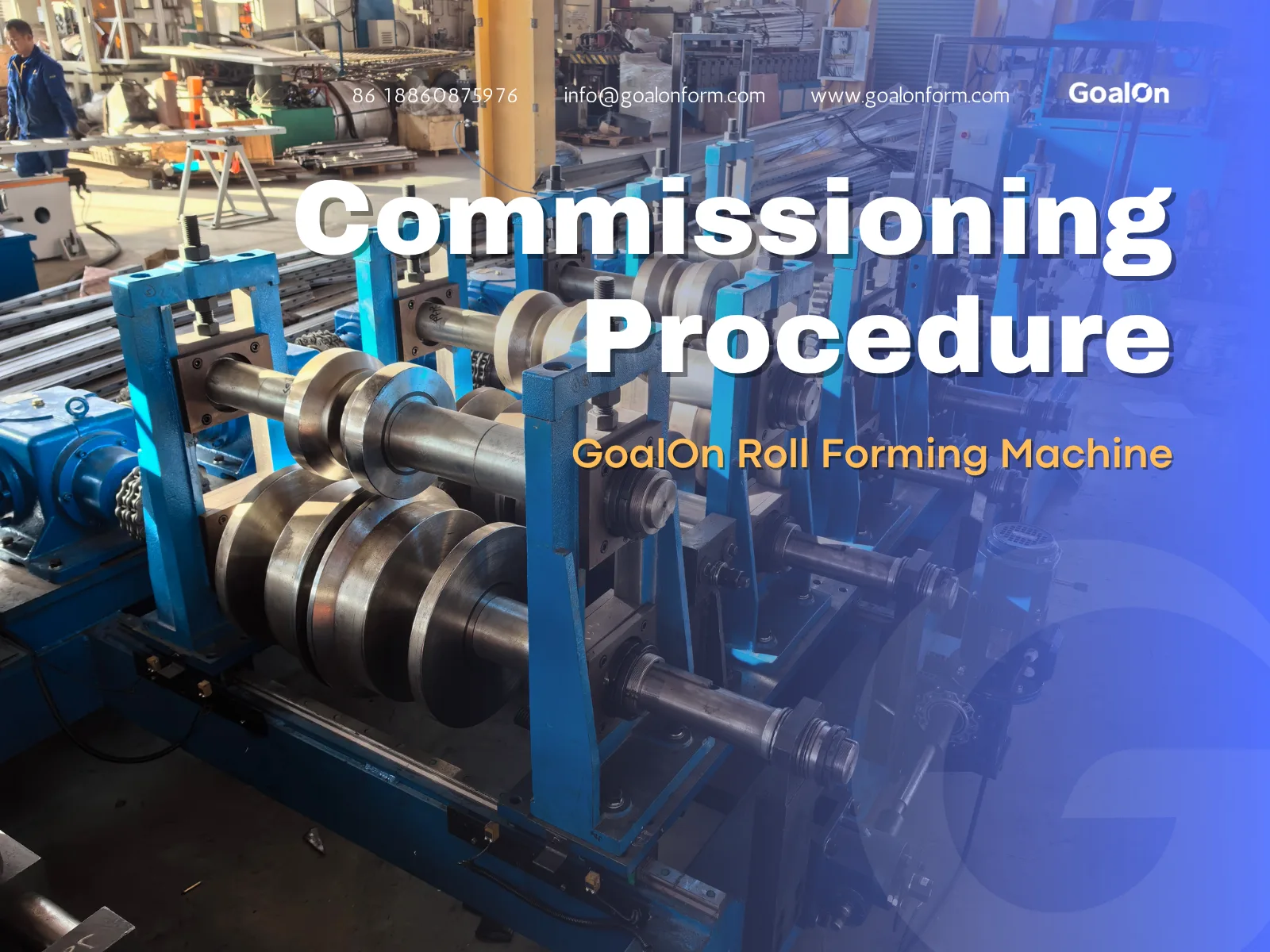
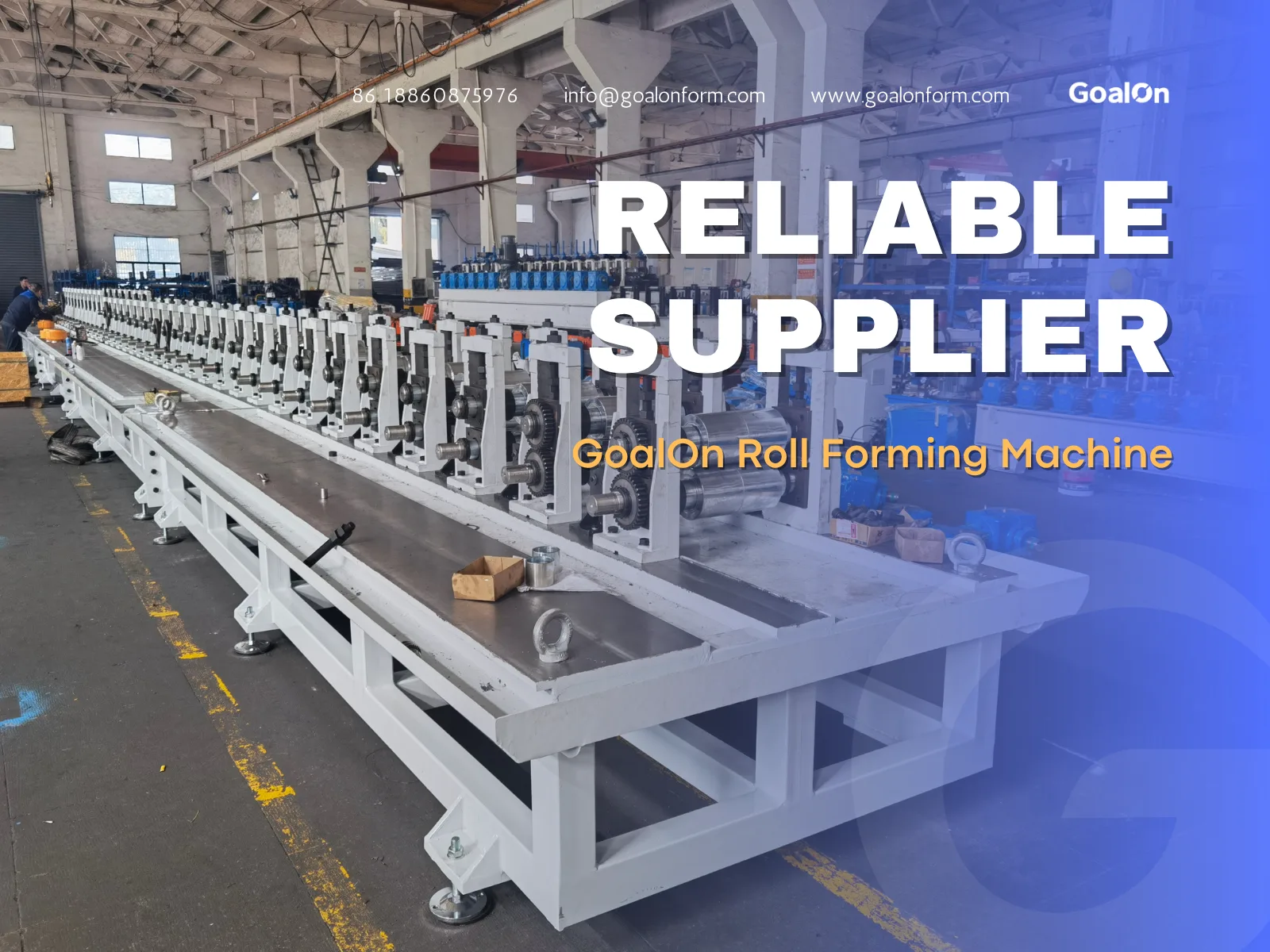
The foundation of every automotive roll forming line is a series of precisely engineered roll stations.
Each roll station gradually bends the metal strip into the required shape. Instead of creating the profile in a single forming step, the machine distributes deformation across multiple forming passes.
This gradual forming process reduces material stress and minimizes profile distortion.
The success of the process depends mainly on two factors:
High-Precision Roller Design
Roll tooling is the heart of the machine.
Every roller must be designed according to the material properties, profile geometry, bend sequence, and springback characteristics.
For automotive applications, profile tolerances are often extremely strict. A small deviation can affect downstream welding, assembly, or robotic operations.
High-quality manufacturers typically use:
- Herramientas de rodillos mecanizadas con CNC
- Heat-treated alloy steel rollers
- Advanced simulation software
- Finite element analysis (FEA)
- Springback compensation design
With properly designed tooling, profile angle deviations can be controlled within extremely tight tolerances.
Intelligent Process Control
Automotive production requires consistent quality across thousands or even millions of parts.
Modern automotive roll forming machines therefore integrate advanced control systems that continuously monitor:
- Line speed
- Forming pressure
- Servo positioning
- Material feed accuracy
- Sincronización del corte
A sophisticated PLC and servo control system can automatically adjust operating parameters when processing different materials.
This is particularly important when forming:
- Aleaciones de aluminio
- Acero galvanizado
- AHSS materials
- Dual-phase steel
- Martensitic steel
Without proper process control, manufacturers may encounter:
- Excessive springback
- Arañazos superficiales
- Edge waviness
- Giro
- Dimensional instability
Why Manufacturer Selection Matters More Than Machine Price
Many buyers focus primarily on initial machine cost.
However, in automotive manufacturing, the total cost of ownership is usually much more important.
A low-cost machine may appear attractive during procurement. Yet poor engineering can lead to:
- Frequent downtime
- High maintenance costs
- Aumento de los índices de desechos
- Production delays
- Calidad irregular de los productos
Over several years of operation, these hidden costs often exceed the initial savings.
For this reason, evaluating the manufacturer is just as important as evaluating the machine specifications.
Key Criterion 1: Machine Stability and Long-Term Durability
The first indicator of a reliable manufacturer is machine durability.
Automotive production lines often operate continuously in multi-shift environments. Equipment must maintain stable performance under demanding production schedules.
Frame Structure Design
A rigid machine frame minimizes vibration during operation.
Manufacturers with strong engineering capabilities typically use:
- Welded steel structures
- Stress-relief treatment
- Precision machining
- Heavy-duty base frames
These measures help maintain forming accuracy during long-term operation.
Quality of Critical Components
The service life of a roll forming machine depends heavily on its key components.
Important components include:
- Roller shafts
- Bearings
- Gearboxes
- Transmission gears
- Servo systems
- Hydraulic units
Premium manufacturers often use high-strength alloy steel and advanced heat treatment processes.
For example, properly heat-treated roller shafts can maintain dimensional stability after thousands of production hours.
In some high-quality systems, roller wear remains below 0.05 mm even after 2,000 hours of continuous operation.
This significantly reduces maintenance frequency and tooling replacement costs.
Environmental Protection Standards
Automotive factories often contain dust, oil mist, and metal particles.
A reliable machine should provide adequate protection for electrical and mechanical systems.
Look for:
- IP54 or higher electrical protection
- Sealed electrical cabinets
- Industrial-grade sensors
- Protected cable routing
These features help ensure stable operation in real production environments.
Key Criterion 2: Process Flexibility and Product Adaptability
Automotive manufacturers frequently launch new vehicle models and redesign existing components.
As a result, production equipment must support fast product changeovers.
Ability to Produce Multiple Automotive Profiles
Different vehicles require different profile designs.
A single production facility may manufacture:
- Door beams
- Battery tray profiles
- Rieles de asiento
- Roof reinforcements
- Chassis members
A capable manufacturer should design equipment that can accommodate a wide range of profile geometries.
Fast Tooling Change Systems
Production flexibility is increasingly important.
Modern roll forming lines often incorporate:
- Hydraulic quick-clamping systems
- Cartridge-type roller assemblies
- Sistemas de posicionamiento servo
- Digital setup recipes
These features can reduce tooling changeover time from several hours to less than 30 minutes.
For manufacturers producing multiple automotive components, this creates substantial productivity gains.
Digital Process Libraries
Advanced suppliers increasingly integrate digital production databases into their equipment.
These systems allow operators to store and retrieve:
- Material parameters
- Roller positions
- Speed settings
- Cutting programs
- Calibration data
When a repeat order arrives, operators can load historical parameters and restart production quickly.
This dramatically reduces setup time and minimizes human error.
Key Criterion 3: Engineering Support and After-Sales Service
Even the most advanced machine occasionally requires technical assistance.
This makes after-sales support one of the most important factors when choosing a supplier.
Fast Response Capability
Production downtime can be extremely expensive.
A professional manufacturer should provide:
- 24/7 technical support
- Diagnóstico remoto
- Online troubleshooting
- Spare parts assistance
Quick support reduces downtime and protects production schedules.
Process Optimization Services
A strong supplier does more than repair machines.
Experienced engineers should also help customers:
- Improve production efficiency
- Reduce scrap rates
- Optimize tooling design
- Increase line speed
- Improve profile quality
These services create long-term value throughout the machine’s lifecycle.
Operator Training
Many production issues originate from incorrect machine setup.
Reliable manufacturers usually provide:
- Installation support
- Commissioning services
- Operator training
- Maintenance training
- Troubleshooting guidance
Well-trained operators can maximize machine performance while extending equipment life.
Evaluate the Manufacturer’s Engineering Strength
When comparing suppliers, buyers should investigate their engineering capabilities rather than focusing solely on marketing materials.
Important questions include:
Does the company have an in-house design team?
An experienced engineering team can develop customized solutions for complex automotive profiles.
Does the company use simulation software?
Advanced software tools improve tooling accuracy and reduce development risks.
Does the company have successful automotive projects?
Real-world project experience often indicates stronger technical expertise.
Can the company provide sample testing?
Testing demonstrates the supplier’s confidence in its technology and process capability.
Future-Proof Your Investment
Automotive technology continues to evolve.
Electric vehicles, lightweight materials, and advanced structural designs are creating new manufacturing challenges.
A roll forming machine purchased today may remain in service for 10 years or longer.
Therefore, selecting a manufacturer with strong research and development capabilities is essential.
Forward-looking suppliers continuously improve:
- Automation systems
- Servo technology
- Tooling design
- Digital manufacturing solutions
- Integración en la fábrica inteligente
This ensures the equipment remains competitive as production requirements change.
Conclusión
Selecting an automotive roll forming machine manufacturer is a strategic decision that directly affects product quality, production efficiency, and long-term profitability.
The best suppliers are not necessarily the cheapest. Instead, they combine high-precision tooling design, durable machine construction, flexible production capability, y professional technical support.
When evaluating potential manufacturers, focus on three critical areas:
- Machine stability and durability
- Process flexibility and adaptability
- After-sales service and engineering support
A well-designed automotive roll forming line is more than a production machine. It is a long-term manufacturing asset that helps automotive suppliers remain competitive in an increasingly demanding market.
By partnering with an experienced manufacturer such as Goal On Machinery, automotive profile producers can achieve higher efficiency, better product consistency, and sustainable growth for years to come.