If you are sourcing a ماكينة تشكيل الرف المستقيم for warehouse shelving or pallet racking, the “right machine” is not defined by speed alone. The real difference is whether the line can produce uprights with stable pitch accuracy (hole-to-hole), consistent profile geometry, and repeatable straightness over long runs—while keeping tooling wear and downtime under control.
That is why many buyers are moving toward a rack upright roll forming line with press punching (instead of servo-hydraulic inline punching) and specifying a cast iron stand roll forming machine to reduce vibration and stabilize forming. For power transmission, you will typically choose either chain drive or a gearbox driven roll forming machine for rack uprights, depending on your thickness range, production rhythm, and long-term maintenance strategy.
This guide breaks down the key decisions that directly impact quality, cost per meter, and on-time delivery—so you can evaluate suppliers with engineering-level clarity, not just brochure parameters.
1) Why Upright Profiles Are Harder Than They Look
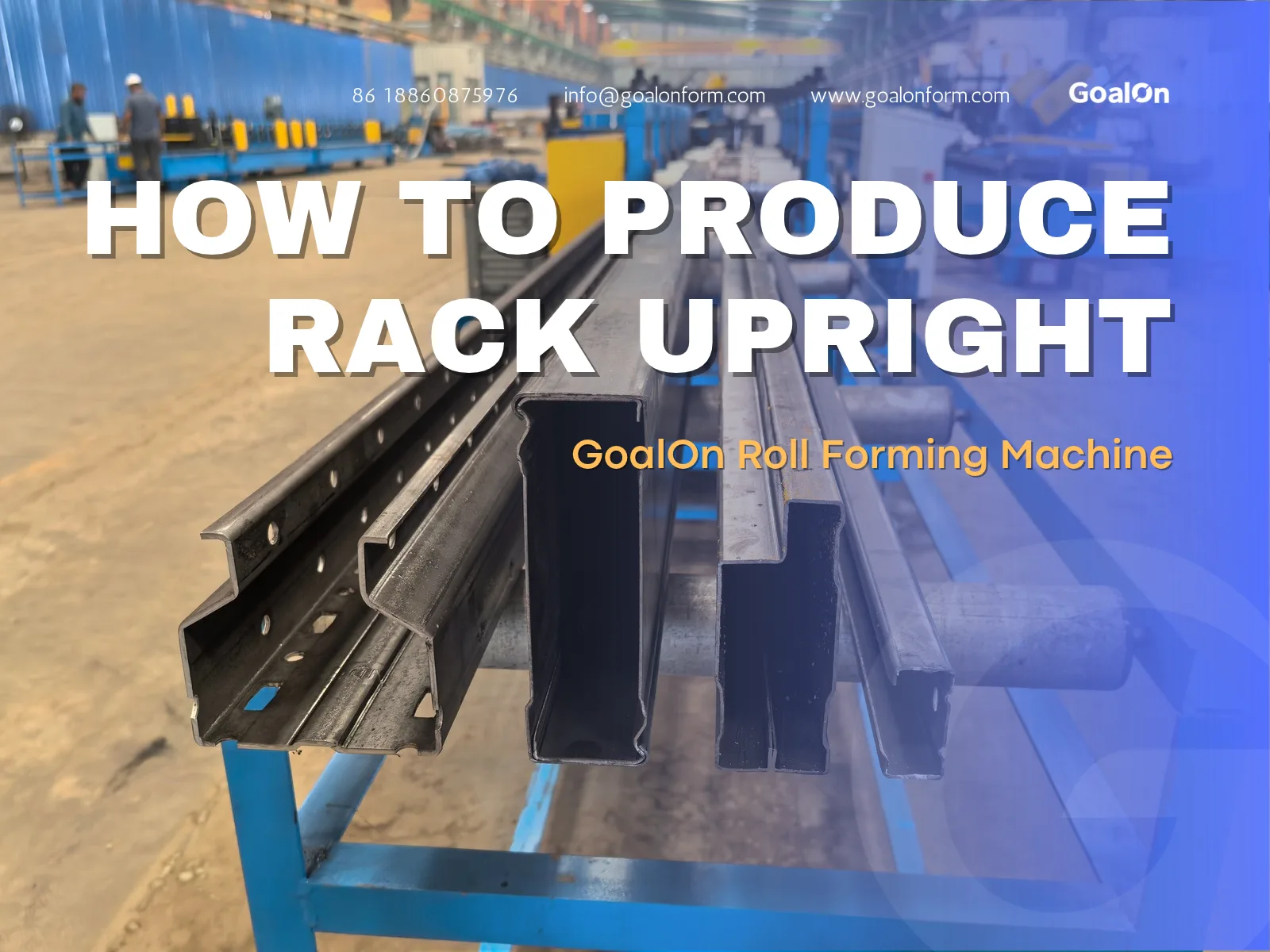
Rack uprights are not “simple channels.” They are safety-critical structural members. A good upright needs:
- Accurate hole pitch for beam connection and accessories
- Stable width/height for fit-up across different bays
- Controlled camber, twist, and bow
- Clean edges and minimal burrs around punched holes
- Reliable material behavior across coil lots
In real production, the biggest headaches come from two places:
- Hole position drift across long length (affected by feed accuracy, strip slip, press timing, and tool wear)
- Profile instability (affected by stand rigidity, roll design, pass schedule, and transmission backlash)
A machine that cannot hold these two variables will create assembly issues, rework, or worst case—field failures. That’s why procurement should always link machine configuration to your upright design, thickness, and target tolerances.
2) Press Punching vs Inline Punching: Why Many Lines Use a Punch Press
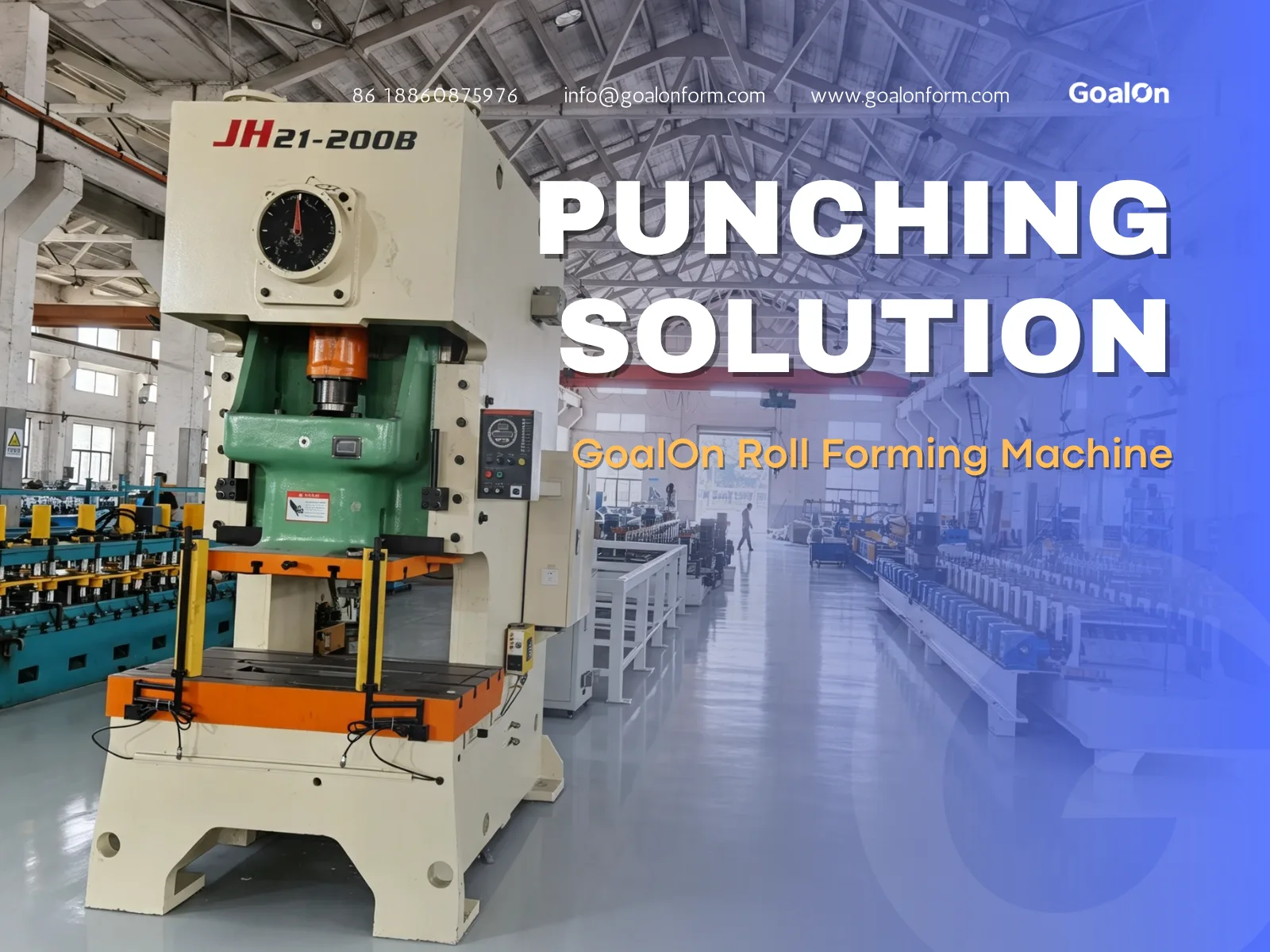
For rack uprights, holes are frequent and often complex (slots, keyholes, double rows, oblong holes). Using a dedicated press punching solution brings several advantages.
2.1 What “press punching” means in a roll forming line
In a typical configuration:
- Decoiler → leveling → servo feeder
- Punch press (mechanical press) punches all patterns
- Roll forming machine forms the profile
- Flying cut-off / post-cut → runout → stacking
This is different from “inline punching” inside roll former stands (hydraulic punching stations), which often causes speed limitations and maintenance complexity.
2.2 Advantages of punch press punching for uprights
Higher punching stability at high hit counts
A mechanical press is optimized for repetitive hits and long tool life.
Cleaner hole quality and predictable burr direction
With correct clearance and die maintenance, you can control burrs and reduce secondary deburring.
Independent optimization of punching and forming
You can optimize press tonnage, stroke rate, and feeder accuracy without compromising forming passes.
Better for frequent pattern changes
A well-designed die set (or modular tooling) supports variant hole patterns for different rack standards.
2.3 What to confirm with suppliers (critical checkpoints)
Ask for these parameters in the quotation:
- Press tonnage, stroke length, strokes per minute
- Feeder type (servo feeder recommended) and feed accuracy
- Die material and heat treatment
- Scrap evacuation design (to avoid die damage and jam)
- How they reference pitch (encoder / feeder control logic)
Key spec to highlight in your RFQ: hole pitch accuracy requirement (e.g., ±0.2 mm per pitch or cumulative tolerance across a defined length). If the supplier cannot commit to a measurable standard, it’s a risk.
3) Why a Cast Iron Stand Matters (Especially for Uprights)
Many roll forming machines use welded steel frames. That can work for lighter profiles, but for rack uprights with frequent punching and thicker material, vibration and micro-deflection become real quality issues.
A cast iron stand roll forming machine is valued because:
- Higher damping capacity: cast iron absorbs vibration better than welded steel
- Improved stand stability under load
- Better repeatability for roll-to-roll alignment once set
- Reduced chance of “profile breathing” when line speed changes
| العنصر | Typical Options | Why It Matters |
| اللكم | Mechanical press + servo feeder | Stable hole pitch accuracy at high hit counts |
| Stand | Cast iron stands | Lower vibration, better repeatability |
| Drive | Chain / Gearbox drive | Cost vs long-run stability |
| المواد | 1.5–3.0 mm (custom) | Defines pass design & power need |
| Cut-off | Flying cut-off / post-cut | Length tolerance & end quality |
In production terms, a cast iron stand can help reduce:
- Wave marks and surface defects caused by vibration
- Roll misalignment drift over time
- Adjusting frequency after long-run thermal changes
If your product includes thickness like 1.5–3.0 mm (common for uprights), or you run multi-shift production, this stand choice often pays for itself through fewer adjustments and more consistent geometry.
Procurement tip: Ask whether the stands are fully cast or cast base with welded reinforcements, and request photos/videos of machining (bearing seat machining quality matters).
4) Chain Drive vs Gearbox Drive: How to Choose for a Rack Upright Roll Forming Machine
Transmission choice influences torque delivery, maintenance, noise, and long-term accuracy.
4.1 Chain driving system (when it makes sense)
Chain drive is widely used because it is cost-effective and easy to maintain.
Best for:
- Moderate thickness / moderate speed projects
- Buyers who want simple maintenance and rapid part availability
- Plants with strong mechanical maintenance capability
Trade-offs:
- Chain stretch over time can introduce synchronization variance
- More frequent tension checks and lubrication
- Slightly higher noise and vibration versus gearbox
If you select chain, specify:
- Quality chain brand/spec
- Lubrication method
- Guarding design and easy access for maintenance
- How the supplier handles multi-stand synchronization
4.2 Gearbox driving system (when it’s the better investment)
A gearbox driven roll forming machine for rack uprights typically offers:
- More stable torque transmission
- Better long-run repeatability
- Lower noise and reduced vibration
- Less day-to-day maintenance compared to chain
Best for:
- Thicker material or higher strength steels
- Higher production speed and long cycles
- Higher expectations on geometry consistency
Trade-offs:
- Higher upfront cost
- Gearbox quality varies a lot—must verify brand, machining and heat treatment level
- Repair requires more specialized service
Engineering note: Gearbox drive helps reduce speed fluctuation and torsional vibration, which can indirectly improve cut accuracy and profile straightness, especially on long uprights.
5) Process Flow Recommendations for a Storage Rack Upright Cold Roll Forming Machine
A typical high-efficiency layout for a storage rack upright cold roll forming machine looks like this:
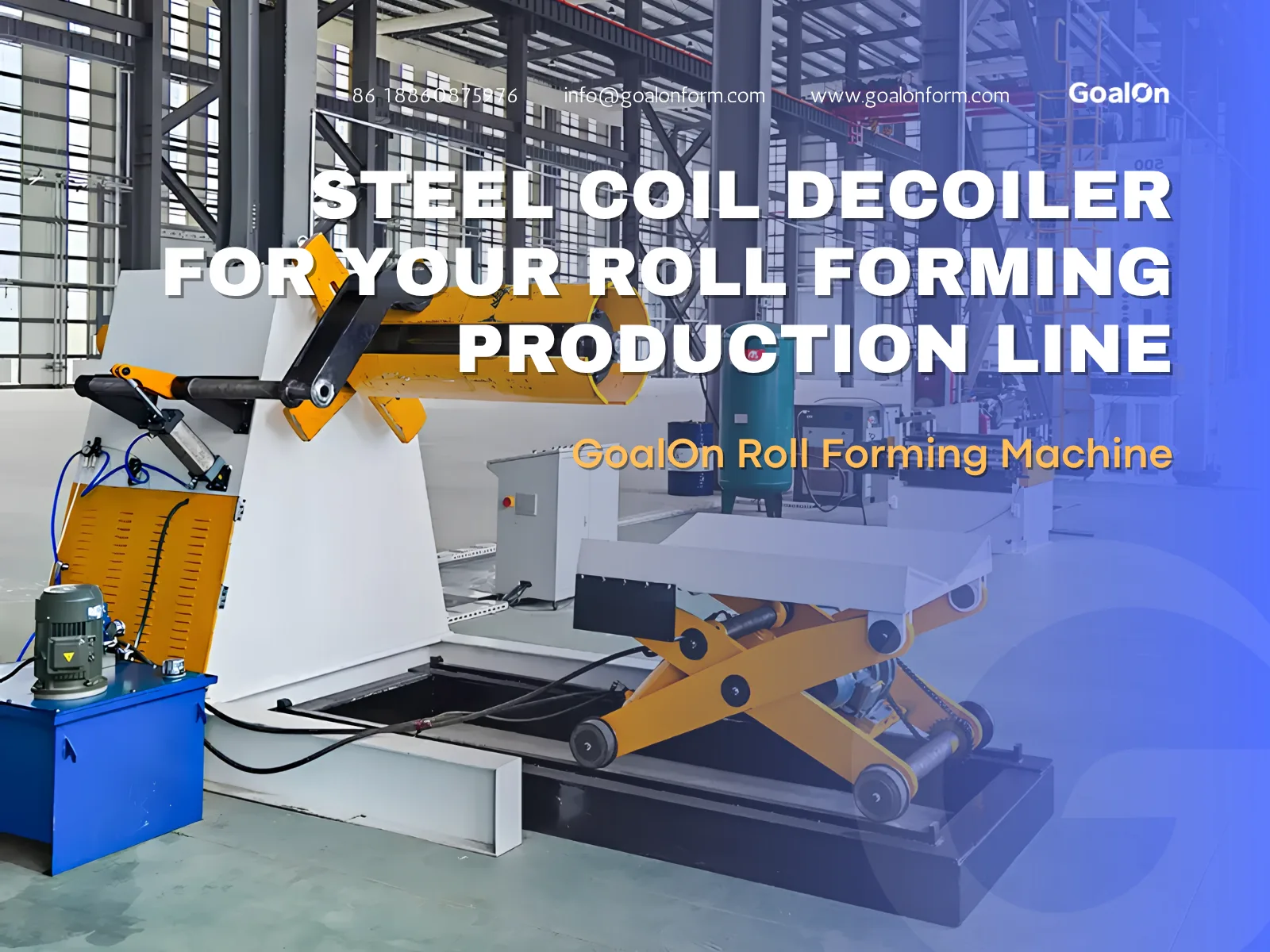
- آلة التفكيك الهيدروليكية (with coil car recommended for heavy coils)
- Pinch & pre-leveling / 7–11 roller leveling
- Servo feeder + mechanical punch press
- Loop pit or accumulator (optional, improves press/forming synchronization)
- Main roll former (cast iron stands)
- Straightening device (if needed)
- Flying cut-off (servo tracking / hydraulic)
- Runout table + automatic stacker
Where buyers often under-spec and regret it
- Leveling capacity: poor leveling causes camber/twist and unstable punching reference
- Feeder control: low-grade feeder leads to pitch drift
- Cut-off rigidity: cut quality impacts end fit-up and packaging
Important: Provide your supplier with coil yield strength range, not just thickness. High-strength steel changes springback and requires different pass strategy and tooling hardness decisions.
6) Quality Metrics That Directly Affect Installation (Not Just Factory Inspection)
When you compare machine proposals, focus on measurable outputs:
6.1 Hole system
- Pitch accuracy (single pitch and cumulative)
- Burr height control
- Hole deformation (especially near bends)
6.2 Profile geometry
- Width, height, lip dimensions
- Web flatness
- Corner radius consistency (tooling design + material)
6.3 Straightness and twist
- Bow along length (e.g., mm per 2 m / 3 m)
- Twist (degrees per meter)
If a supplier only states “high precision” without tolerance targets, ask them to commit to a FAT (Factory Acceptance Test) checklist.
7) Tooling and Pass Design: Your Hidden Cost Driver
Rack upright tooling is not only “rollers.” It is a system:
- Roll material (often alloy tool steel) + heat treatment
- Pass design to control springback and edge wave
- Spacers, shafts, bearings, and adjustment mechanism
What you should ask:
- What is the roller material and hardness (e.g., HRC range)?
- How many forming stands and why (based on your profile complexity)?
- Are there side rolls to control flange growth?
- How do they control strip guiding to avoid edge scratching?
Professional advice: If you plan to run multiple upright sizes, discuss cassette change or shared base with changeable tooling. Sometimes a second tooling set is cheaper than production downtime.
8) Speed, Output and ROI: How to Estimate Payback Honestly
Do not calculate ROI using maximum line speed from a catalog. For uprights, actual output is limited by:
- Punch press speed and feeder stability
- Scrap discharge during high hit counts
- Part length changes and stacking capability
- Coil changes and setup time
A realistic evaluation method:
- Define your top 3 upright SKUs (thickness, length, hole pattern)
- Estimate stable SPM (strokes per minute) without excessive burr/tool wear
- Convert to meters/hour including downtime (OEE target)
If your current bottleneck is punching, upgrading to a dedicated press punching system yields faster ROI than increasing roll former speed.
9) What to Include in Your RFQ (So Suppliers Quote the Same Standard)
To get comparable quotations, include:
- Upright drawing (DXF preferred), hole map and tolerances
- Material spec: thickness range, yield strength range, coating
- Target speed and daily output
- Hole pitch tolerance and end cut tolerance
- Preferred drive: chain or gearbox (or ask for both options)
- Required automation: auto stacking, bundle packing, labeling
- Electrical standard and safety requirements
Also request:
- FAT acceptance criteria
- Reference customer videos (same or similar upright)
- Wear parts list + recommended spares for 1 year
10) Buying Checklist: How to Select the Right Supplier Faster
Use this quick checklist during supplier evaluation:
- Can they provide a working reference line for uprights?
- Do they design in-house (roll design + die design) or outsource?
- Are stands الحديد الزهر and fully machined at bearing seats?
- Can they show feeder accuracy data and press specs?
- Do they offer both chain and gearbox options with clear pros/cons?
- What is the commissioning plan and training content?
A supplier who explains limitations clearly is usually more reliable than one who promises “any speed, any tolerance.”
Conclusion: The Configuration That Most Buyers Choose for Reliable Upright Production
For most upright manufacturers aiming at stable quality and efficient mass production, a ماكينة تشكيل الرف المستقيم configured with press punching, cast iron stands, and a drive system matched to your thickness and speed target (chain for cost-effective simplicity, or gearbox drive for long-run stability) is the most balanced solution.
If you share your upright drawing, thickness/yield strength, target output, and hole pitch tolerance, we can recommend a detailed line configuration—including press tonnage, stand number, drive option, and automation level—to help you reach stable production quickly and reduce total cost per ton.