The global shift toward metal roofing is no longer just a trend—it is a structural change in how modern buildings are designed and constructed. From residential villas to large-scale commercial developments, metal roof tiles are increasingly replacing traditional clay and concrete systems. This transition is driven by performance, cost efficiency, and installation speed. However, behind every high-quality metal roof lies a highly engineered production system: the roof tile roll forming line.
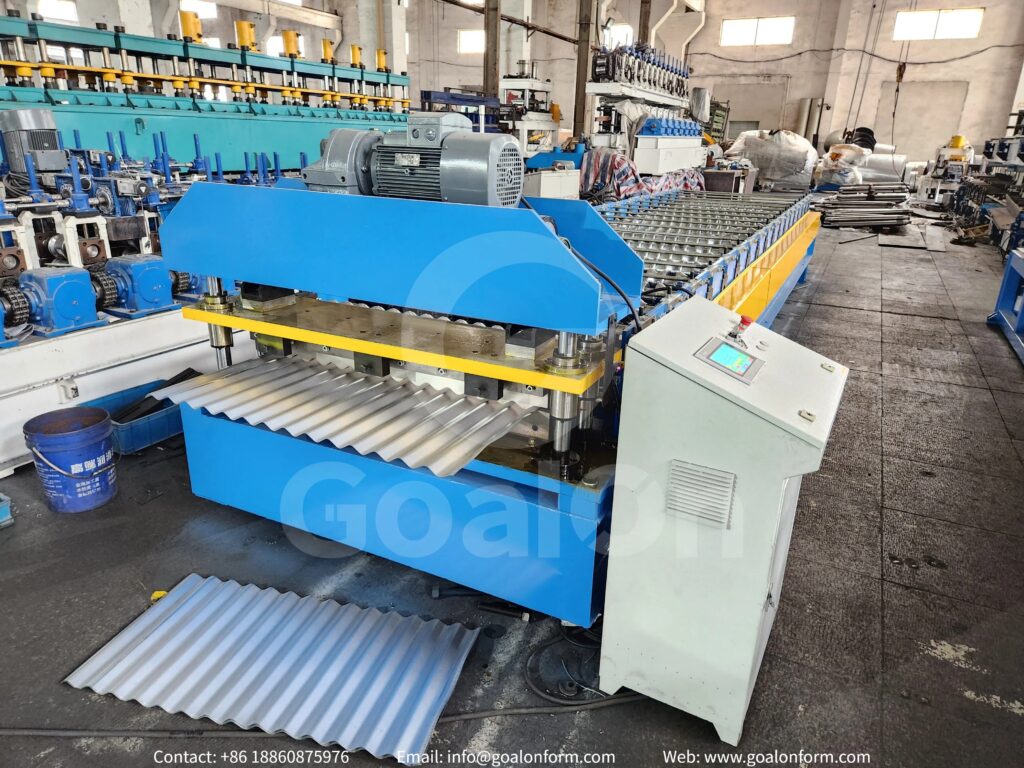
For manufacturers, investing in a roof tile roll forming machine is not simply about adding production capacity. It is about redefining manufacturing precision, ensuring product consistency, and building a competitive advantage in a rapidly evolving construction market. In this article, we will take a deeper engineering and commercial perspective to explore how these machines reshape roofing production, what truly determines their performance, and how buyers can make smarter decisions.
Understanding the Role of Roof Tile Roll Forming in Modern Roofing Systems
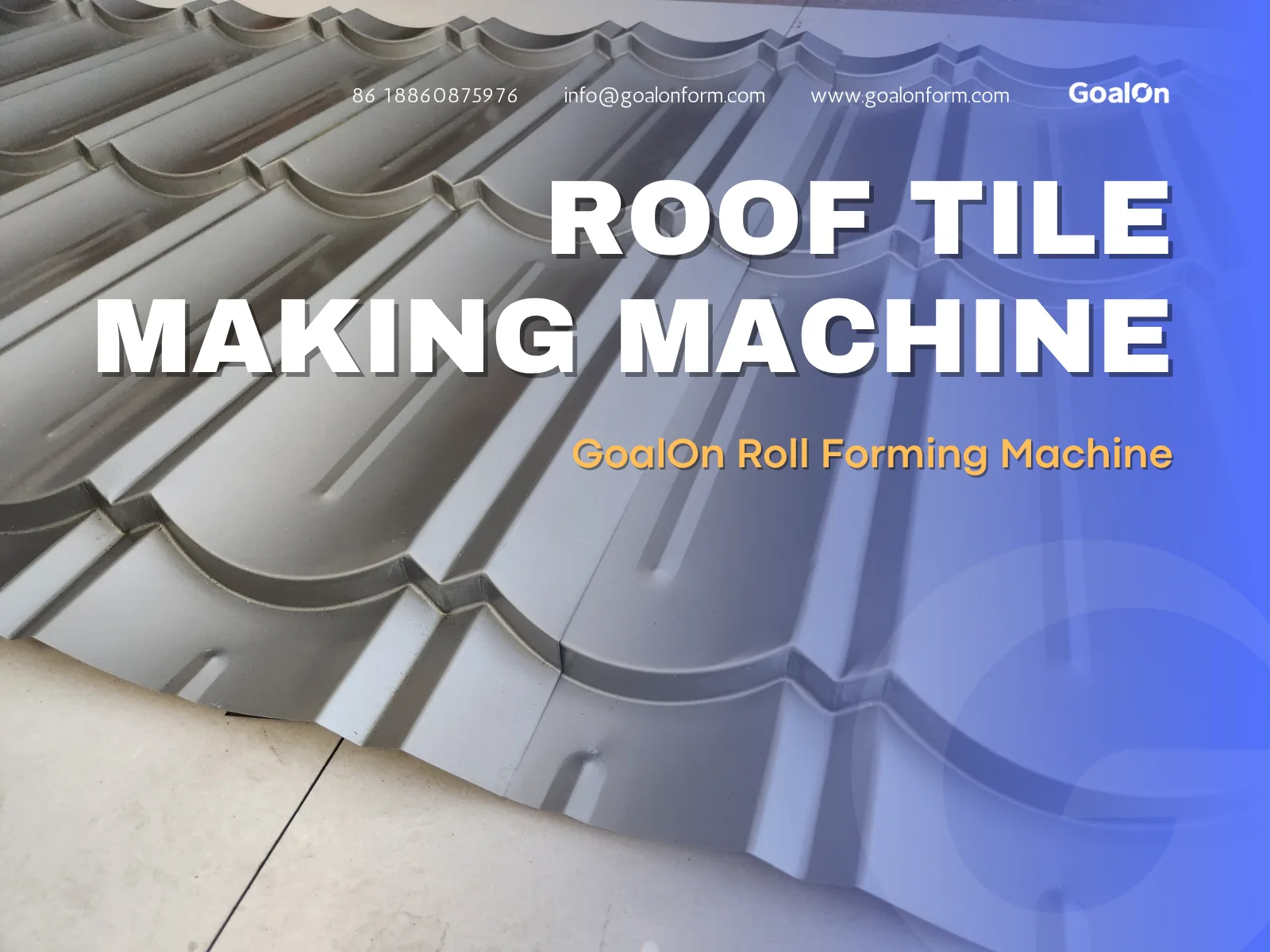
Unlike conventional press-based production, roll forming is a continuous forming process that transforms flat metal coils into complex profiles through progressive deformation. In the case of roof tiles, the challenge is even greater: the machine must not only form longitudinal profiles but also create periodic step patterns that replicate the appearance of traditional glazed tiles.
This dual requirement—continuous forming combined with intermittent stamping—makes roof tile production lines one of the most technically demanding systems in the cold roll forming industry.
A complete production line typically processes materials such as PPGI (pre-painted galvanized steel), galvanized steel, o aluminum coils. These materials must be handled carefully to avoid surface damage, especially when producing high-end architectural roofing products where aesthetics are as important as structural performance.
Production Line Architecture: More Than Just a Forming Machine
From an engineering standpoint, a roof tile roll forming line should be viewed as an integrated production system rather than a single machine. Each module directly affects final product quality and production efficiency.
1. Decoiling and Feeding System
The process begins with coil handling. A hydraulic or manual decoiler ensures stable uncoiling with controlled tension. For thinner materials or coated coils, improper tension can lead to surface scratches o feeding instability. Advanced lines may include coil cars y pressing arms to improve safety and automation.
2. Precision Leveling and Guiding
Before entering the forming section, the strip passes through a leveling unit. This step eliminates coil set y internal stress, ensuring flatness. Guiding systems with adjustable side rollers are critical to maintain alignment—especially for tile profiles where symmetry and edge straightness are visually critical.
3. Roll Forming Section
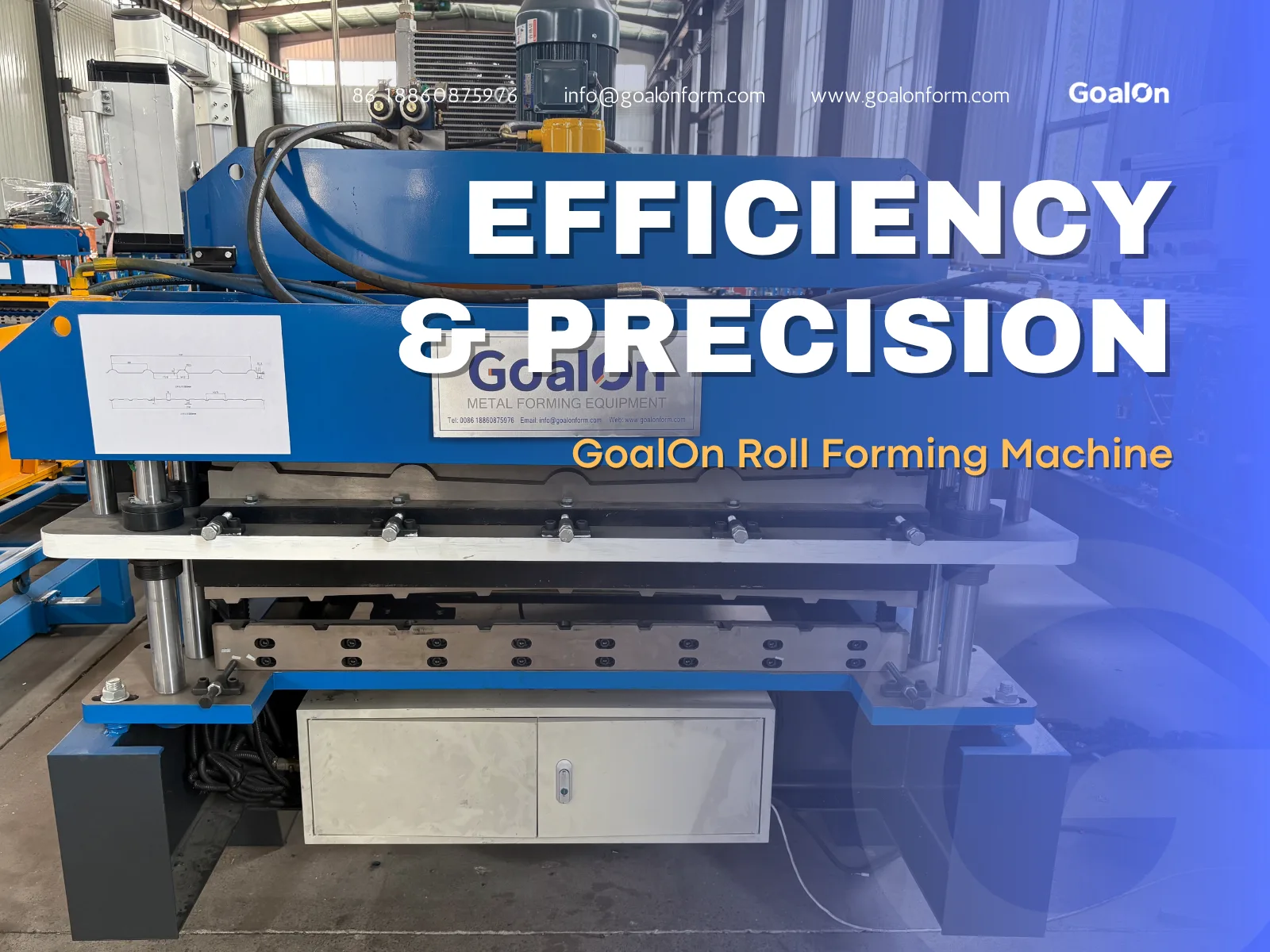
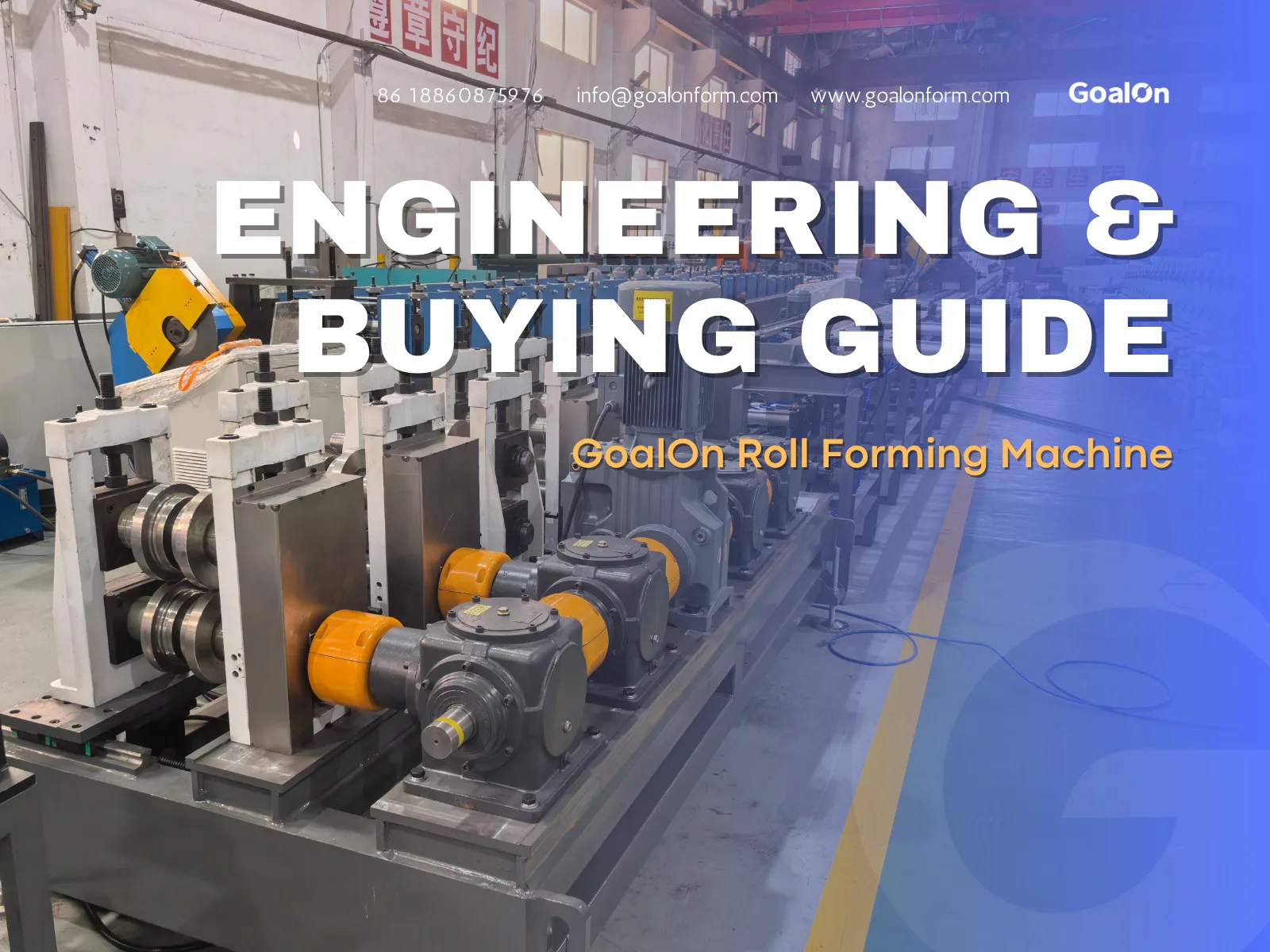
The forming machine itself consists of multiple stations that gradually shape the strip into the required tile geometry. For roof tiles, forming is not just about bending angles—it is about maintaining consistent rib height, smooth step transition, y edge integrity.
High-quality machines use:
- CNC-machined rollers (Cr12 / GCr15 with heat treatment)
- large-diameter shafts for rigidity
- heavy-duty frame structure to minimize vibration
These factors directly influence dimensional accuracy and long-term stability.
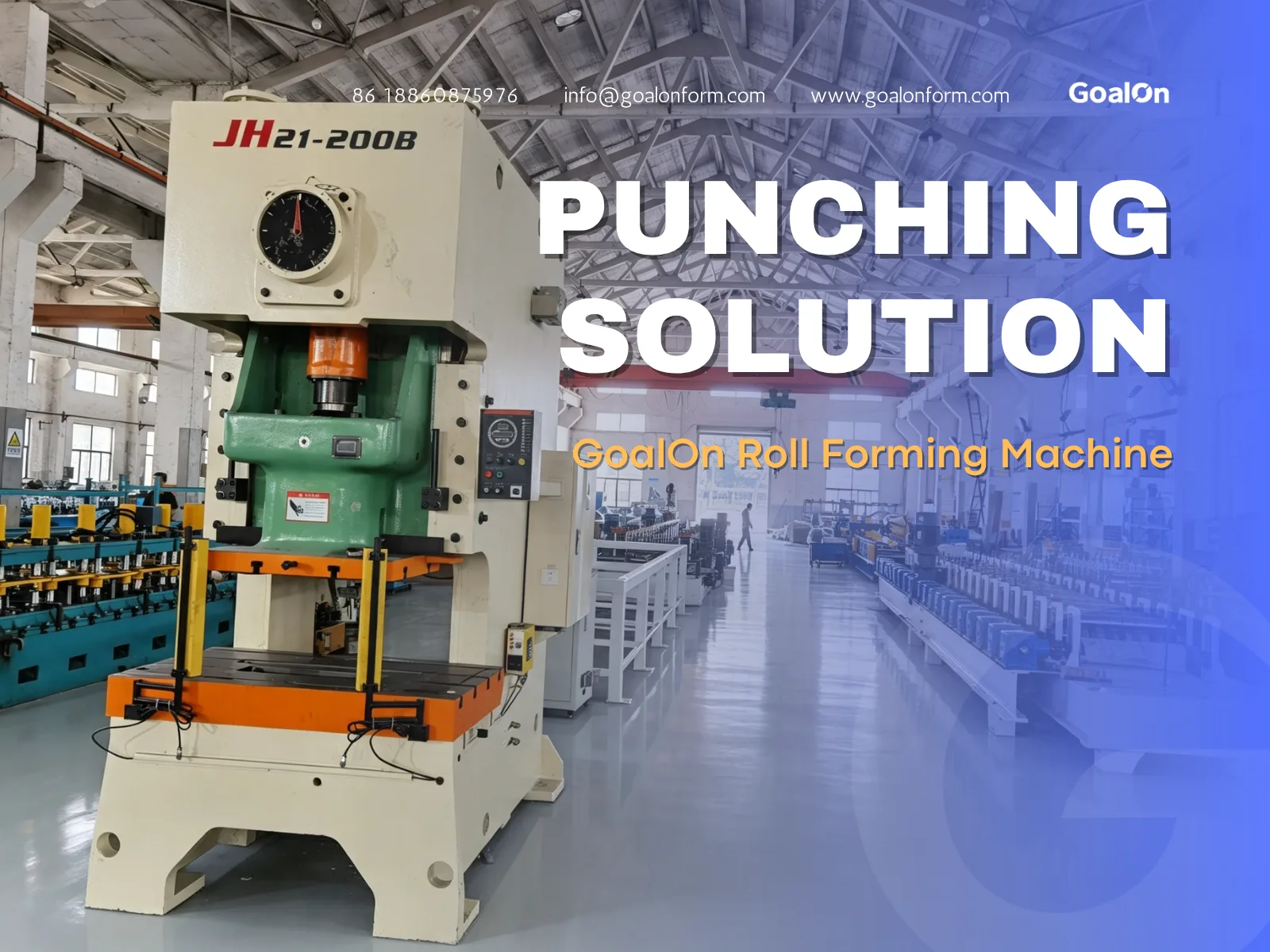
The Core Differentiator: Hydraulic Step Punching and Embossing
What truly distinguishes a roof tile roll forming machine from standard roll forming equipment is the step punching system.
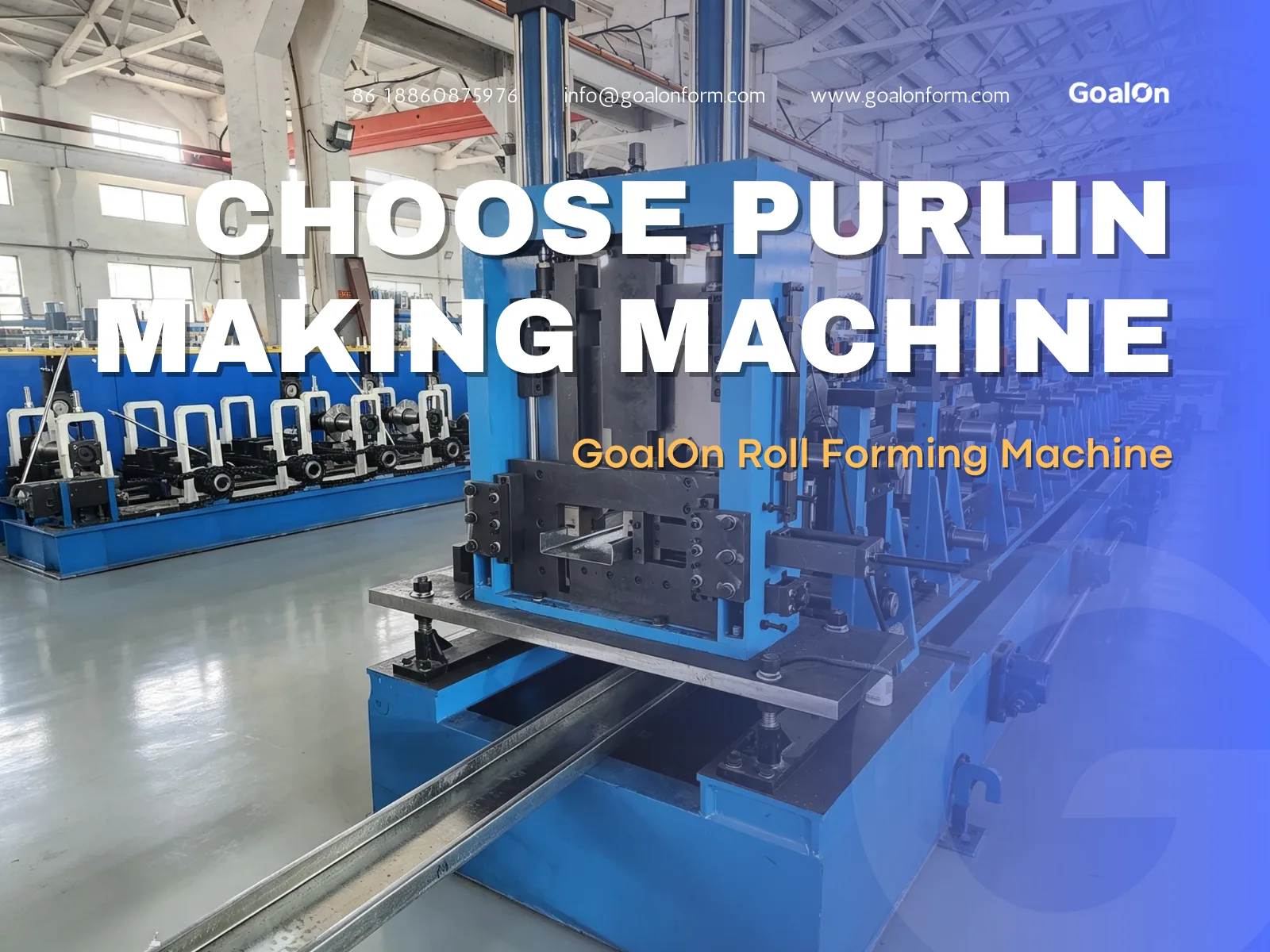
Unlike continuous profiles such as purlins or panels, roof tiles require repeated stamping to create the characteristic tile step geometry. This is achieved through a synchronized hydraulic punching system integrated within or after the forming section.
The engineering challenge lies in synchronization:
- The strip must stop or slow down with precise timing control
- The punching force must remain consistent across cycles
- Each step position must follow accurate length indexing
Poor synchronization leads to:
- uneven tile spacing
- profile deformation
- surface damage on coated materials
In advanced systems, servo-driven synchronization or encoder-based control significantly improves accuracy and allows higher production speeds.
Additionally, embossing rollers or plates can be incorporated to create surface textures. These not only enhance visual appeal but also improve sectional rigidity by increasing structural strength.
Cutting Technology: Accuracy Defines Installation Quality
After forming and punching, the profile must be cut into individual tiles. This stage is often underestimated but is critical for downstream installation.
Most roof tile production lines use hydraulic stop-to-cut systems. While this reduces complexity and cost, it requires precise control to ensure:
- accurate tile length tolerance
- burr-free cutting edges
- minimal deformation at cut points
For higher-end applications, some manufacturers adopt flying cutting systems to improve efficiency, although this increases system complexity.
In real-world roofing projects, even small deviations in tile length can lead to installation misalignment, affecting both efficiency and final appearance. Therefore, cutting precision directly translates into customer satisfaction.
Automation and Control: The Backbone of Modern Production
Modern roll forming lines are no longer purely mechanical systems—they are increasingly intelligent.
A well-designed control system typically includes:
- Sistemas de control por PLC (Siemens, Delta, Mitsubishi)
- touchscreen HMI interface
- automatic length setting and counting
- fault detection and alarm systems
- production recipe storage
For manufacturers handling multiple projects, fast specification changeover is essential. Advanced control systems allow operators to switch between product parameters with minimal downtime, improving overall efficiency.
Automation also reduces reliance on manual labor, which is especially important in regions with limited skilled operators.
Real Production Benefits: What Manufacturers Actually Gain
From a business perspective, the advantages of investing in a high-quality roof tile roll forming line go far beyond technical performance.
High Throughput with Stable Output
Depending on tile design and punching frequency, production speeds typically range from 6 to 10 meters per minute. This is efficient considering the intermittent punching constraint in tile production.
Consistent Product Quality
Roll forming ensures high repeatability. Every tile maintains the same geometry, which is critical for large-scale projects requiring uniformity.
Reduced Material Waste
Optimized forming and punching reduce scrap rate and improve material utilization, especially for coated steel.
Lower Operating Costs
Automated systems reduce labor dependency y energy consumption per unit, improving long-term profitability.
Market Perspective: Why Demand Continues to Grow
The increasing adoption of metal roof tiles is closely linked to global construction trends. In regions such as Africa, Southeast Asia, and South America, rapid urbanization is driving demand for cost-effective and durable roofing solutions.
Metal roof tiles offer:
- lightweight structural advantage
- high corrosion resistance
- easy logistics and installation
- flexible aesthetic customization
In developed markets, architectural trends are shifting toward combining traditional appearance with modern materials, making glazed-style metal tiles increasingly popular.
Key Considerations for Machine Buyers
Selecting the right roof tile roll forming machine requires more than comparing prices. Buyers should evaluate both engineering specifications and supplier capabilities.
Entre los factores importantes se incluyen:
- compatibilidad del grosor del material
- roller hardness and heat treatment
- shaft diameter and rigidity
- hydraulic punching tonnage stability
- control system reliability
- after-sales support and spare parts availability
From an engineering perspective, machine stability is often more important than maximum speed. A reliable system ensures consistent output and lower maintenance costs over time.
Future Outlook: Smarter, Faster, and More Flexible Production
Looking ahead, roof tile roll forming technology will continue to evolve toward higher automation and flexibility.
Key development trends include:
- servo-driven punching systems
- digital production integration (MES systems)
- fast profile switching capability
- energy-efficient system design
Manufacturers adopting these technologies will gain advantages in both cost control and product quality.
Conclusion: Turning Equipment Investment into Market Advantage
A roof tile roll forming machine is no longer just equipment—it is a complete production solution that determines product quality, operational efficiency, and market competitiveness.
For construction companies, metal profile manufacturers, and machine traders, understanding the technical depth behind these systems is essential. The right production line enables you to deliver roofing products with high precision, stable quality, y competitive cost structure.
In today’s market, where efficiency and consistency define success, investing in a well-engineered roof tile roll forming line is a strategic move that directly supports long-term business growth.