مقدمه
As warehousing, logistics, e-commerce, and industrial storage industries continue to expand worldwide, the demand for high-quality storage rack systems has increased significantly. Manufacturers are under growing pressure to produce rack uprights, box beams, step beams, shelf panels, and other structural components faster, more accurately, and at lower costs.
In this environment, selecting the right rack roll forming machine has become one of the most important investment decisions for rack manufacturers. A well-designed production line can dramatically improve productivity, reduce labor requirements, ensure dimensional consistency, and increase profitability.
However, not all rack roll forming machines are built the same. Differences in automation level, punching accuracy, profile flexibility, welding technology, and production speed can have a major impact on long-term manufacturing performance.
This guide explains the critical factors to consider when purchasing a rack roll forming machine and how GoalOn Machinery helps manufacturers achieve efficient, reliable, and scalable rack production.
Understanding Rack Roll Forming Machines
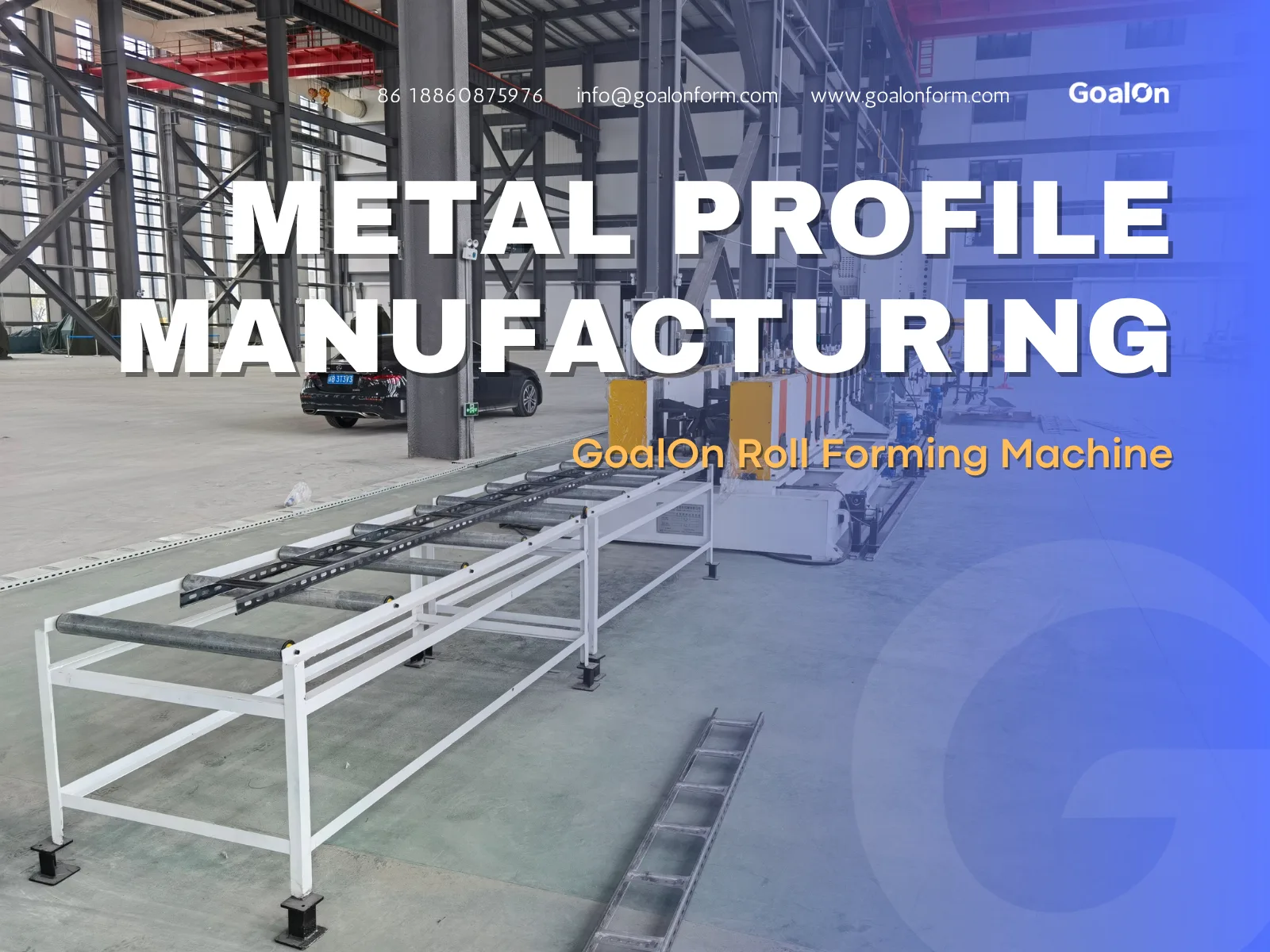
A rack roll forming machine is a fully automated production line designed to manufacture various rack components from steel coils. Unlike traditional manufacturing methods that require multiple standalone machines and extensive manual handling, modern roll forming lines integrate several processes into one continuous production system.
A typical rack roll forming production line consists of seven major systems:
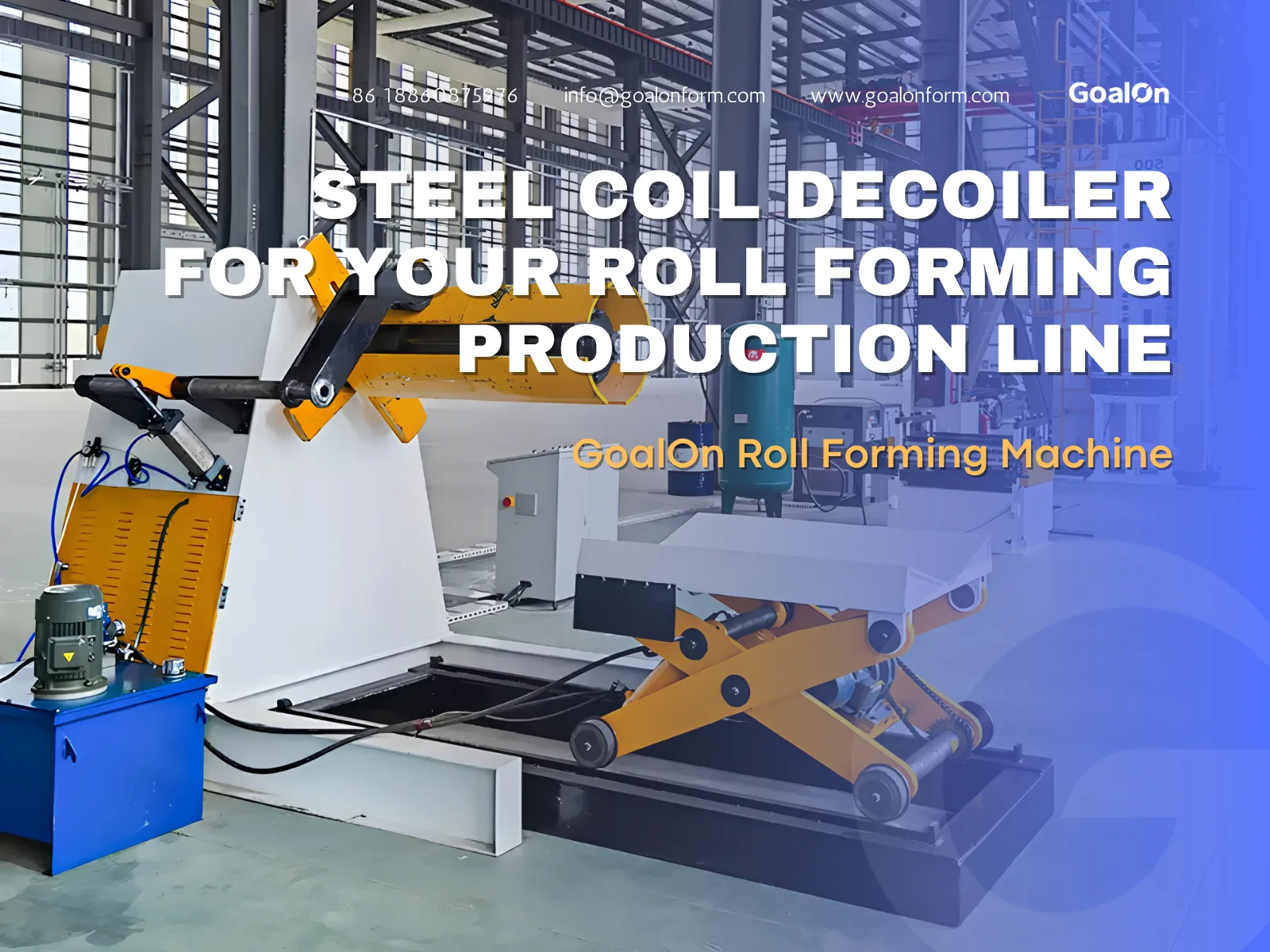
- Decoiling System
- Servo Feeding System
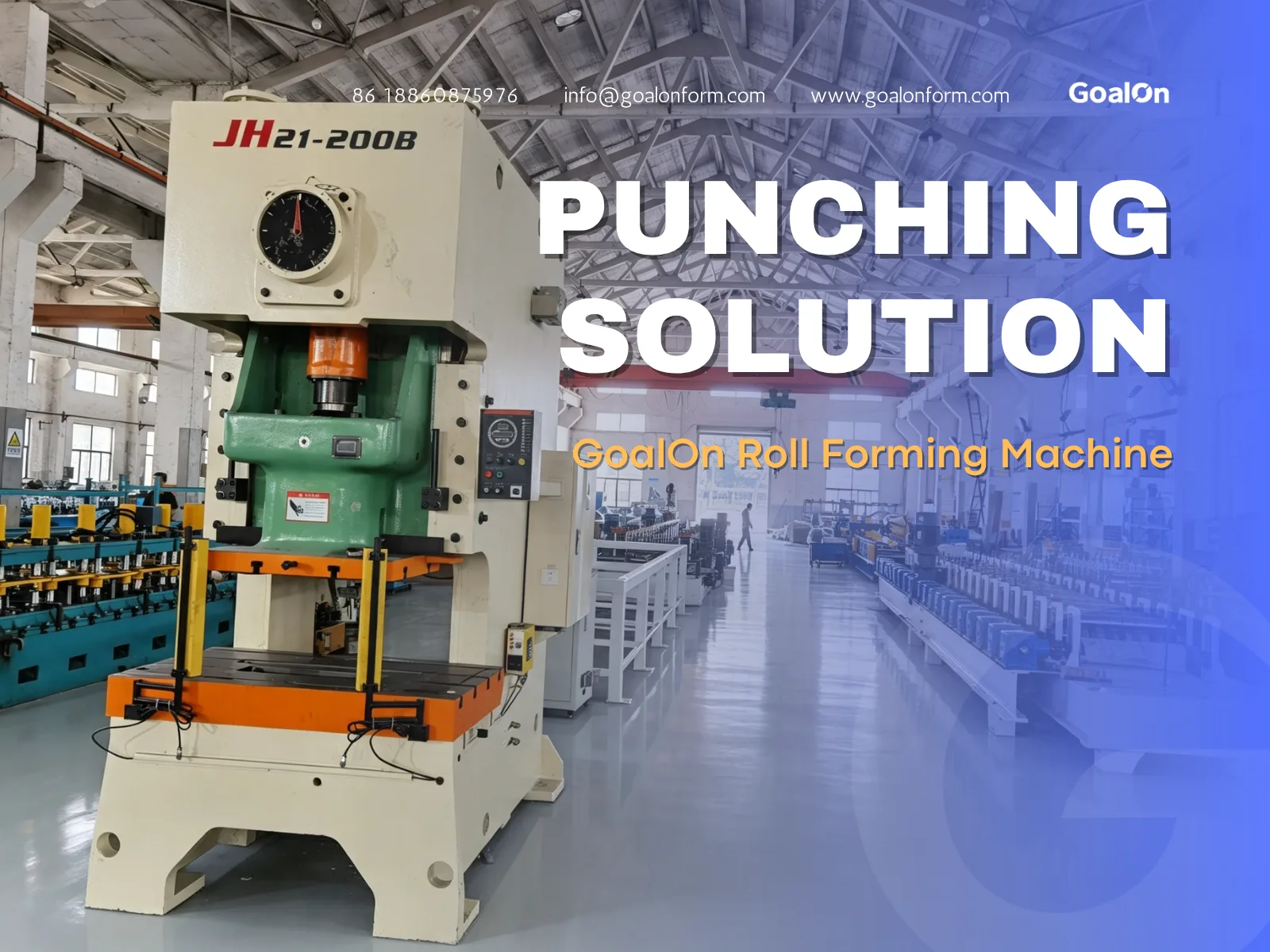
- Punching System
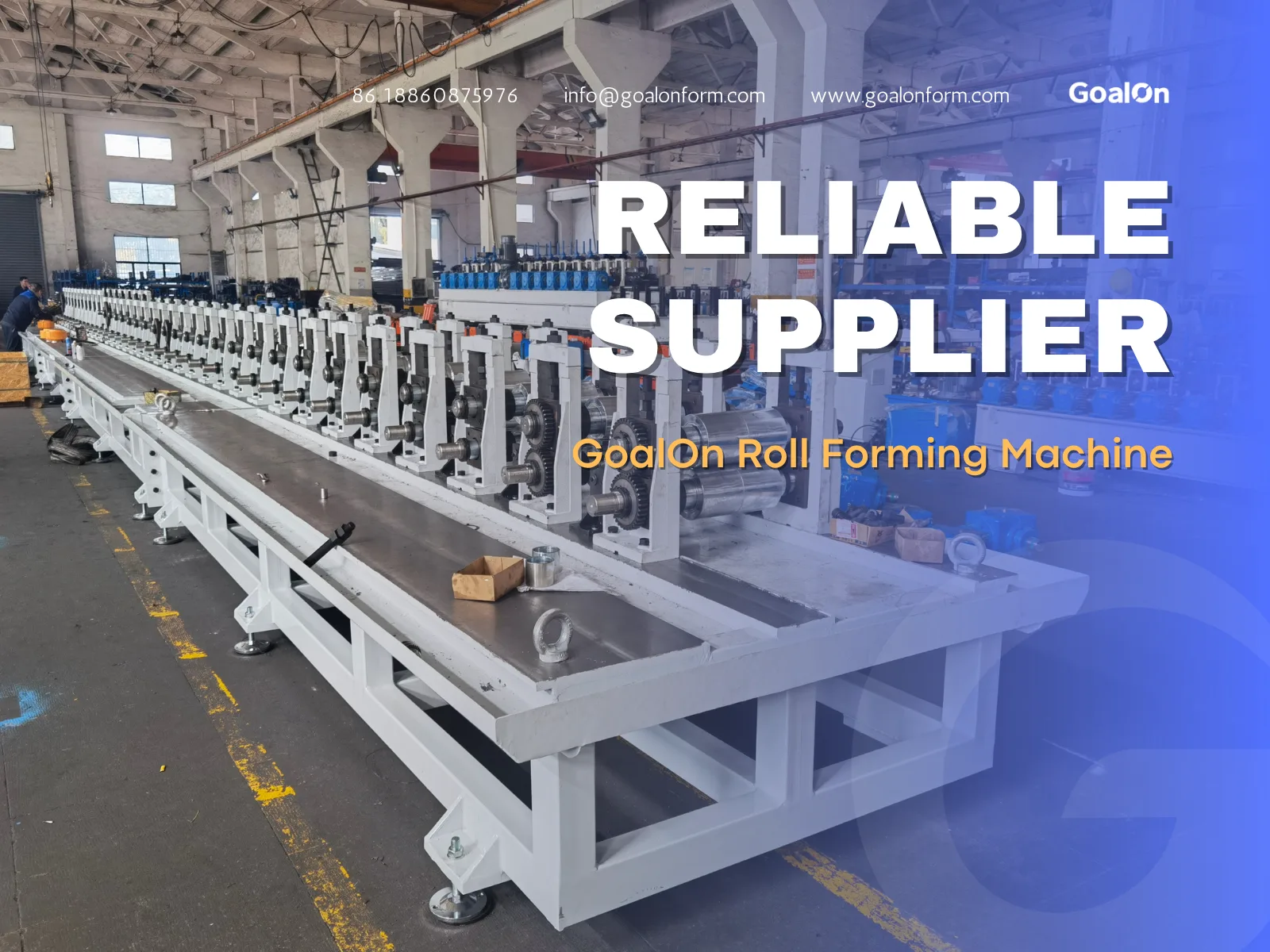
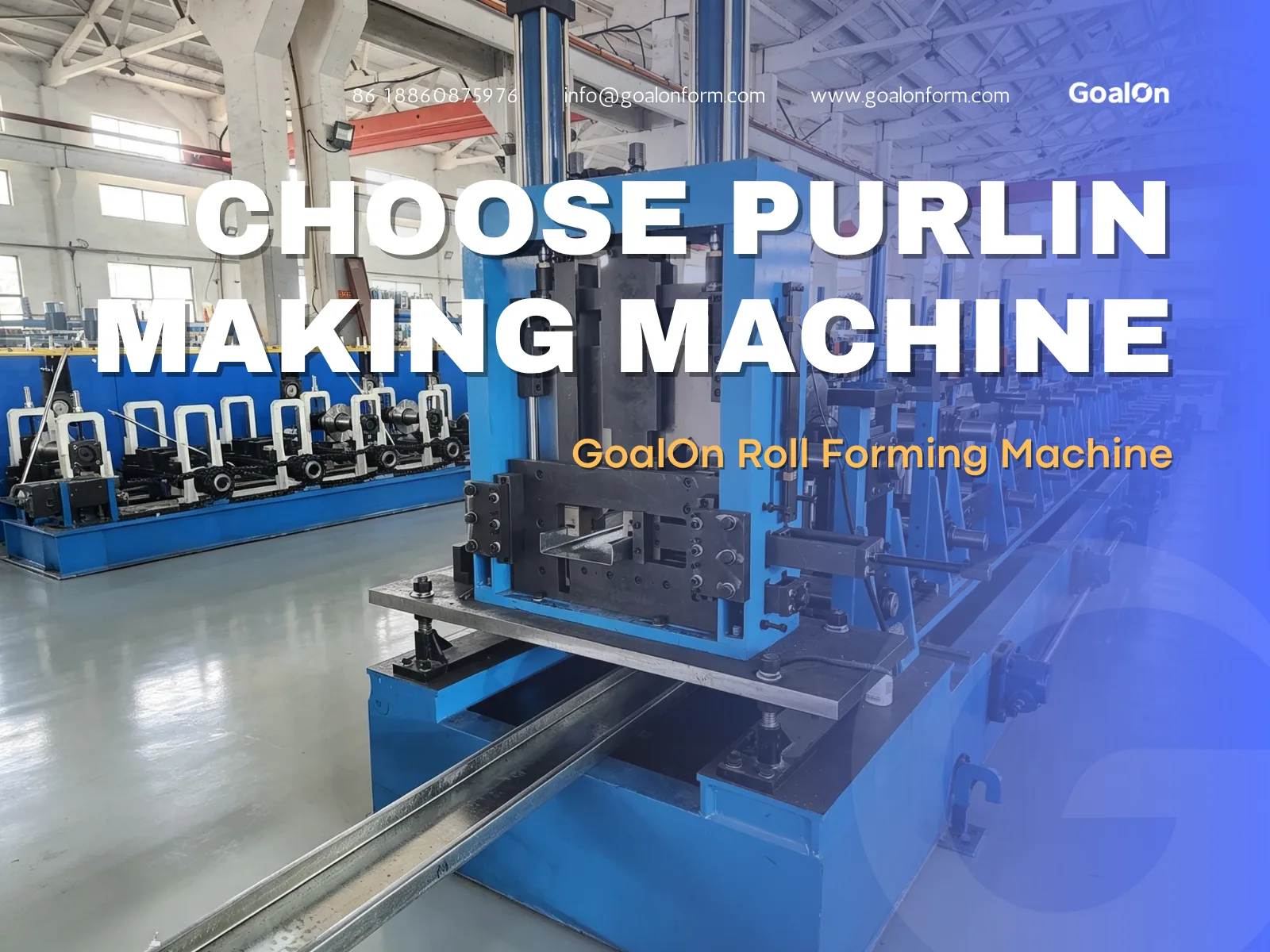
- Roll Forming System
- Online Welding System
- Cutting and Bending System
- Electrical Control System
Through intelligent PLC control and high-precision servo drives, the entire process—from coil loading to finished profile discharge—can operate automatically with minimal operator intervention.
Depending on the product design, the machine can manufacture:
- Rack Uprights
- Box Beams
- Step Beams
- Shelf Panels
- Warehouse Storage Profiles
- Industrial Shelving Components
- Heavy-Duty Rack Structural Members
This integrated manufacturing approach significantly improves production efficiency while maintaining consistent product quality.
Why Traditional Rack Manufacturing Is Becoming Less Competitive
Many rack manufacturers still rely on separate punching machines, press brakes, welding stations, and manual transfer operations. While this approach may appear economical initially, it often creates serious production bottlenecks.
Traditional production methods typically suffer from:
- Multiple material handling stages
- High labor dependency
- کیفیت نامنظم محصول
- Increased production time
- Greater risk of human error
- Higher operating costs
As labor costs continue to rise globally, these inefficiencies become increasingly difficult to justify.
Modern automated rack roll forming lines eliminate many of these challenges by combining multiple manufacturing processes into a continuous production flow. This reduces downtime between operations and allows manufacturers to achieve stable, high-volume output.
For companies seeking long-term competitiveness, automation is no longer a luxury—it is becoming a necessity.
Production Efficiency: The First Factor to Evaluate
When investing in a rack roll forming machine, production efficiency should be one of the primary considerations.
Many buyers focus only on machine speed, but true production efficiency involves several interconnected factors:
- Coil loading efficiency
- Servo feeding accuracy
- Punching cycle speed
- Forming stability
- همگامسازی برش
- Product changeover time
A machine capable of running at high speed but frequently stopping for adjustments may actually produce fewer finished products than a slower but more stable production line.
GoalOn Machinery designs rack roll forming systems around continuous production principles. The integration of automated feeding, punching, forming, welding, and cutting enables uninterrupted manufacturing with minimal manual intervention.
This allows manufacturers to produce large volumes of rack components efficiently while maintaining consistent product quality throughout long production runs.
For high-volume warehouse rack manufacturers, production efficiency directly influences delivery lead times and profitability.
Precision Matters More Than Many Buyers Realize
One of the most common challenges in rack manufacturing is maintaining dimensional consistency.
Even small deviations in hole positions or profile dimensions can create serious assembly problems during rack installation.
Poor manufacturing accuracy often results in:
- Misaligned connection holes
- Beam installation difficulties
- Structural instability
- افزایش نرخ ضایعات
- Customer complaints
- Costly rework
To avoid these issues, buyers should carefully evaluate the machine’s precision capabilities.
The most important areas include:
Servo Feeding Accuracy
The servo feeding system controls material positioning before punching operations. High-quality servo systems ensure accurate hole spacing and repeatability throughout the production process.
Punching Precision
Rack systems often contain hundreds of connection holes. Any deviation can affect assembly performance.
A well-designed hydraulic punching system combined with servo positioning can maintain highly consistent hole placement.
Roll Forming Accuracy
The roll forming section determines the final profile geometry.
Factors affecting forming accuracy include:
- Roller machining quality
- Shaft rigidity
- Machine frame strength
- Drive system stability
- طراحی ایستگاه شکلدهی
دقت برش
The cutting system must synchronize perfectly with line speed to ensure consistent product lengths and clean profile ends.
GoalOn Machinery utilizes high-precision servo control technology throughout the production line, helping customers achieve accurate dimensions, stable profile geometry, and reliable hole positioning.
The result is improved assembly performance and significantly lower rejection rates.
Automation and Labor Savings
Labor shortages and rising wages are affecting manufacturers worldwide.
Many rack factories still require multiple operators to manage separate production processes, increasing labor expenses and reducing overall efficiency.
A highly automated rack roll forming machine can significantly reduce workforce requirements by automating:
- تغذیهٔ سیمپیچ
- Material positioning
- Punching operations
- Profile forming
- Welding processes
- Product cutting
- Length control
With PLC-based automation, a small team can manage production volumes that previously required a much larger workforce.
In addition to direct labor savings, automation provides several indirect benefits:
- Improved production consistency
- Reduced operator dependency
- Lower training requirements
- Enhanced workplace safety
- Better production planning
Over the machine’s operational lifespan, labor savings often become one of the largest contributors to return on investment.
Profile Flexibility and Fast Changeover Capability
Today’s rack manufacturers face increasing demand for customized products and smaller production batches.
Customers frequently request different:
- Profile sizes
- Hole patterns
- Material thicknesses
- Beam designs
- Upright specifications
Machines with poor flexibility can struggle to adapt to these changing requirements.
Traditional systems often require lengthy tooling changes and extensive manual adjustments, leading to costly downtime.
Therefore, machine flexibility should be carefully evaluated before purchase.
GoalOn Machinery offers production solutions featuring one-click profile changeover technology, allowing operators to switch between product specifications quickly and efficiently.
This capability provides several advantages:
- Faster response to customer orders
- Reduced machine downtime
- Improved production scheduling
- Increased equipment utilization
- Better support for customized products
For manufacturers serving diverse markets, flexibility can become a major competitive advantage.
Evaluating the Welding System
For box beam and certain structural rack profiles, online welding quality is extremely important.
A poorly designed welding system may create:
- Weak weld joints
- Inconsistent weld penetration
- Excessive spatter
- Reduced structural strength
When evaluating a rack roll forming machine, buyers should examine:
- Welding method
- Welding speed
- Weld consistency
- Maintenance requirements
- Integration with forming speed
An effective online welding system should operate seamlessly within the production line while maintaining consistent weld quality.
GoalOn Machinery integrates online welding technology into selected rack production lines, helping customers achieve stable production while ensuring structural reliability.
Machine Structure and Long-Term Durability
Many buyers focus primarily on initial purchase price while overlooking machine durability.
However, the machine frame, shafts, rollers, and drive system directly influence long-term operating performance.
Key structural components to evaluate include:
Machine Frame
A rigid machine frame minimizes vibration and improves forming accuracy.
مواد رولیک
High-quality rollers should undergo precision machining and heat treatment to ensure long service life.
Shaft Design
Heavy-duty shafts provide greater resistance to deflection during forming.
Drive System
Chain drive, gearbox drive, and gear transmission systems each have different advantages depending on the application.
A durable machine structure reduces maintenance requirements and extends production life.
For manufacturers planning high-volume production, long-term reliability often outweighs small differences in initial purchase cost.
Understanding Total Cost of Ownership
Many purchasing decisions focus exclusively on machine price.
However, the lowest-priced machine is not always the most economical investment.
A more useful evaluation method is calculating the Total Cost of Ownership (TCO).
This includes:
- Initial equipment investment
- Labor costs
- Maintenance expenses
- Energy consumption
- کارایی تولید
- Scrap rates
- Downtime costs
A higher-quality automated production line may require greater initial investment but often generates lower operating costs over time.
GoalOn Machinery’s automated rack roll forming solutions help manufacturers reduce labor requirements, improve production stability, and increase output capacity, ultimately lowering overall manufacturing costs.
Why Manufacturers Choose GoalOn Machinery
GoalOn Machinery specializes in roll forming technology and provides customized production solutions for storage rack manufacturers worldwide.
Our advantages include:
Industry Experience
Years of expertise in roll forming equipment design, manufacturing, and commissioning.
Customized Solutions
Production lines tailored to specific product designs, material specifications, and production requirements.
Advanced Automation
Integrated PLC control and servo-driven systems for precise and efficient production.
Reliable Quality
High-quality components and strict manufacturing standards ensure long-term equipment performance.
Global Support
Professional technical assistance covering installation, training, commissioning, and after-sales service.
Whether producing rack uprights, box beams, shelf panels, or other storage system components, GoalOn Machinery provides solutions designed to improve productivity, consistency, and profitability.
نتیجهگیری
Choosing the right rack roll forming machine requires more than comparing prices. Manufacturers should carefully evaluate production efficiency, forming precision, automation level, flexibility, welding quality, machine durability, and long-term operating costs.
A well-designed production line can transform manufacturing performance by reducing labor dependence, increasing output, improving product quality, and enhancing profitability.
As the global storage and logistics industries continue to grow, investing in advanced roll forming technology becomes increasingly important for manufacturers seeking sustainable competitive advantages.
GoalOn Machinery is committed to helping rack manufacturers build efficient, reliable, and future-ready production systems through innovative roll forming solutions tailored to their specific needs.