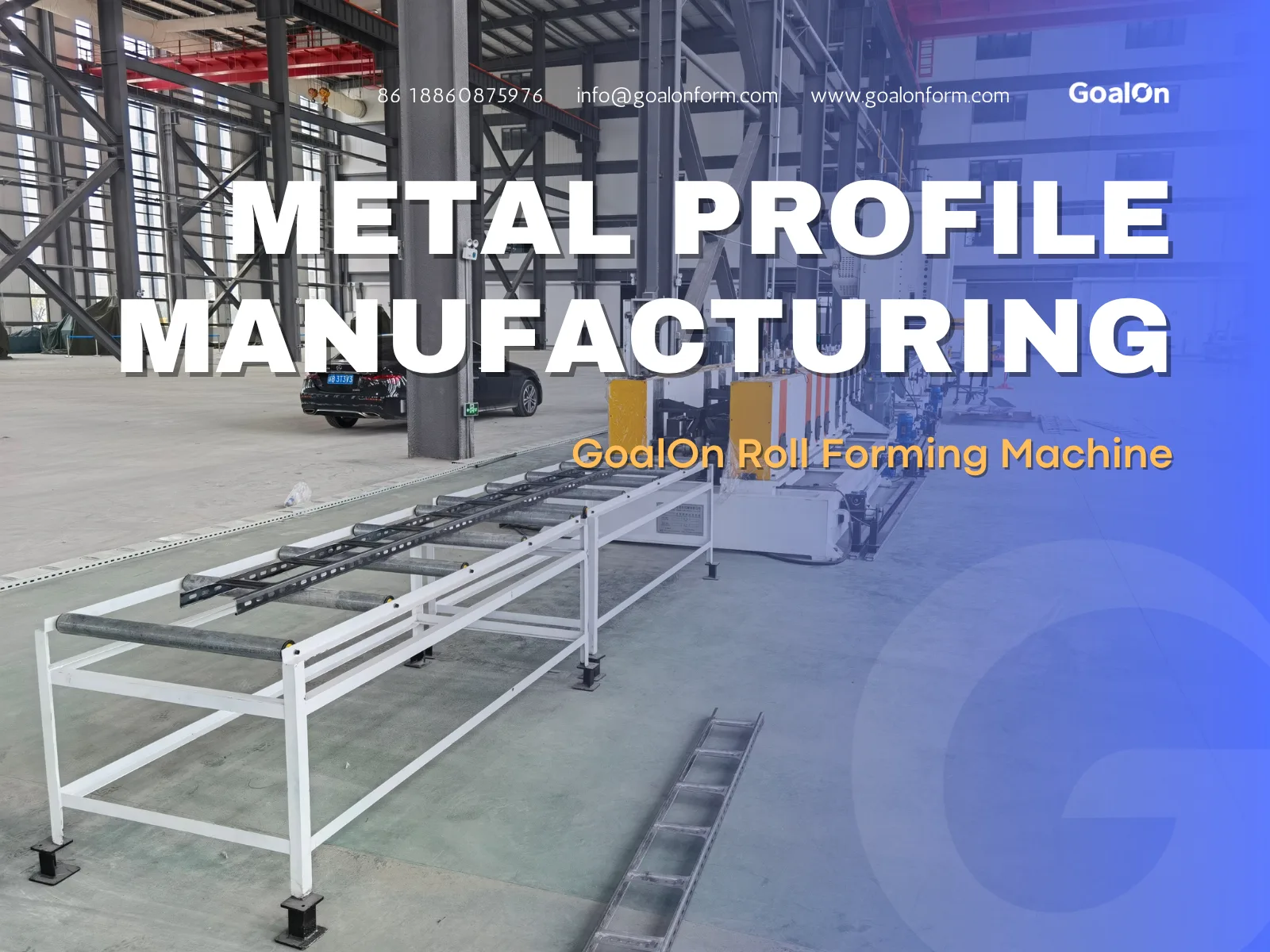
In today’s increasingly demanding manufacturing landscape, material selection is no longer limited to mild steel or galvanized sheets. Industries such as construction, automotive, energy, and infrastructure are progressively shifting toward high-performance materials—including stainless steel and various special alloys—to meet stricter requirements in corrosion resistance, strength, and durability. This raises a practical and often underestimated question: can roll forming machines effectively process these advanced materials?
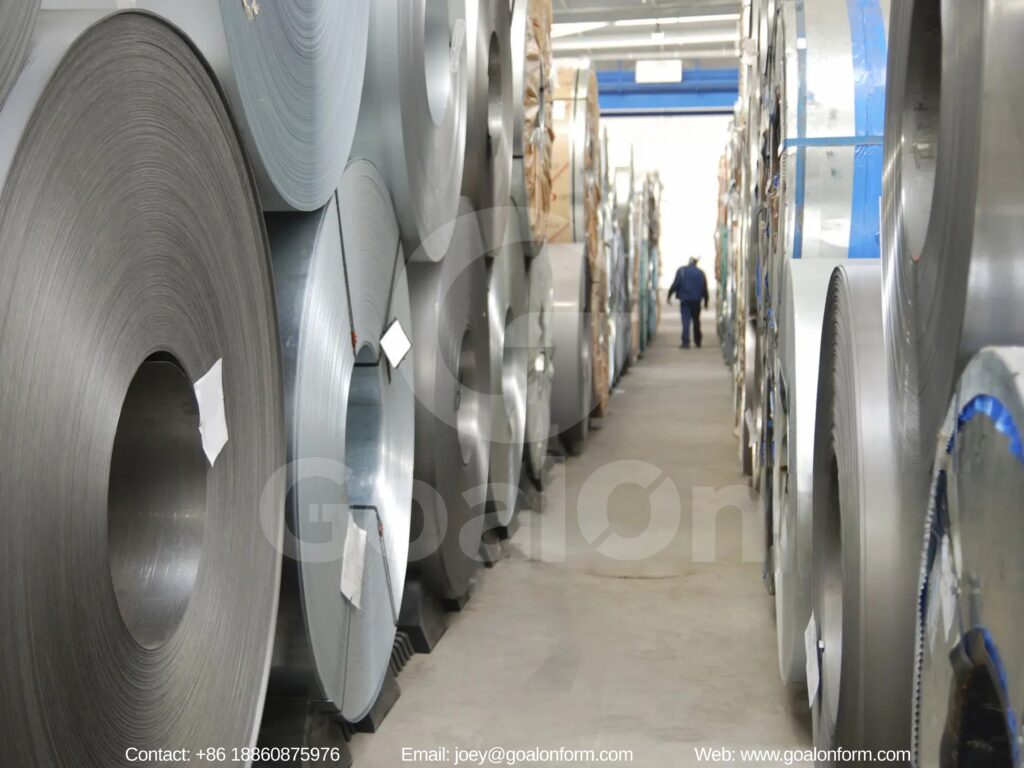
The short answer is yes—but with important technical considerations. This article explores the realities behind processing stainless steel and specialty alloys in roll forming, from material behavior to machine configuration, tooling design, and cost-performance balance.
Understanding the Nature of Stainless Steel and Special Alloys
Before evaluating machine capability, it is essential to understand how these materials behave differently compared to standard carbon steel.
Stainless steel, especially grades like 304 and 316, is characterized by higher yield strength, significant work hardening, and lower thermal conductivity. This means that during deformation, the material becomes progressively harder, placing greater stress on forming tools and machine components.
Similarly, special alloys—such as high-strength low-alloy (HSLA) steels, aluminum alloys, and even some copper-based alloys—exhibit unique forming characteristics. For instance:
- HSLA steels combine high tensile strength with reduced ductility
- Aluminum alloys have lower modulus of elasticity, leading to higher springback
- Certain alloys may have anisotropic properties, affecting consistency in forming
These differences directly influence how a roll forming machine must be designed and operated.
Can Roll Forming Machines Handle These Materials?
From an engineering perspective, roll forming is inherently suitable for processing stainless steel and many special alloys. The process relies on incremental deformation through multiple forming stations, which reduces the risk of cracking compared to stamping or press forming.
Video Highlights: Watch our 12-gauge Stainless Steel Cable Tray Roll Forming Machine running at stable 15m/min.
However, the key lies in machine capability and configuration.
A standard cold roll forming mill designed for mild steel may struggle with high-yield materials.
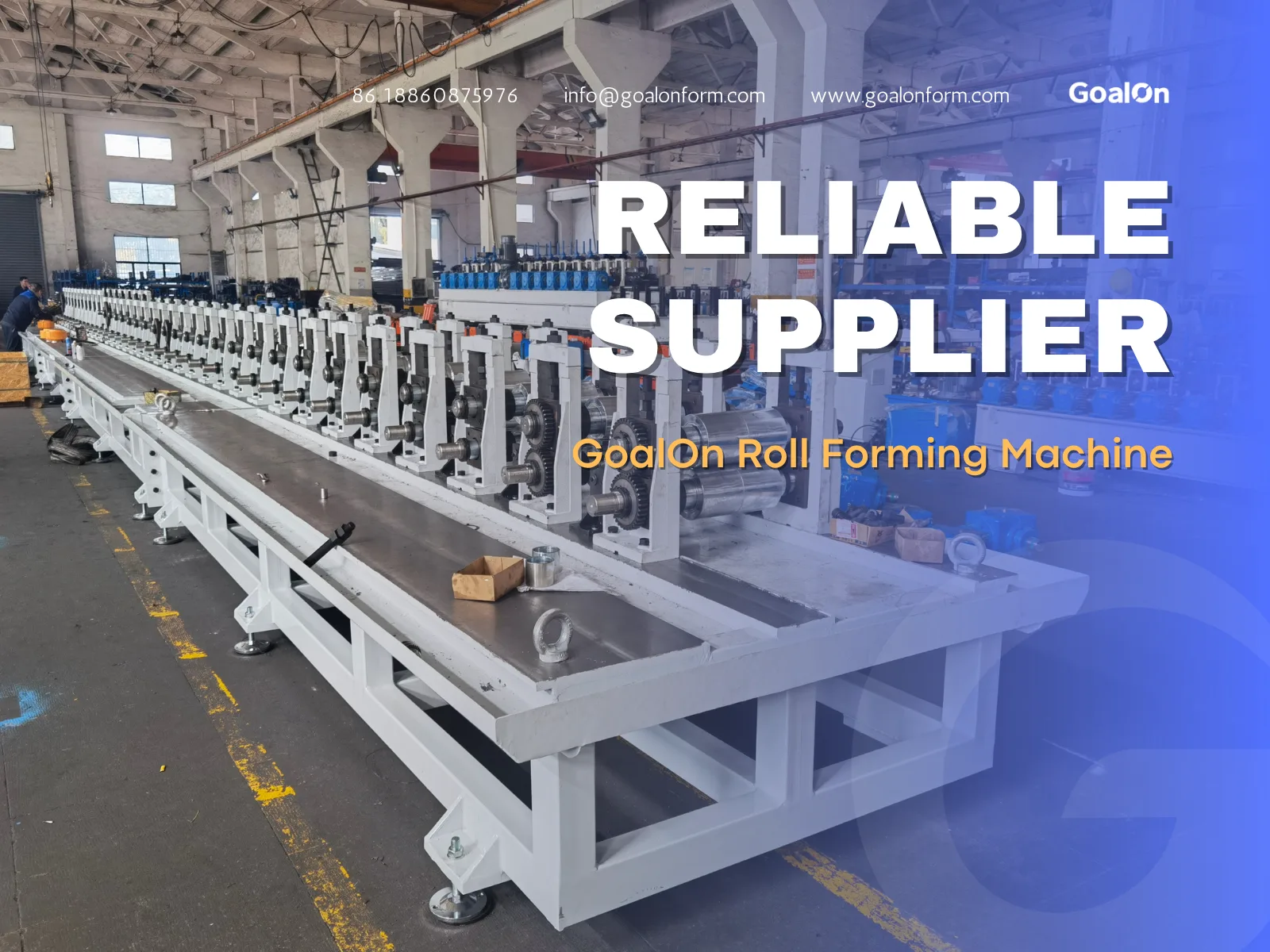
As a premier stainless steel roll forming machine manufacturer, Goalon upgrades our standard roll forming lines with reinforced structures, heavy-duty gearboxes, and precision-engineered Copra-designed rollers to handle 0.3mm to 3.0mm high-strength alloys seamlessly
Tooling Design: The Core of Successful Forming
When processing stainless steel or special alloys, tooling design becomes the most critical factor.
Unlike mild steel, stainless steel requires larger bend radii to avoid micro-cracking. A common rule is that the minimum bend radius should be at least 1.5–2 times the material thickness, depending on the grade. (R≥1.5t ir R≥2t)
Additionally, due to strong work hardening, roll tools must be manufactured from high-grade materials such as:
- D2 tool steel
- Cr12MoV alloy steel
- Tungsten carbide coatings for extreme applications
Surface treatment is equally important. Polishing and coating reduce friction and prevent galling—a common issue when forming stainless steel.
Another key aspect is pass design. Instead of aggressive forming in fewer stations, engineers often adopt a multi-pass gradual forming strategy, which distributes deformation evenly and reduces stress concentration.
Machine Structure and Power Requirements
Processing advanced materials places significantly higher loads on the machine.
A machine intended for stainless steel must feature a rigid frame structure, typically using welded steel bases with stress-relief treatment. This ensures stability under high forming forces.
Drive systems also require careful consideration. Compared to standard applications, stainless steel forming demands:
- Higher motor power
- Stronger gearbox transmission systems
- Stable chain or gear drive mechanisms
In many cases, gearbox-driven roll forming machines are preferred over chain-driven systems due to their higher torque capacity and precision.
Additionally, the shaft diameter and bearing capacity must be increased to withstand continuous high loads without deformation or vibration.
Springback and Dimensional Control
One of the biggest challenges when forming stainless steel and certain alloys is springback—the tendency of material to partially return to its original shape after deformation.
This effect is more pronounced in:
- Stainless steel
- Aluminum alloys
- High-strength steels
To compensate, engineers must incorporate overbending angles in roll design. This requires precise calculation and often iterative testing.
Modern roll forming lines may integrate servo-controlled adjustments or fine-tuning mechanisms to improve dimensional accuracy during production.
Without proper springback compensation, profiles may fail to meet tolerance requirements, especially in applications such as structural components or precision frames.
Our engineering team utilizes COPRA SE roll design software to precisely simulate and compensate for springback in SUS 304 profiles, ensuring tolerances within ±0.5mm.
Surface Protection and Lubrication
Surface quality is often a critical requirement for stainless steel products, especially in architectural or visible applications.
During roll forming, friction between rolls and material can lead to:
- Surface scratches
- Galling
- Material pickup on rolls
To mitigate this, manufacturers use:
- Specialized lubricants designed for stainless steel
- Chrome-plated or coated rolls
- Highly polished roll surfaces
In some cases, film protection layers are applied to the material before forming, especially for decorative finishes.
Typical Applications of Stainless Steel Roll Forming
Despite the challenges, roll forming of stainless steel is widely used across industries.
Common applications include:
- Architectural panels and façade systems
- Cable trays and support systems
- Automotive structural components
- Solar mounting systems
- Food-grade equipment profiles
For these applications, the benefits of roll forming—such as high efficiency, continuous production, and consistent cross-section—outweigh the increased complexity of processing.
Cost Considerations and ROI Analysis
Processing stainless steel and special alloys inevitably increases production costs. These include:
- Higher tooling costs due to material and treatment
- Increased machine investment
- Slower forming speeds in some cases
- More frequent maintenance requirements
However, these costs must be evaluated against the value of the final product.
In many cases, stainless steel profiles command higher market prices due to their corrosion resistance, durability, and low maintenance requirements. This often results in a favorable return on investment, especially for long-term or high-volume projects.
Common Mistakes and How to Avoid Them
Companies entering this segment often underestimate the technical challenges. Some common mistakes include:
- Using standard roll tooling for stainless steel
- Ignoring springback compensation
- Underestimating required motor power
- Poor lubrication strategy
Avoiding these pitfalls requires a combination of engineering expertise, proper machine specification, and real production testing before finalizing the solution.
How to Select the Right Roll Forming Machine
For buyers such as construction companies, profile manufacturers, and machine traders, selecting the right equipment is critical.
Key evaluation points include:
- Material type and thickness range
- Required profile complexity
- Production speed expectations
- Tolerance requirements
- Future flexibility for different materials
A reliable supplier should provide not only the machine but also forming analysis, tooling design, and sample testing to validate feasibility.
Final Thoughts
Roll forming machines are fully capable of processing stainless steel and many special alloys—but only when properly engineered and configured.
The transition from standard materials to advanced alloys is not simply a material upgrade; it is a system-level adjustment involving tooling, machine structure, process design, and operational control.
For companies aiming to expand into higher-value markets, mastering this capability can provide a strong competitive advantage. The key is to approach it with the right technical understanding and a long-term investment mindset.
Inquiry Now
To get an accurate quote within 24 hours, please share your: 1. Material grade & thickness 2. Profile drawing (CAD/PDF) 3. Expected production speed.
Related Posts