In metal forming industries such as construction profiles, steel framing systems, and industrial sheet processing, production speed is often one of the first technical parameters buyers focus on. However, experienced engineers and machine purchasers understand that roll forming speed is not a fixed number. It is a system result influenced by mechanical design, material behavior, automation level, and downstream processes.
To properly understand machine speed, we must move beyond the simple “meters per minute” label and analyze how actual production output is generated in real industrial environments.

Understanding Roll Forming Speed as a System Output
In industrial practice, machine speed is typically expressed in meters per minute (m/min), referring to the linear movement of steel strip through the forming rollers. However, this value only represents the theoretical running speed of the forming section.
In real production, what matters more is the effective production speed, which includes cutting cycles, punching delays, coil feeding stability, and operator or system interruptions. A machine rated at 30 m/min may only deliver 18–25 m/min actual output, depending on configuration.
Therefore, speed should always be understood as a system-level performance indicator, not an isolated parameter of the roll forming unit.
Typical Speed Levels Across Different Roll Forming Applications
Different product categories in roll forming industry naturally operate at different speed ranges due to variations in geometry, material thickness, and processing requirements.
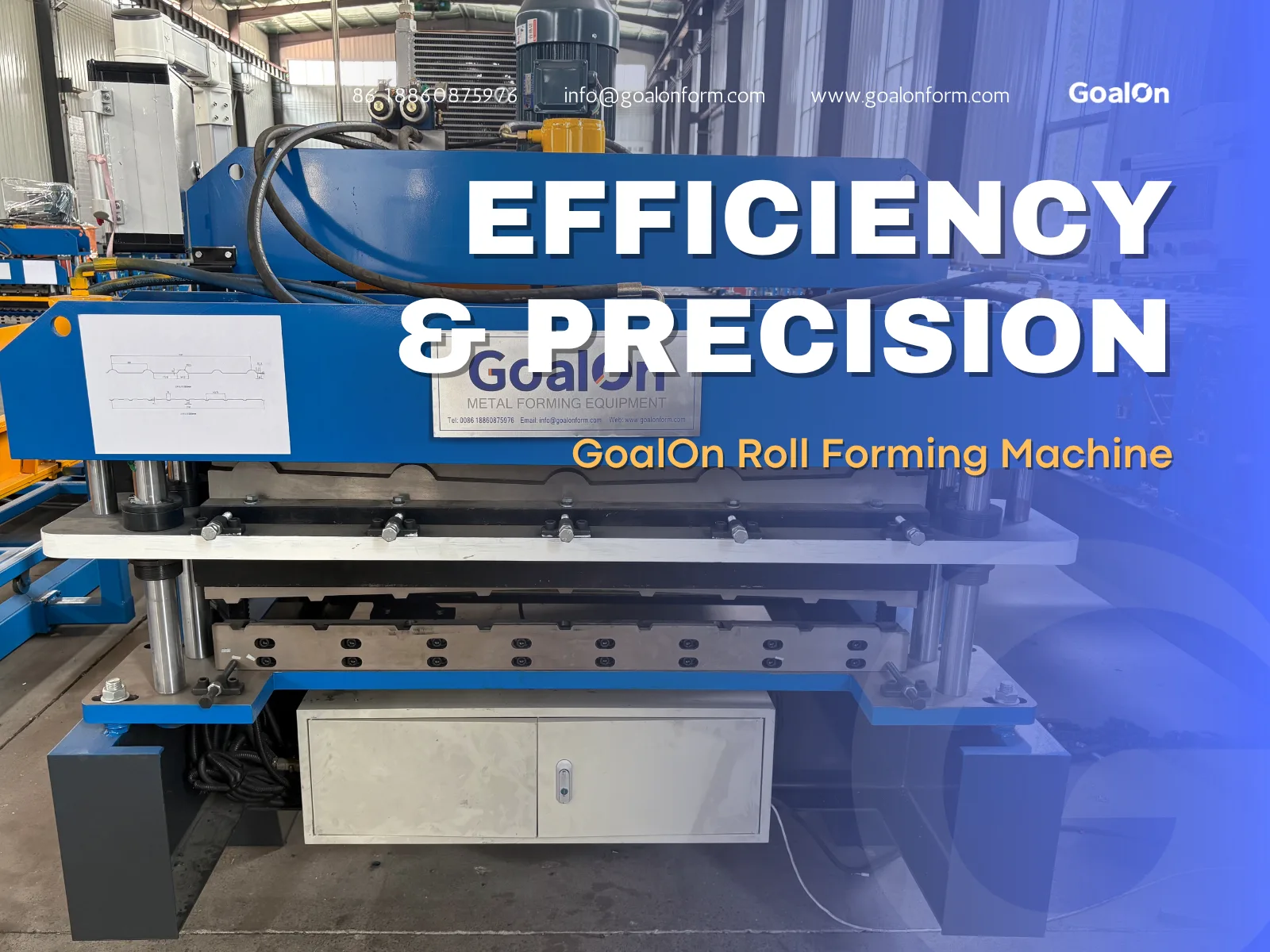
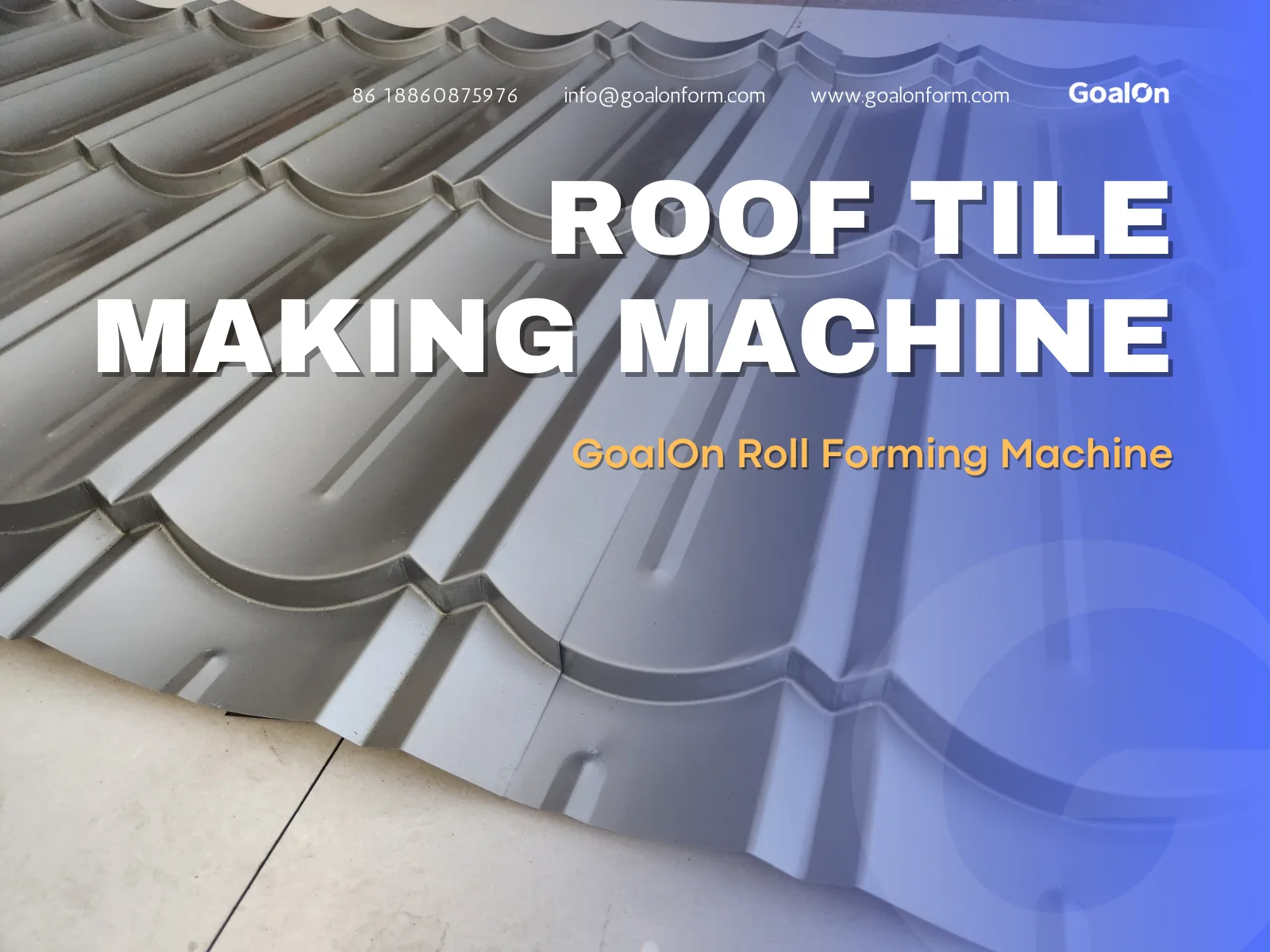
Roofing and wall panel systems are generally the fastest category. Because their profiles are relatively simple and continuous, modern production lines equipped with flying shear cutting systems can operate at 20–60 m/min depending on design and automation level.
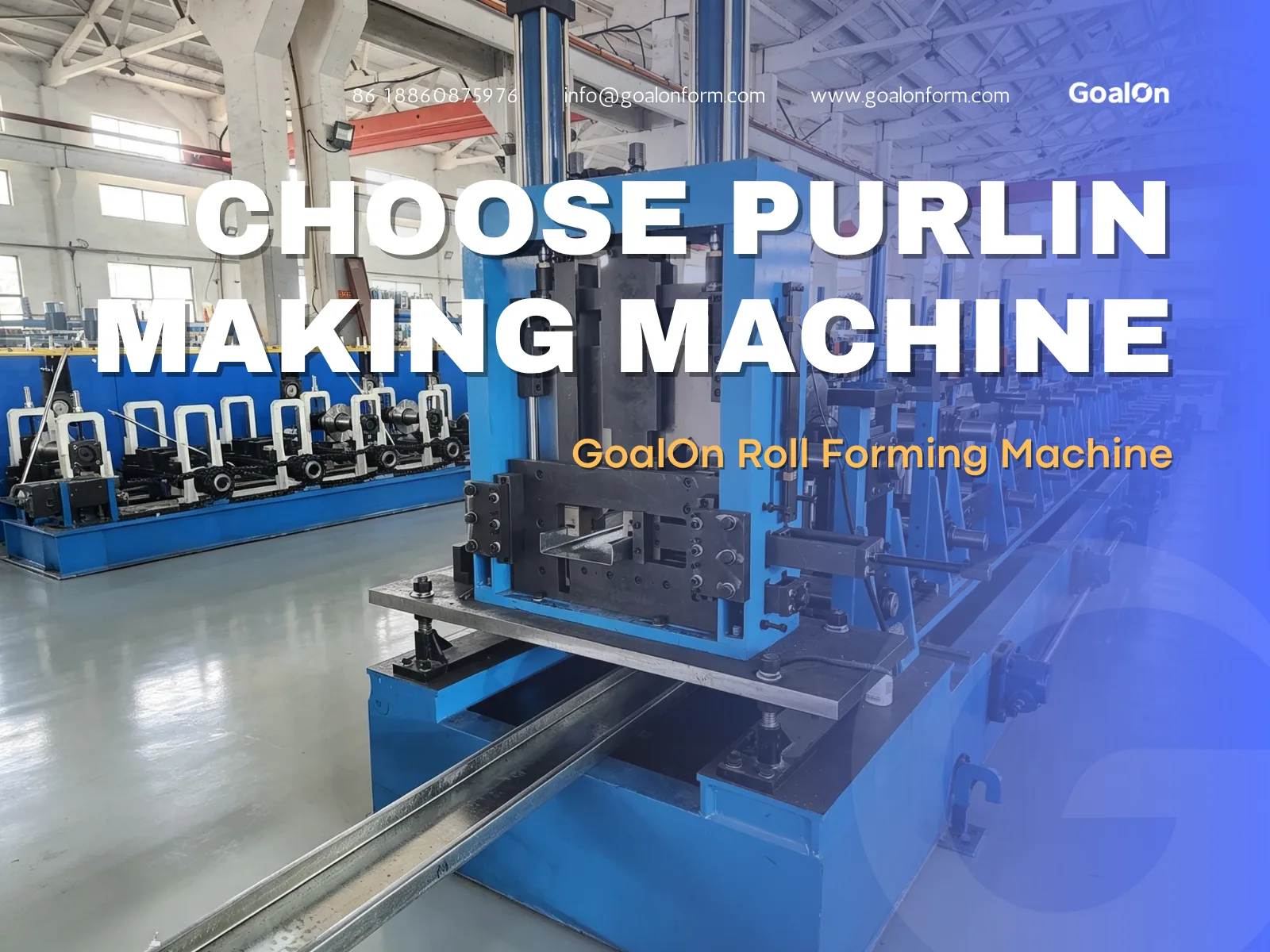
In contrast, structural systems such as C and Z purlin machines operate at lower speeds, typically between 10–30 m/min, because they require size adjustments, punching operations, and handling of thicker materials up to 3.0 mm. The complexity of configuration changes directly limits maximum continuous speed.
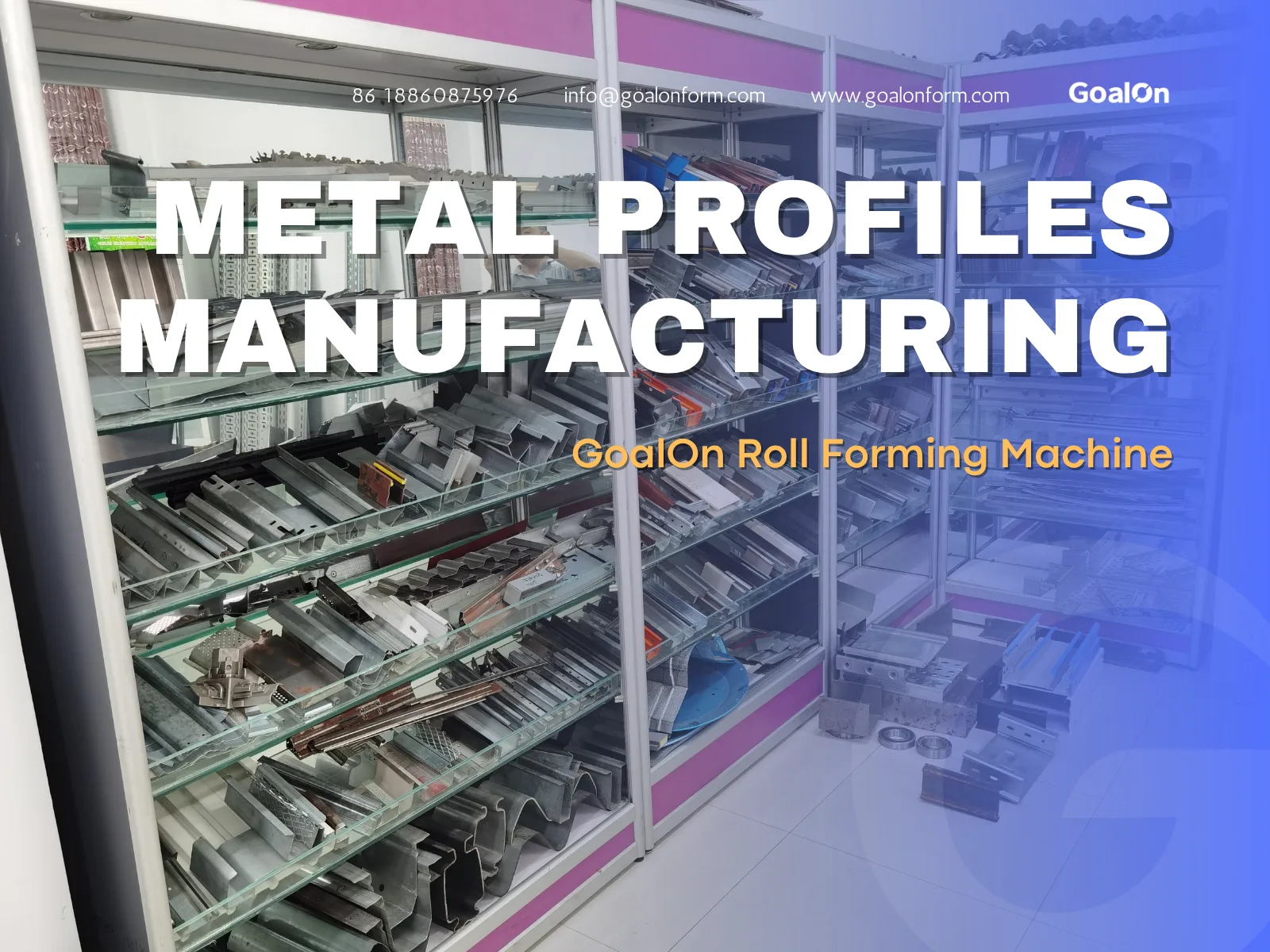
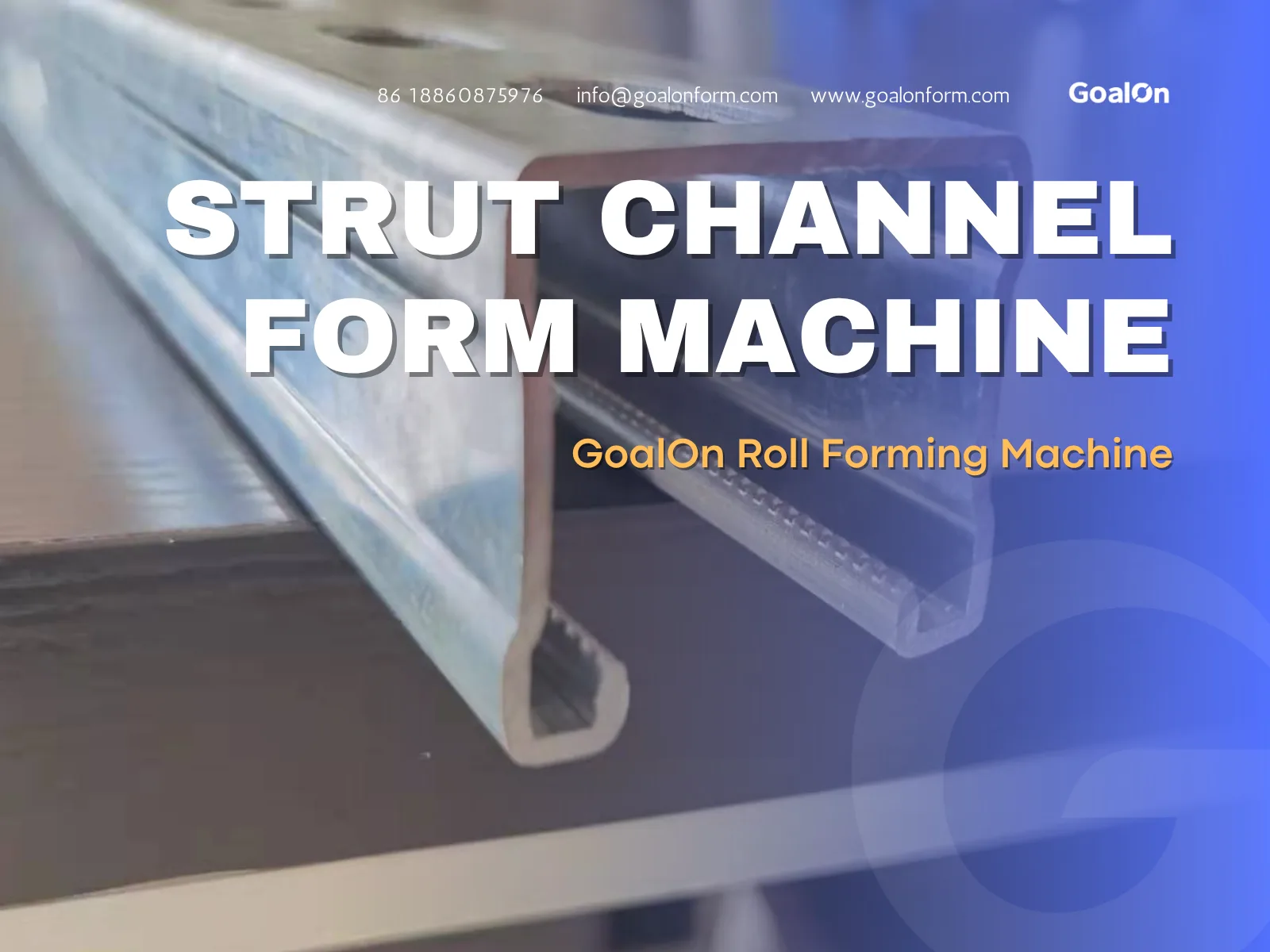
More complex profiles such as cable trays, door frames, and precision architectural components operate in the range of 5–15 m/min, where dimensional accuracy and surface quality are more important than raw throughput.
This comparison clearly shows that speed is always dependent on application logic rather than machine capability alone.
How Mechanical Design Directly Controls Production Speed
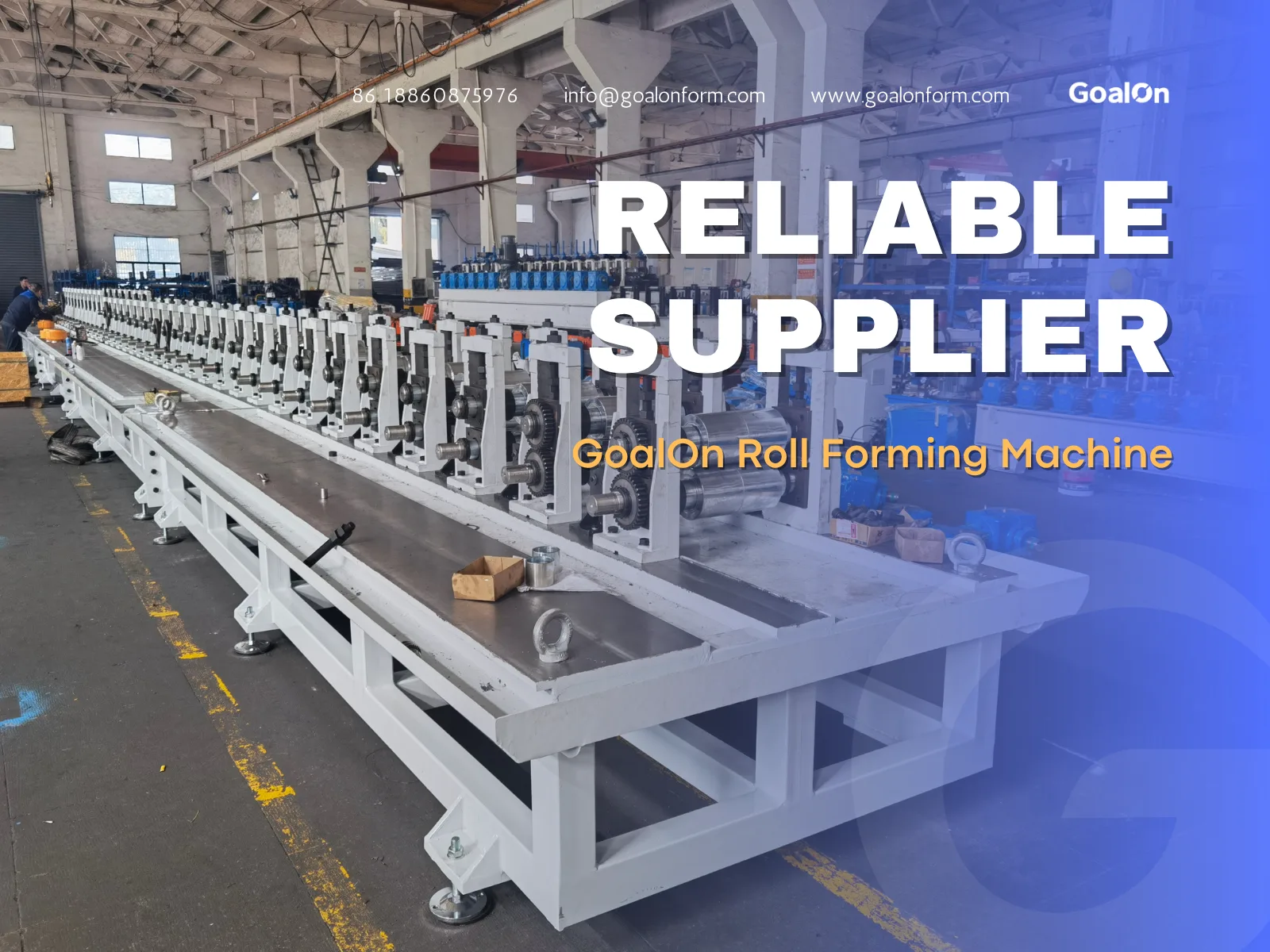
Once application type is defined, the next major influence on speed is mechanical structure. The number of forming stations is one of the most important design variables. A higher number of stations improves forming stability but increases friction and resistance, which naturally limits achievable speed. In engineering terms, more forming passes mean better profile accuracy but lower dynamic efficiency.
Material thickness and strength also significantly impact machine performance. Thin galvanized sheets such as 0.4–0.8 mm can be processed at high speeds, while thicker or high-strength materials like G550 steel require higher forming force and reduce allowable speed to protect rollers and drive systems. This is why heavy-duty structural lines always operate slower than lightweight panel lines.
Another critical factor is the drive system configuration. Chain-driven systems are widely used in standard machines and support medium-speed operation, usually up to around 20–25 m/min. However, gear-driven systems provide better torque stability and synchronization, making them more suitable for high-load or high-speed industrial applications where continuous operation is required.
From a design perspective, speed is not simply “added,” but engineered through a balance of force transmission, roller arrangement, and structural rigidity.
The Role of Cutting, Punching, and Automation in Speed Limitation
Even if the forming section is capable of high-speed operation, downstream processes often become the real bottleneck.
Cutting systems are a key example. Traditional stop-to-cut systems require the line to pause during each cutting cycle, which directly reduces effective output. In contrast, flying shear systems driven by servo control allow continuous movement during cutting, enabling the machine to maintain full line speed without interruption.
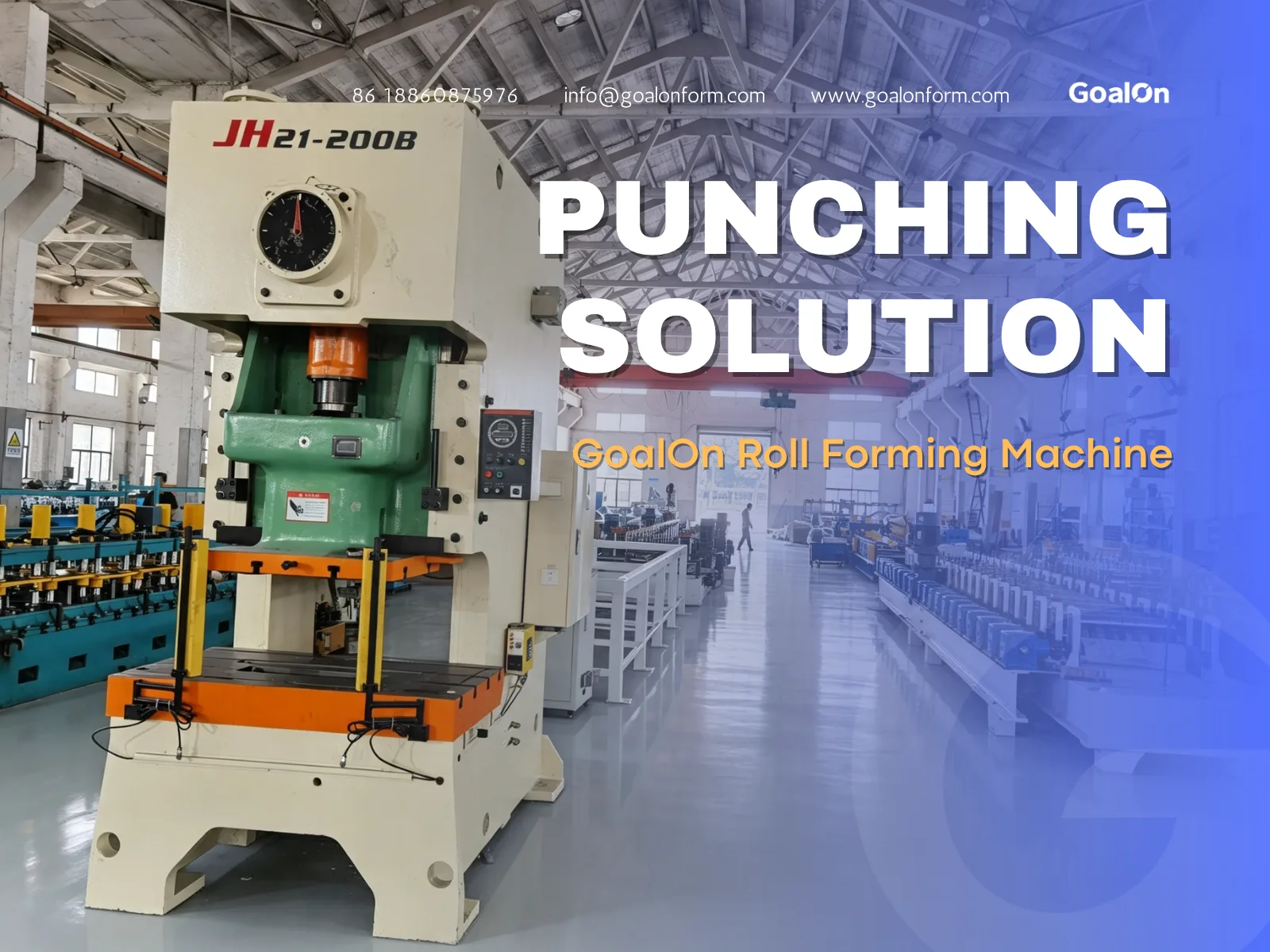
Punching systems introduce another layer of complexity. Hydraulic punching is slower due to pressure buildup time, while servo-driven punching systems offer faster cycle times and better synchronization. When multiple punching stations are required, coordination becomes even more critical, often limiting maximum line speed.
Automation also plays a decisive role. Modern PLC-based control systems combined with servo motors allow precise synchronization between feeding, forming, cutting, and stacking. Without automation, operators must manually adjust or pause processes, which reduces real productivity significantly.
In high-end production lines, speed is no longer controlled by mechanical capability alone but by the synchronization level of the entire automation system.
The Balance Between Speed, Stability, and Product Quality
A common misunderstanding in machine selection is assuming that higher speed automatically means better performance. In reality, roll forming is always a balance between speed and stability.
When a machine operates at maximum speed, several risks increase: profile deformation due to insufficient forming time, surface damage caused by excessive friction, and dimensional deviation caused by vibration or synchronization errors. At the same time, equipment wear also increases, reducing long-term machine life.
For this reason, professional manufacturers usually define an optimal operating speed range, which is typically 10–20% lower than the theoretical maximum. Within this range, the machine achieves stable forming conditions while maintaining acceptable productivity and product consistency.
From an engineering standpoint, stable quality output is always more valuable than unstable high-speed production.
How Professional Buyers Should Evaluate Machine Speed
When evaluating a roll forming machine, speed should never be treated as a standalone specification. Instead, it must be analyzed together with the full production system.
The most reliable approach is to request real production data based on your specific profile, including material type, thickness, and punching or cutting requirements. This ensures that quoted speed reflects actual operating conditions rather than ideal laboratory performance.
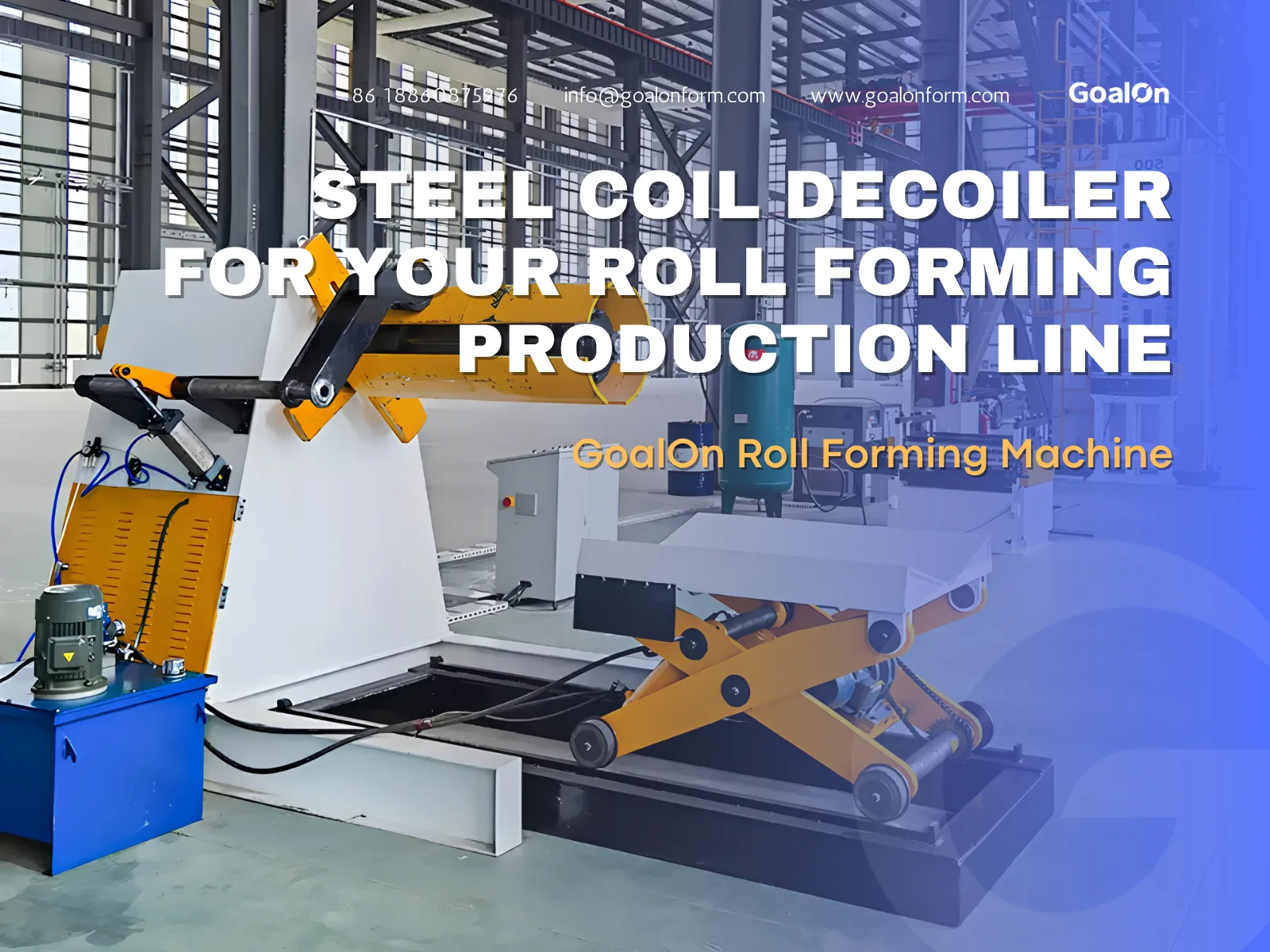
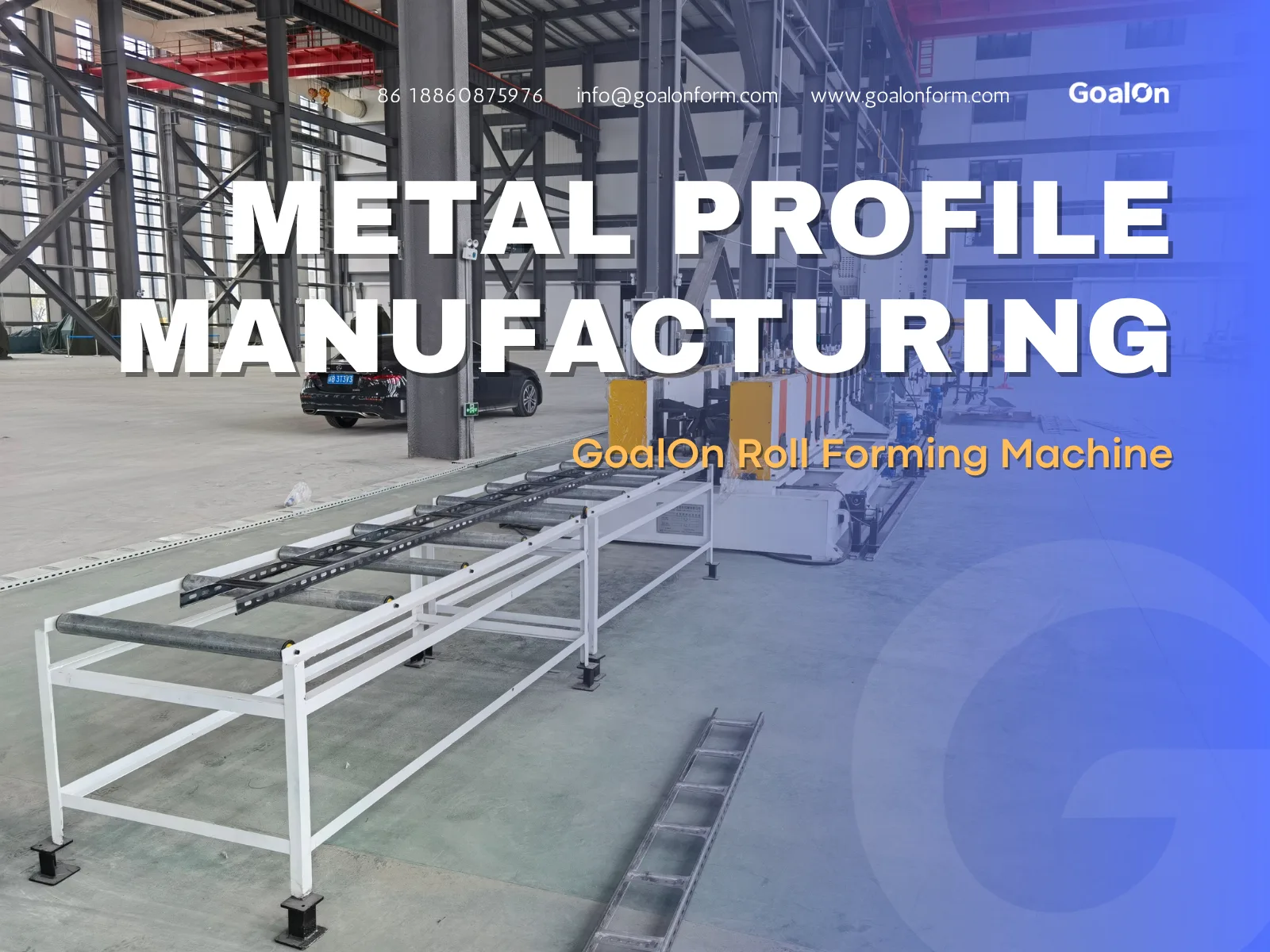
It is also important to evaluate the entire production line, not just the forming machine. Decoiler stability, leveling accuracy, punching synchronization, cutting method, and stacking efficiency all contribute to final output speed. Any weak link in the system will reduce overall productivity regardless of how fast the forming section is.
For long-term investment planning, buyers should also consider whether the system can be upgraded in the future with features such as flying cutting, servo punching, or automatic stacking, as these upgrades can significantly increase production efficiency without replacing the entire line.
Conclusion: Speed Is an Integrated Engineering Result, Not a Fixed Number
The real production speed of a roll forming machine is not defined by a single specification sheet value. It is the result of a carefully balanced system involving mechanical structure, material behavior, automation design, and process coordination.
Different applications naturally require different speed levels, and attempting to maximize speed without considering stability and quality often leads to reduced efficiency in real production environments.
For construction companies, metal profile manufacturers, and machine trading companies, the key is not to search for the fastest machine, but to identify the most stable and well-balanced production system for their specific application.
In modern roll forming technology, true competitiveness does not come from maximum speed alone, but from sustainable high-efficiency production with controlled quality consistency.