In the roll forming industry, machine performance is often discussed in terms of speed, automation level, or price. However, experienced engineers and professional buyers understand that the most critical factor lies elsewhere: the material itself.
The relationship between raw material properties and roll forming machine design is fundamental. Ignoring this connection is one of the most common reasons why a roll forming line fails to meet expectations after installation.
For construction companies, metal profile manufacturers, and machine trading companies, understanding how material characteristics influence equipment configuration is not just technical knowledge—it is a key decision-making advantage.
Material Thickness: The Starting Point of Machine Design
Material thickness is not simply a parameter; it directly determines the structural configuration of the entire roll forming machine.
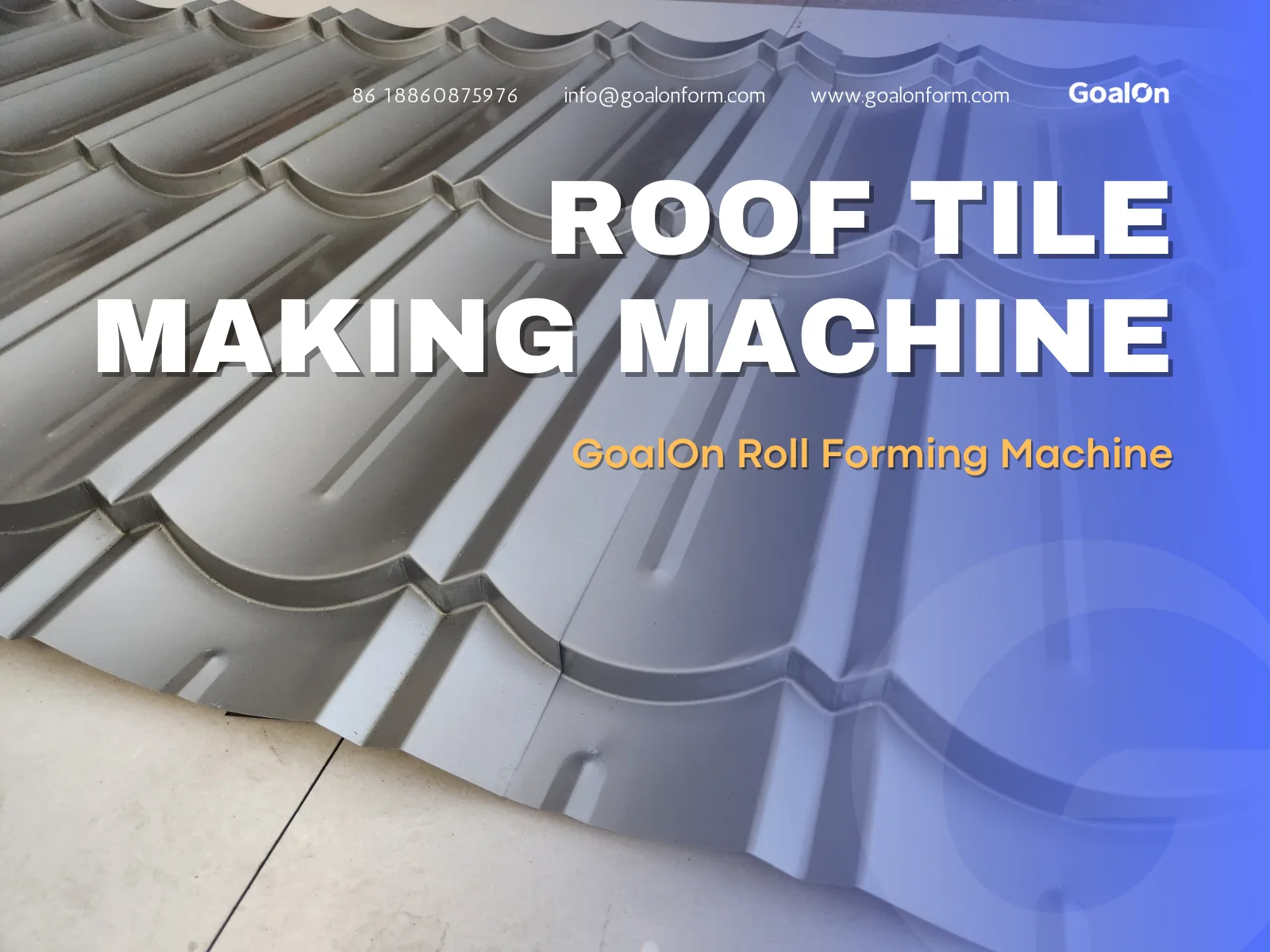
When processing thin materials such as 0.3–0.8 mm pre-painted steel for roofing sheets, machines can operate with lighter frames, smaller shaft diameters, and fewer forming stations. These machines are optimized for speed and cost-efficiency, making them suitable for high-volume production of standard panels.
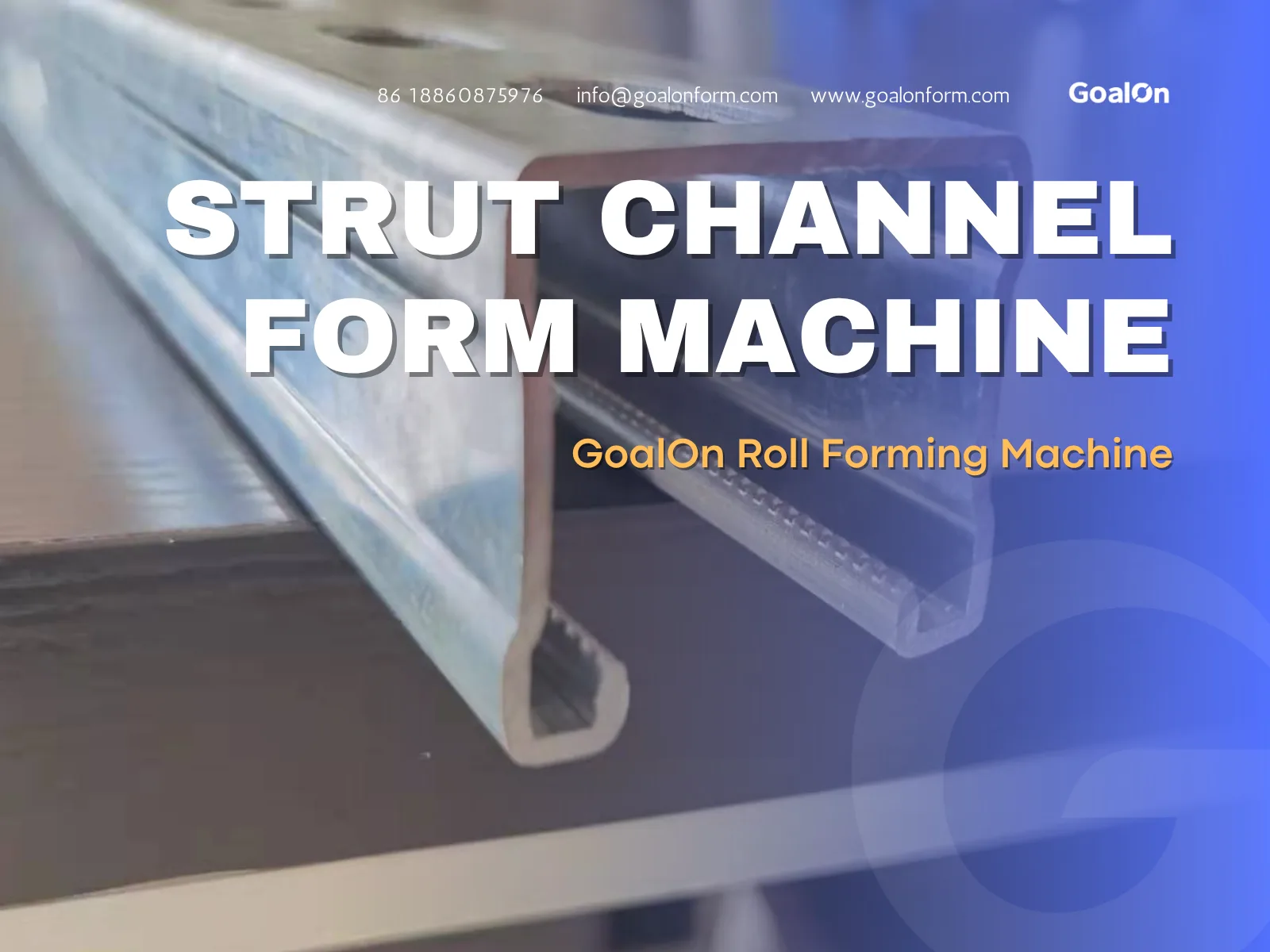
However, when the material thickness increases to 1.5–3.0 mm, commonly used in structural profiles like C purlins or rack systems, the situation changes significantly. The forming force increases exponentially, requiring:
- Heavier machine frames (often H-beam or welded plate structures)
- Larger shaft diameters for higher torque transmission
- More robust transmission systems (gearbox instead of chain in many cases)
- Increased number of forming stations for gradual deformation
Heavier machine frames (often H-beam or welded plate structures)
Larger shaft diameters for higher torque transmission
More robust transmission systems (gearbox instead of chain in many cases)
A mismatch here leads to severe issues: roller wear, shaft deformation, unstable profiles, and even machine damage. This is why professional roll forming machine manufacturers always define the thickness range as the first step in machine design—not as a flexible option.
Yield Strength: The Hidden Factor Behind Forming Difficulty
While thickness is visible and easy to measure, yield strength is often underestimated—yet it plays an equally important role.
Standard mild steel behaves predictably during forming. But high-strength materials (such as G550 or similar grades) introduce additional challenges:
- Higher resistance to deformation
- Increased risk of edge cracking
- Stronger springback effect after forming
To address these challenges, a well-designed roll forming machine must incorporate:
- More forming passes to reduce stress concentration
- Precisely calculated roller contours
- Controlled forming progression to avoid sudden deformation
From an engineering perspective, this is where real expertise becomes evident. Two machines may look similar externally, but their tooling design can differ significantly depending on the material grade.
For buyers, especially machine trading companies, understanding this difference is crucial. A machine that works perfectly with mild steel may fail when processing high-strength material—leading to customer complaints and costly adjustments.
Coating Type and Surface Sensitivity
In modern construction and manufacturing, coated materials such as galvanized steel (GI), pre-painted steel (PPGI), and aluminum coils are widely used. These materials introduce another layer of complexity: surface protection.
Unlike bare steel, coated materials require careful handling during the forming process. Poorly designed machines can cause:
- Scratches on painted surfaces
- Zinc layer damage on galvanized coils
- Surface waviness due to uneven pressure
To prevent these issues, high-quality roll forming machines are equipped with:
- Polished or chrome-coated rollers
- Optimized forming pressure distribution
- Stable guiding systems to prevent material deviation
For customers producing visible products such as roofing panels, wall cladding, or door frames, surface quality is directly linked to market competitiveness. A small scratch can lead to product rejection.
Beyond the Machine: Matching the Entire Roll Forming Line
Material selection does not only affect the roll forming machine itself—it influences the configuration of the entire roll forming line.
Par exemple :
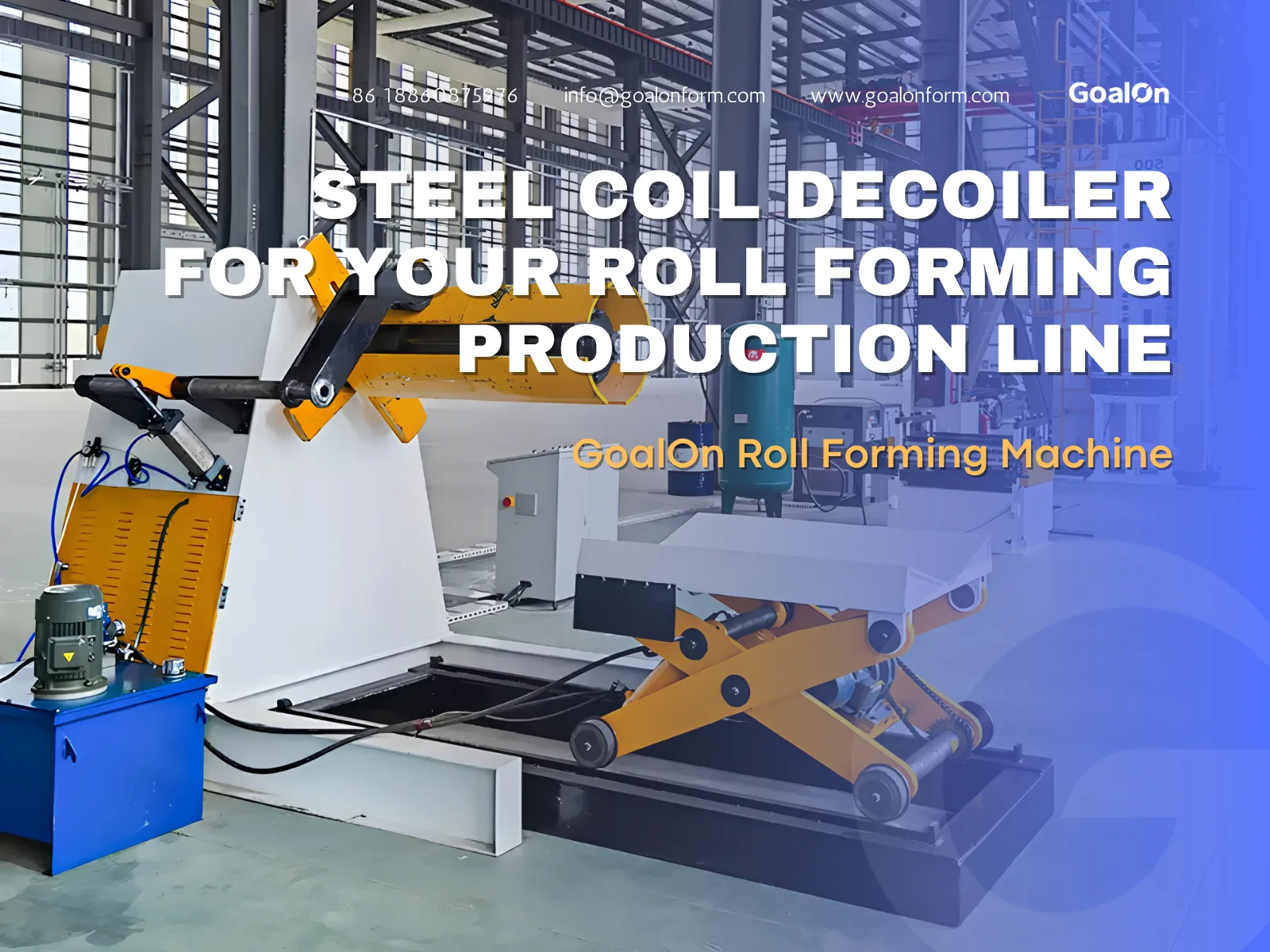
- High-strength and thick materials require stronger decoilers with hydraulic expansion
- Leveling units must be more precise to eliminate internal stress before forming
- Cutting systems (hydraulic or servo tracking) must handle higher loads without deformation
A common mistake is to focus only on the forming machine while underestimating auxiliary equipment. In reality, a mismatch in any section of the line can reduce overall production efficiency.
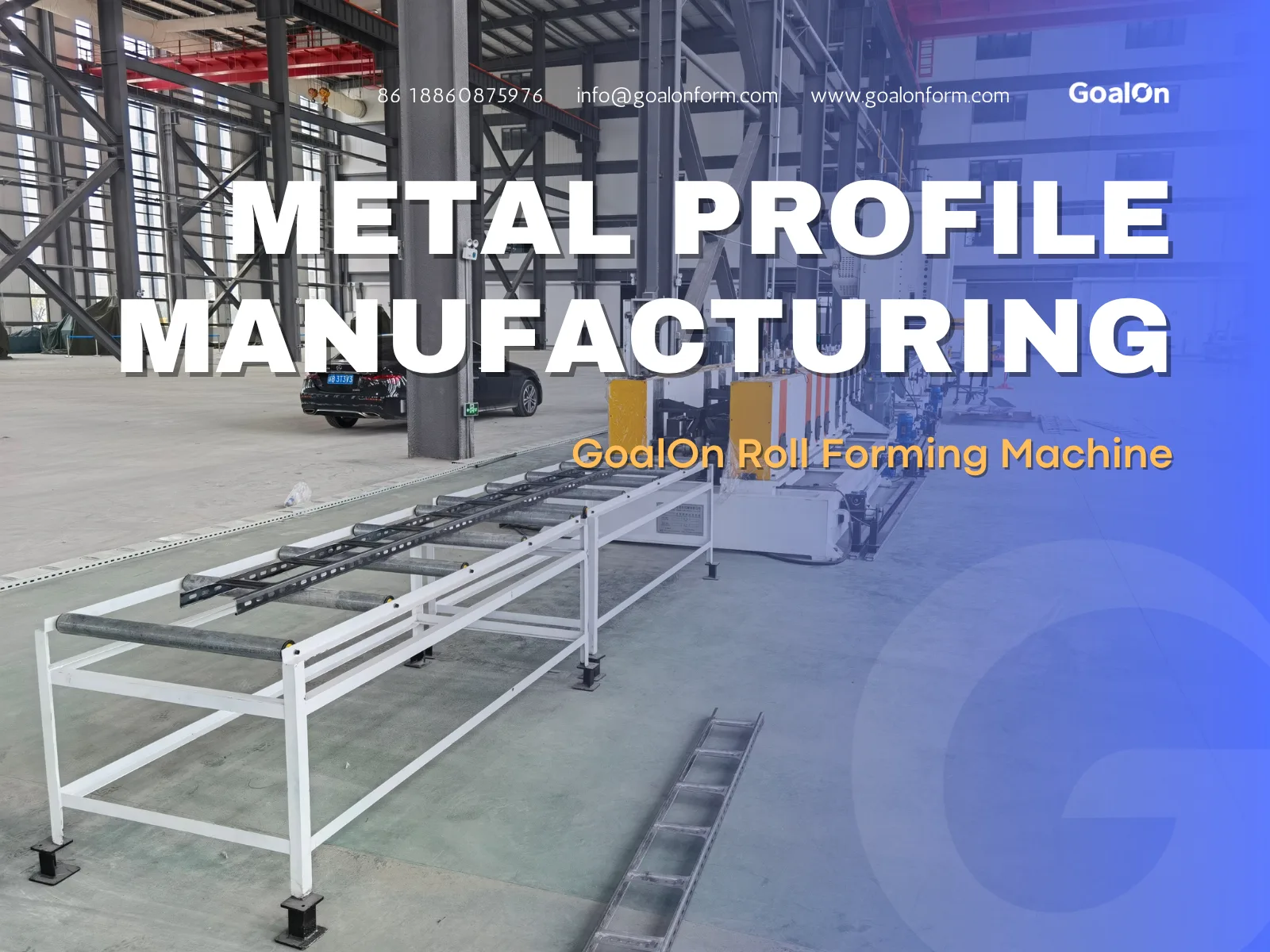
Professional suppliers typically evaluate the full process: decoiling → leveling → forming → cutting → stacking. This system-level approach ensures stable and continuous production.
Practical Insights for Buyers
From a procurement perspective, selecting the right roll forming machine is not about choosing a standard model—it is about defining a solution based on material.
Here are several practical recommendations:
- Always provide detailed material specifications (thickness range, yield strength, coating type)
- Confirm whether the machine design is customized or based on a generic model
- Ask for previous project references using similar materials
- Evaluate whether the supplier understands forming challenges such as springback and cracking
For construction companies and profile manufacturers, this reduces operational risk. For machine trading companies, it ensures long-term customer satisfaction and fewer after-sales issues.
Conclusion
In roll forming, the material is not just an input—it is the foundation of the entire process. Thickness, yield strength, and coating type define how a roll forming machine should be designed, configured, and operated.
For buyers who take material selection seriously, the result is clear: stable production, consistent product quality, and a machine that truly delivers long-term value.
Understanding this relationship is what separates a standard purchase from a successful investment in a roll forming line.