1. Understanding the Real Value of Purlins in Modern Steel Buildings
In steel construction, purlins are far more than secondary components. They are load-distribution elements that directly influence the stability, lifespan, and installation efficiency of the entire structure.
C, Z, and U purlins are widely used across industrial buildings, warehouses, and commercial projects. Their role is to transfer loads from roofing and cladding systems to the primary steel frame, ensuring even stress distribution.
From a production perspective, this means one thing:
Any deviation in geometry, hole position, or straightness will directly affect installation accuracy and structural safety.
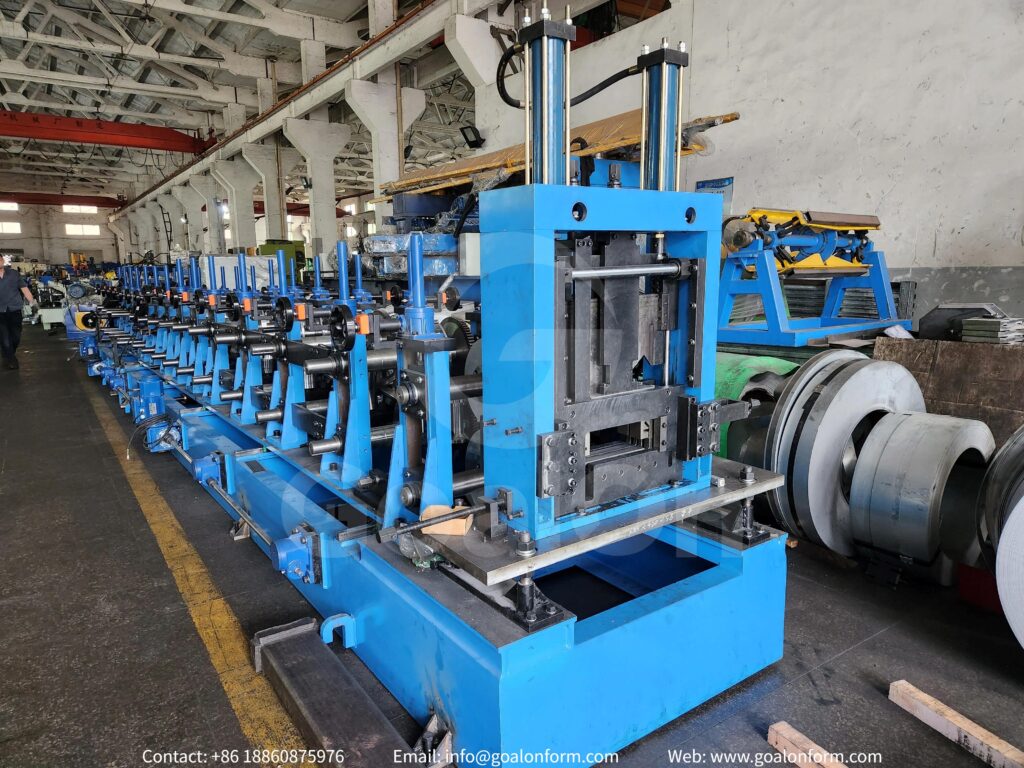
That’s why investing in a high-performance purlin roll forming machine is not just about production—it’s about controlling construction quality at the source.
2. What Defines a High-Performance Purlin Roll Forming Machine
A modern purlin roll forming line is no longer a simple forming unit. It is a fully integrated system designed for precision, flexibility, and continuous production.
Key capabilities include:
- Multi-profile compatibility
One machine can produce C, Z, and sometimes U profiles with adjustable dimensions. - Automatic size adjustment (CZ interchangeable systems)
Reduces changeover time from hours to minutes, critical for project-based production. - Integrated punching solutions
Hole patterns, slots, and connection points can be completed inline. - Stable forming structure
Gearbox or chain-driven systems ensure forming consistency for thicker materials (1.5–3.0 mm typical). - Precision cutting system
Hydraulic or servo tracking cutting ensures clean edges and accurate length control.
For metal profile manufacturers, these features translate into:
higher throughput, lower labor dependency, and consistent product quality.
3. Complete Production Line Layout (From Coil to Finished Purlin)
A well-designed purlin roll forming line typically follows a structured process. Based on real industrial configurations, the most efficient layout includes:
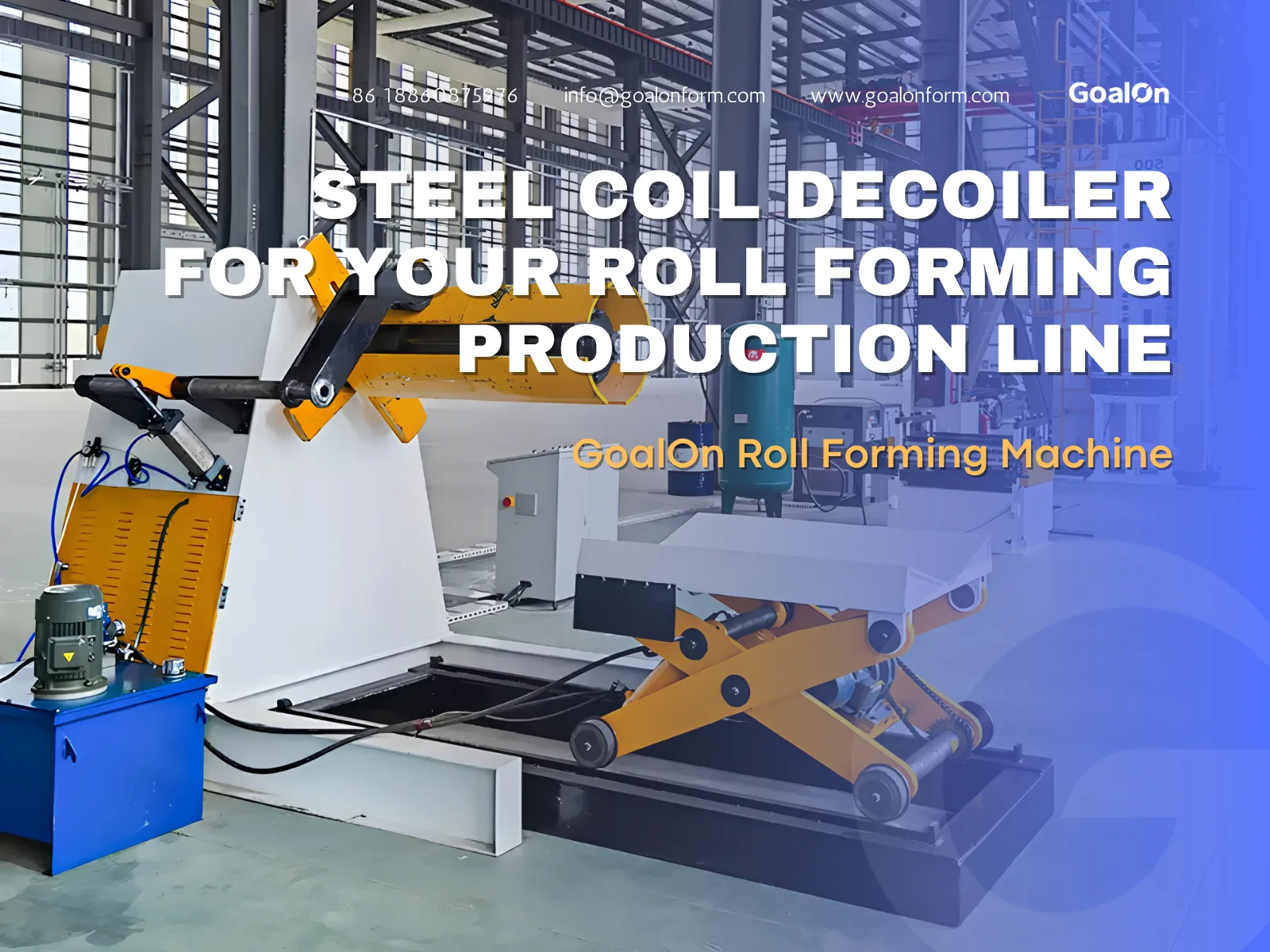
1) Decoiling Section
- Manual or hydraulic decoiler (3T–5T common)
- Optional loading car for automation
- Function: stable coil feeding without material deformation
2) Leveling System
- Essential for removing coil stress
- Directly affects forming accuracy and straightness
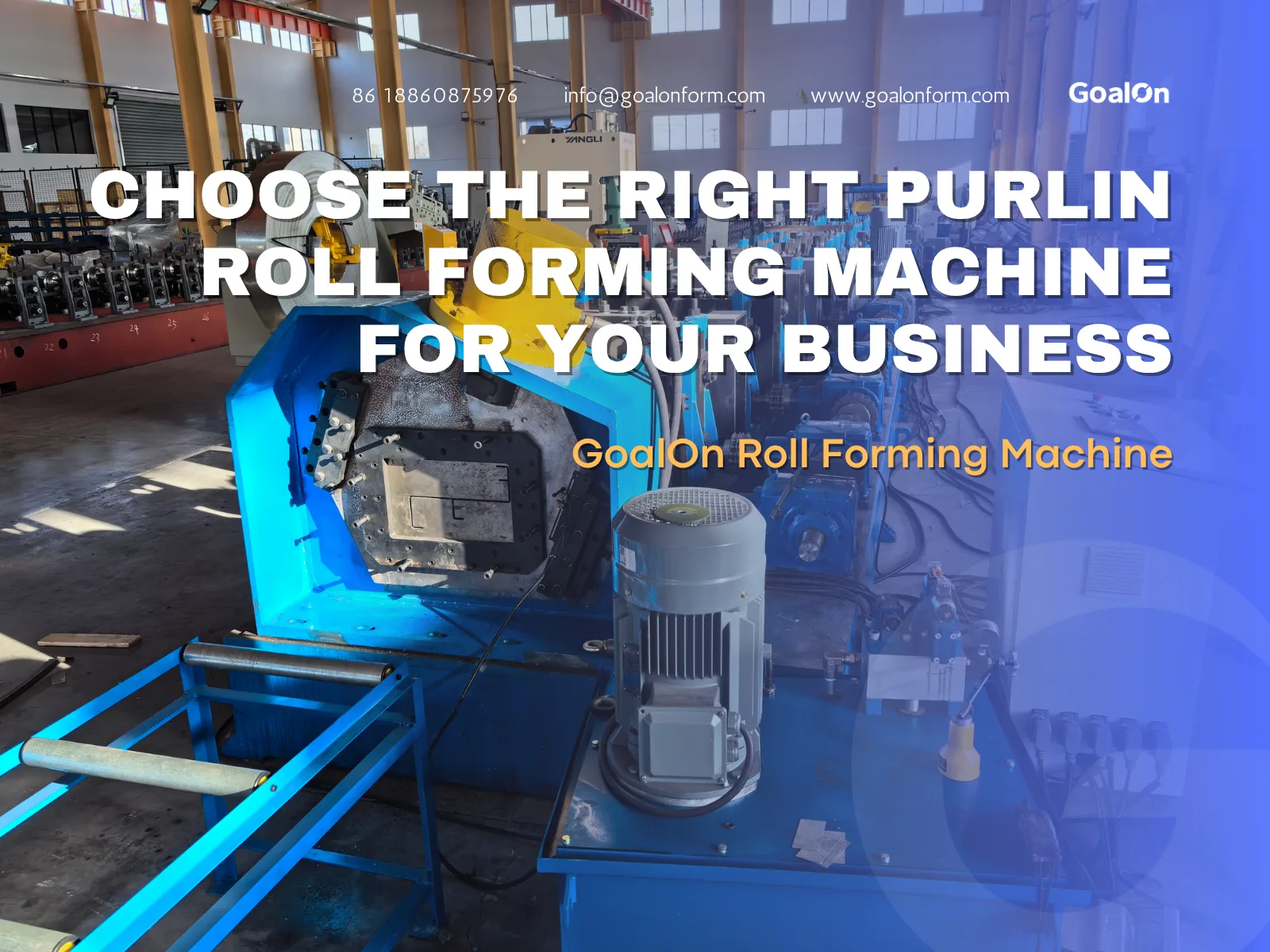
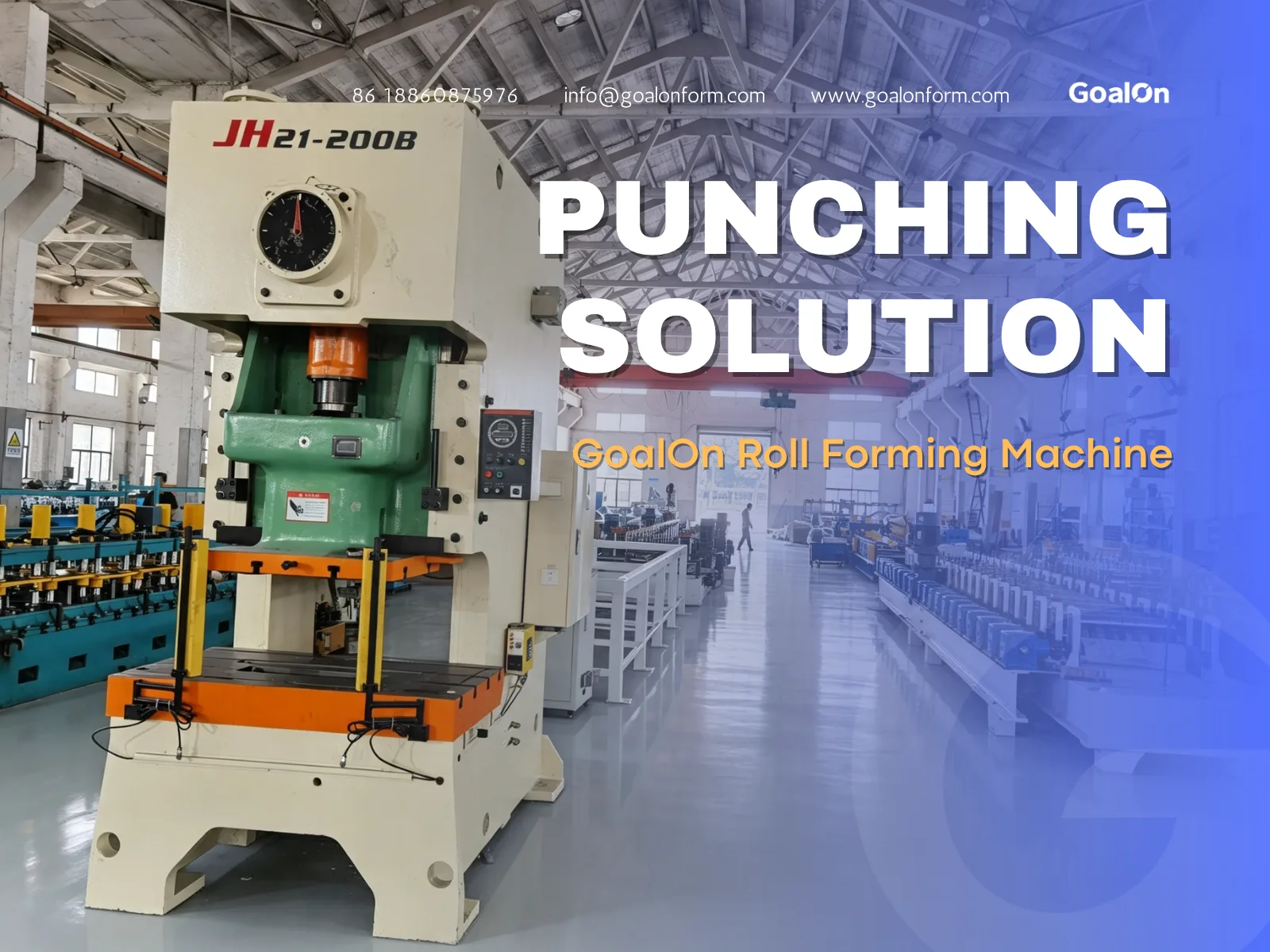
3) Punching Unit
- Hydraulic or servo punching
- Pre-punching is common for high precision hole positioning
4) Pre-Cutting (Optional)
- Used in flexible production systems
- Allows quick size switching without stopping the line
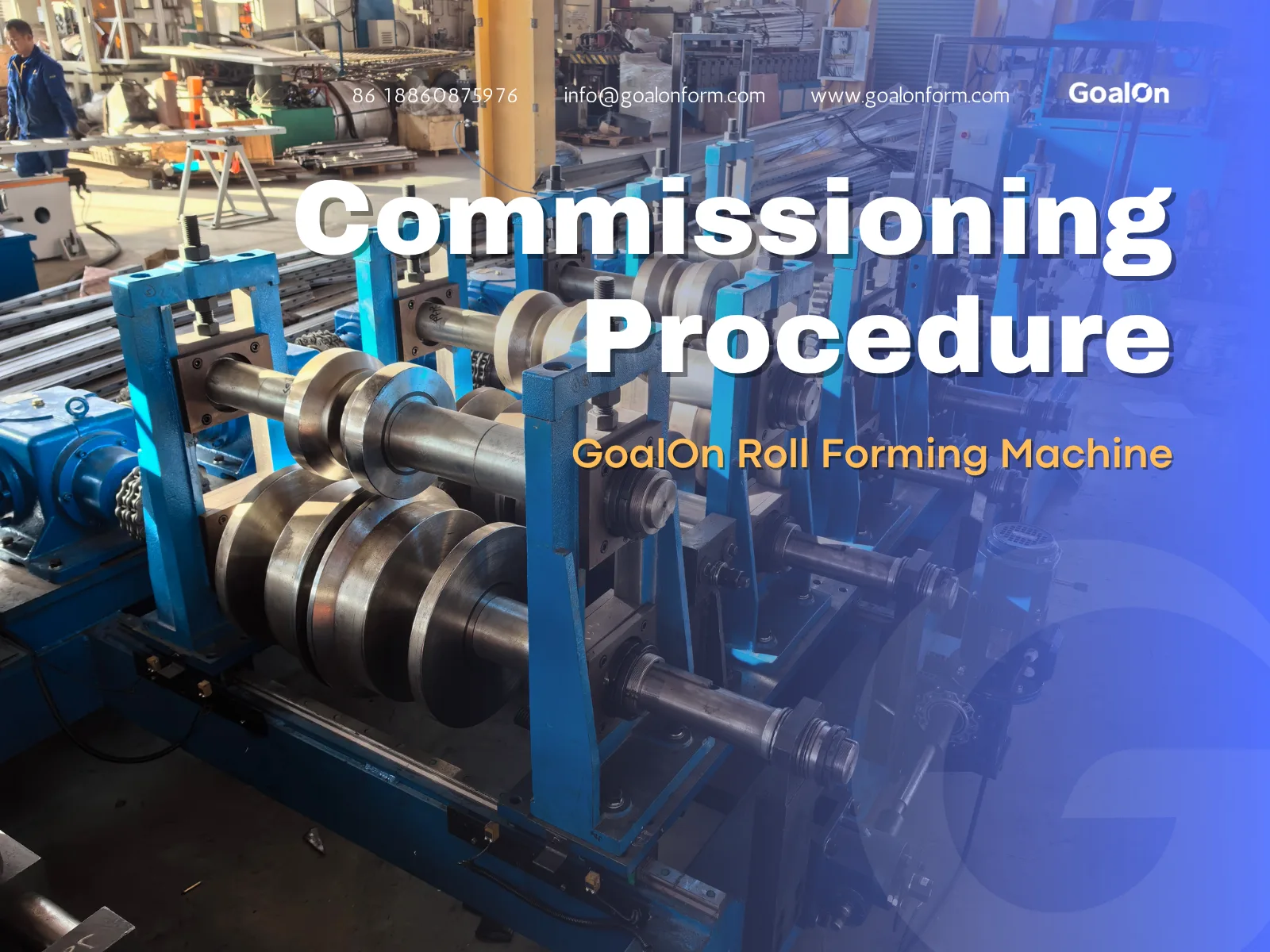
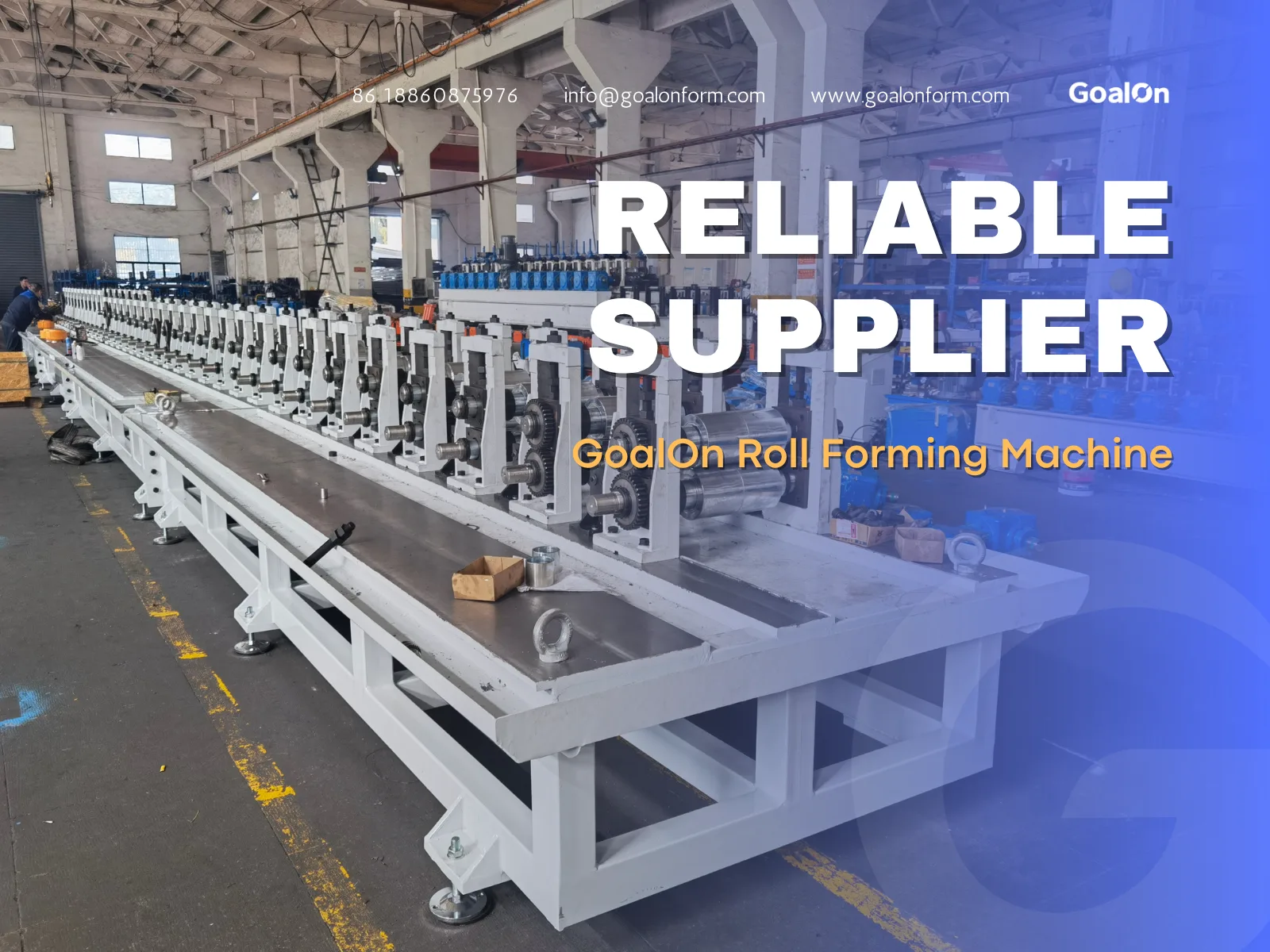
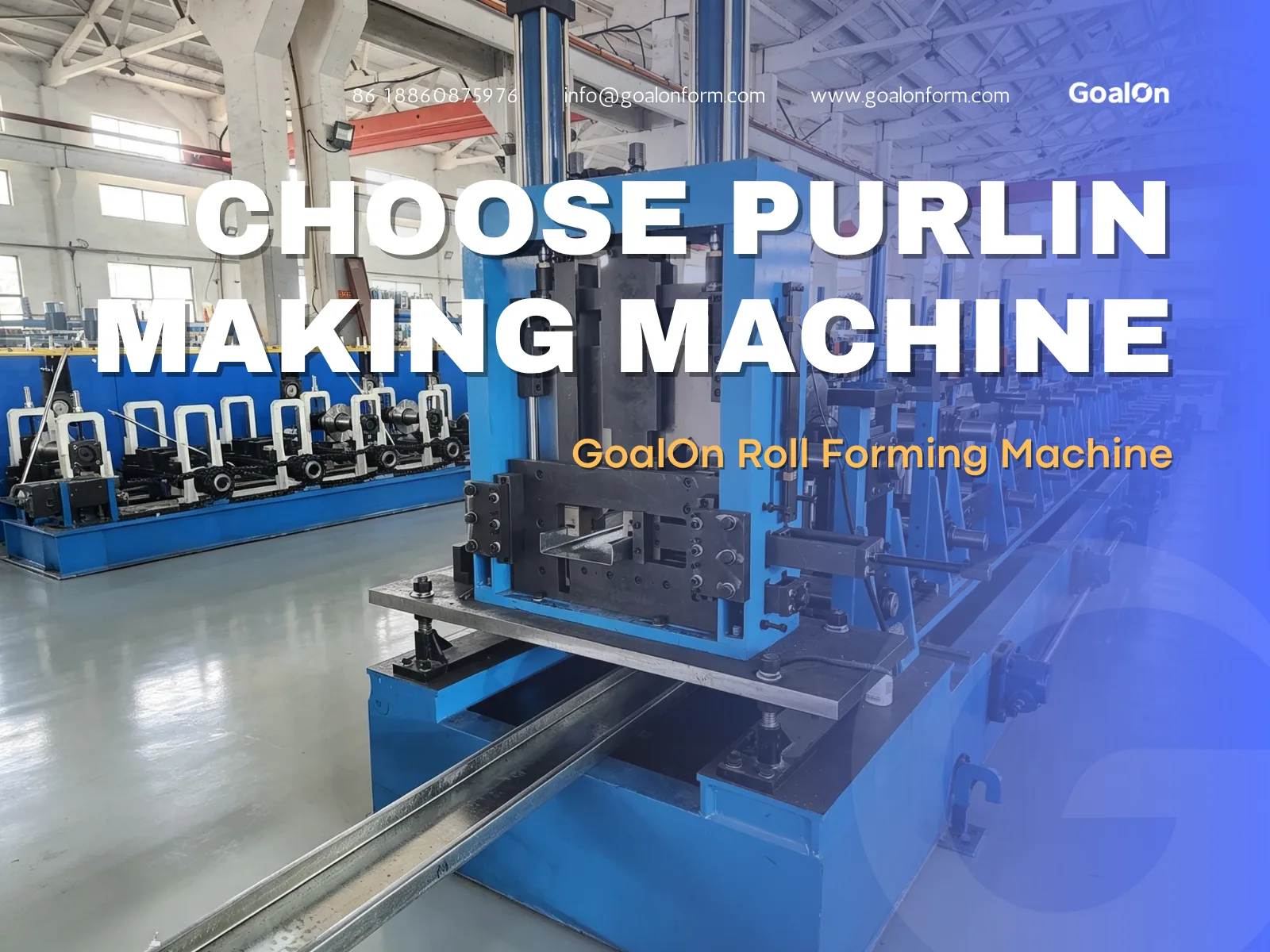
5) Roll Forming Machine
- Core unit with 14–20+ forming stations
- Chain or gearbox transmission depending on thickness
6) Post-Cutting / Flying Cutting
- Stop-cutting: lower cost, suitable for medium speed
- Flying cutting: continuous production, higher efficiency
7) Output System
- Manual run-out table or automatic stacker
- Impacts labor cost and downstream logistics
This modular structure allows buyers to customize the line based on budget, speed, and automation level.
4. Key Technical Decisions That Directly Impact ROI
Choosing a purlin roll forming machine is not just about specifications—it’s about matching configuration to your business model.
A. Manual vs Automatic Size Adjustment
- Manual: lower cost, longer setup time
- Automatic: ideal for projects with frequent size changes
B. Pre-Punching vs Post-Punching
- Pre-punching: higher accuracy, better for structural connections
- Post-punching: more flexible but may affect positioning precision
C. Stop Cutting vs Flying Cutting
- Stop cutting: economical, suitable for standard production
- Flying cutting: essential for high-speed, large-volume orders
D. Transmission System
- Chain drive: cost-effective, easy maintenance
- Gearbox drive: higher stability for thick materials and heavy-duty production
A wrong configuration can lead to:
- Pannes fréquentes
- Material waste
- Low production efficiency
A correct configuration ensures:
maximum uptime, stable output, and faster return on investment.
5. Advanced Trends: Where Purlin Roll Forming Is Heading
The industry is moving toward automation, flexibility, and digital control.
Emerging trends include:
- Fully automatic CZ change systems (motorized adjustment)
- Servo-controlled punching and feeding
- Remote diagnostics and PLC integration
- Conception d'outillage à changement rapide
For machine trading companies and large manufacturers, these upgrades are no longer optional—they are becoming standard expectations in competitive markets.
6. Why Engineering Experience Matters More Than Price
A purlin roll forming machine is a long-term production asset. Its performance depends heavily on:
- Roll tooling design accuracy
- Material deformation understanding
- Structural rigidity of the machine
- Alignment precision during assembly
Manufacturers with real engineering and field experience can:
- Optimize forming passes
- Reduce material stress and deformation
- Ensure stable operation over years
In contrast, poorly designed machines often result in:
- Torsion du profilé
- Inconsistent hole alignment
- Frequent maintenance issues
For buyers, this means higher hidden costs over time.
7. How to Choose the Right Supplier for Your Market
If your target customers are in construction, manufacturing, or equipment trading, you should evaluate suppliers based on:
- Proven project cases (especially similar profiles)
- Ability to customize full production lines
- Technical support and commissioning experience
- Availability of upgrade options (automation, stacking, etc.)
A reliable supplier is not just a machine provider, but a long-term production partner.
8. Conclusion: Building a Competitive Advantage with the Right Machine
A well-configured purlin roll forming machine does more than produce profiles—it defines your production efficiency, product quality, and market competitiveness.
For steel structure manufacturers and metal profile producers, the key is not simply buying a machine, but building a complete, optimized roll forming solution.