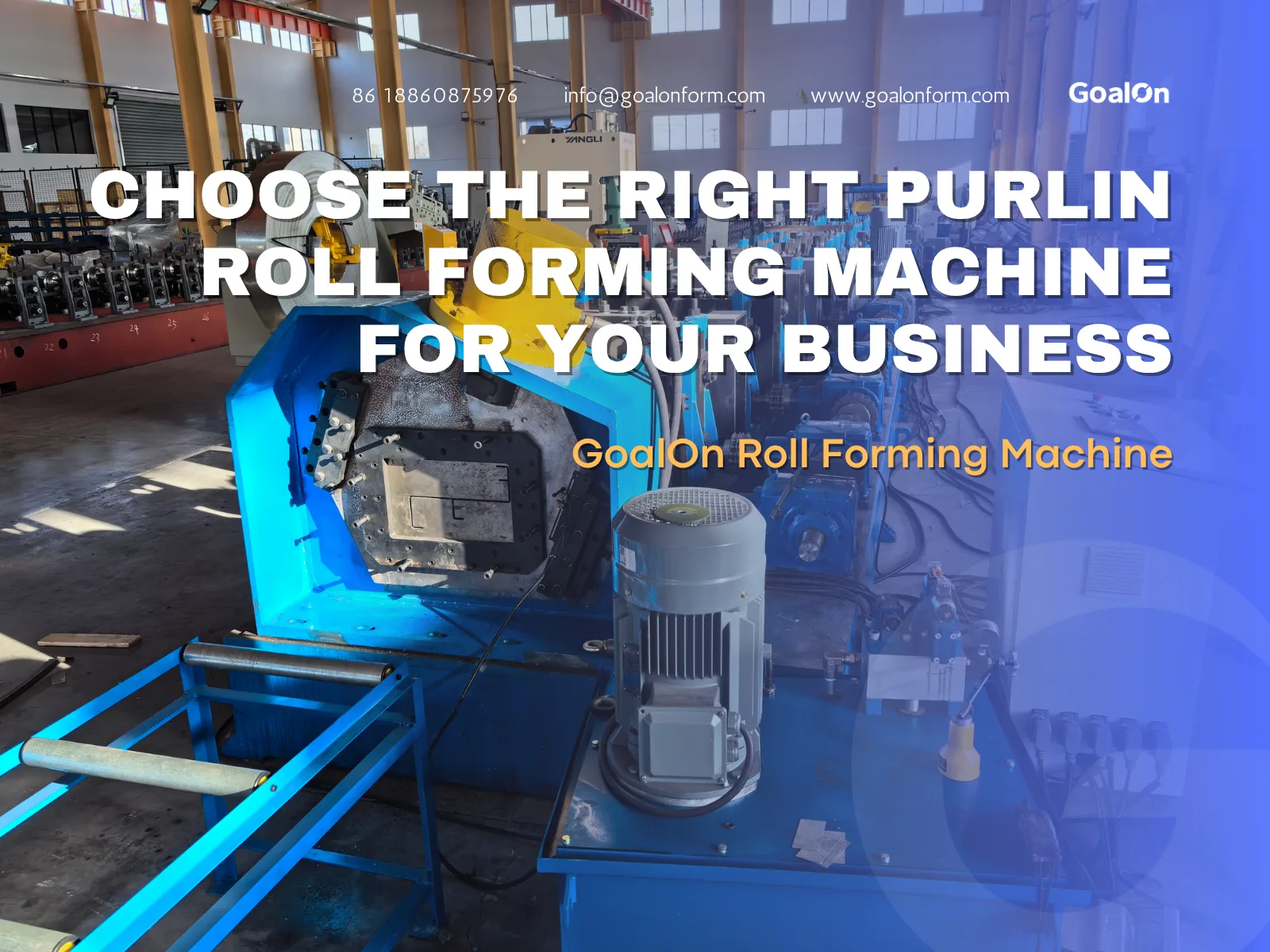
How to Choose the Right Purlin Roll Forming Machine
Choosing the right पर्लिन रोल फॉर्मिंग मशीन is a critical decision for steel structure manufacturers and construction companies. The machine directly affects production efficiency, profile accuracy, material waste and long-term operating costs.
Unlike simple metal forming equipment, a professional purlin production line must match your required profile size, steel thickness, production volume and automation requirements.
Understanding your project requirements is the first step in selecting the right machine. Consider the types of purlins needed and the materials used.
Production capacity is another critical factor. The machine should match your project’s scale and timeline.
Automation and ease of use can significantly impact production efficiency. Look for machines with adjustable settings for flexibility.
Budget constraints also play a role in the decision-making process. Compare prices and features to find the best value.
Finally, consider the manufacturer’s reputation and after-sales support. This ensures long-term reliability and service.
What Is a Purlin Roll Forming Machine?
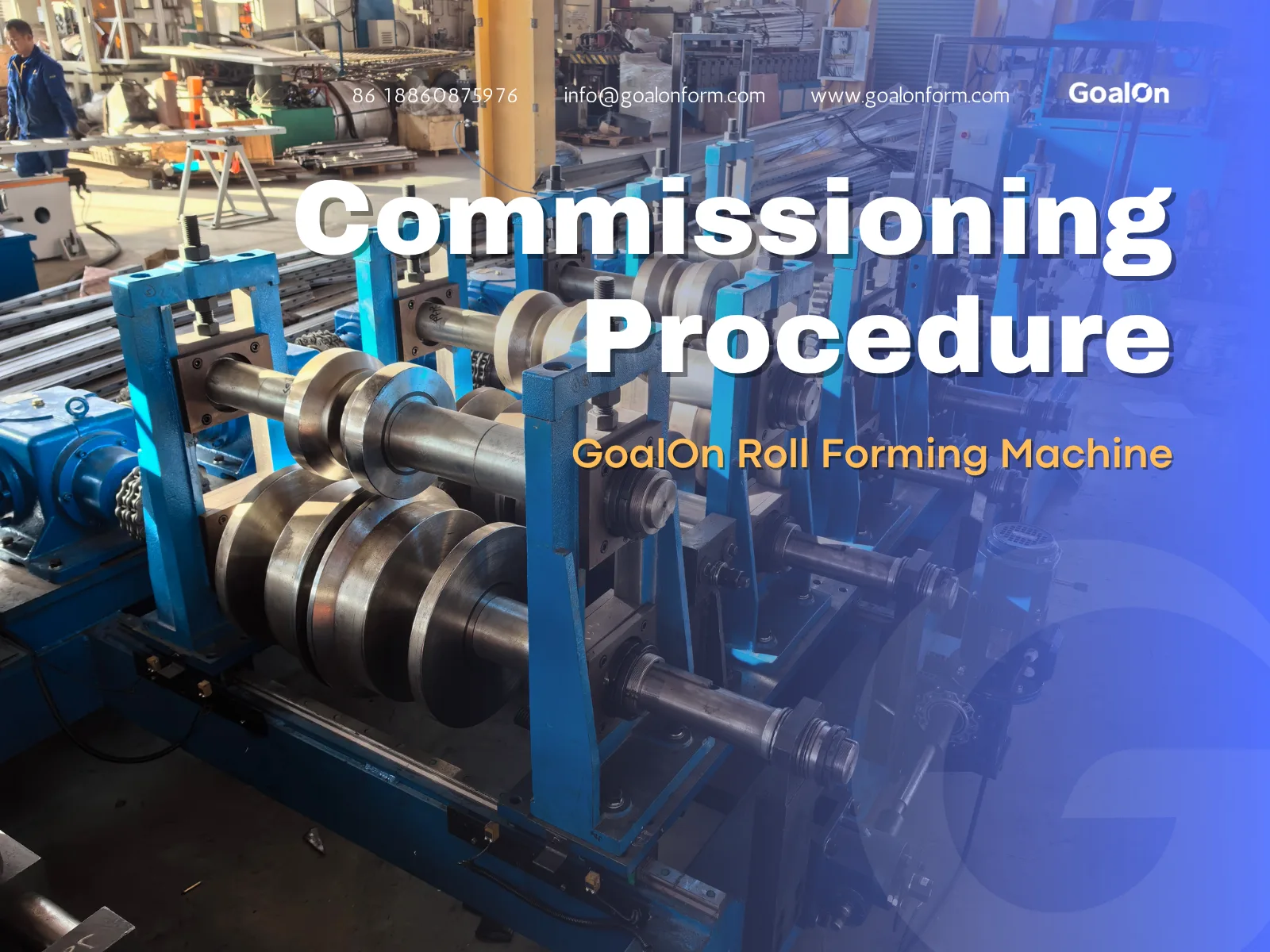
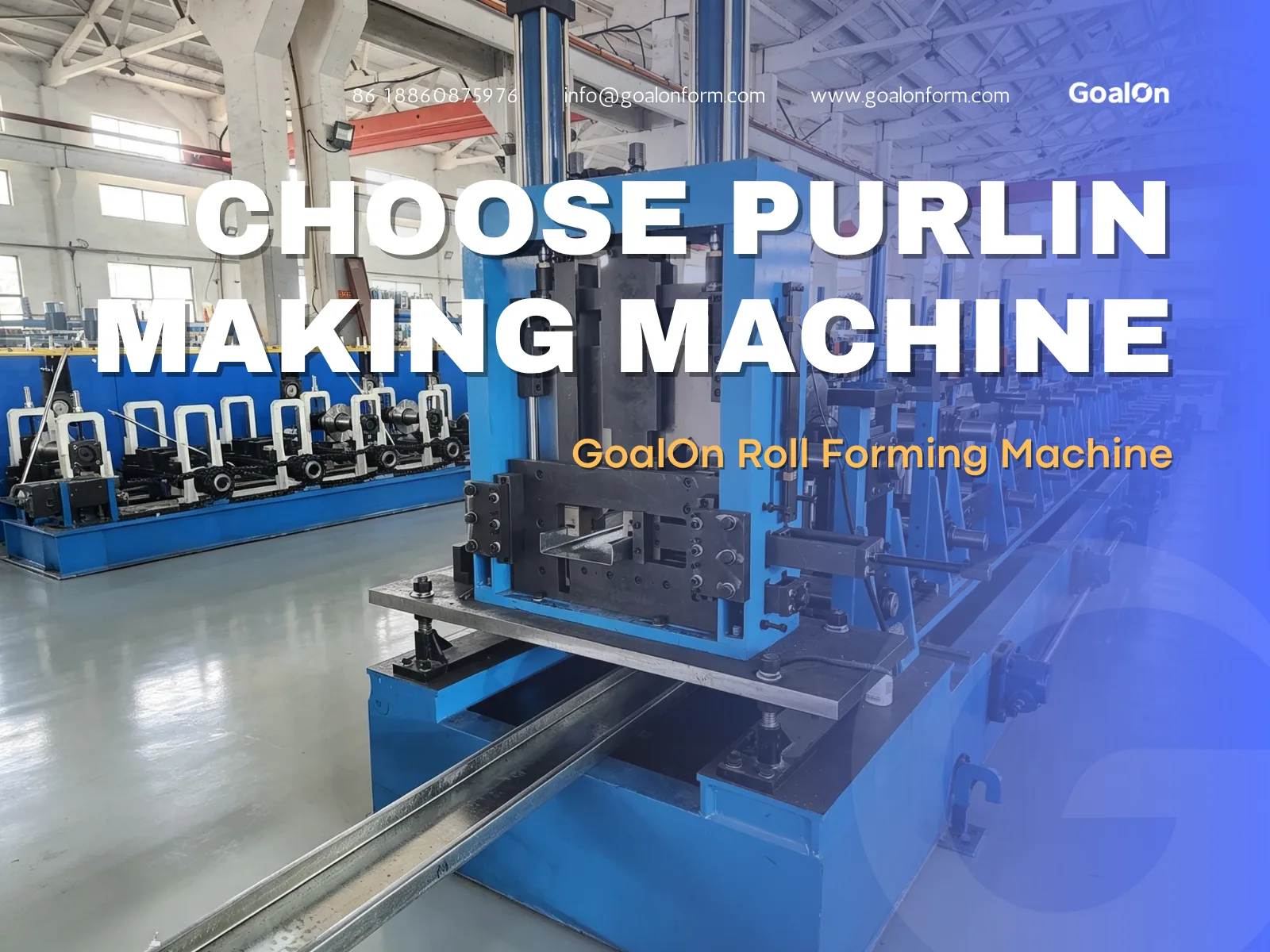
A पर्लिन रोल फॉर्मिंग मशीन uses continuous cold roll forming technology to transform steel coils into accurate structural profiles. They are designed for shaping metal sheets into purlins. These purlins then form integral parts of a building’s structure.
The machines operate through a process called metal roll forming. This involves passing metal sheets through a series of rollers. Each roller set progressively shapes the metal into the desired profile.
Several factors define these machines. Their design, speed, and automation level are some key aspects. Knowing these features helps in selecting the ideal machine for your needs.
Consider the variety of machines available. Some are manual, requiring direct human input. Others are semi-automatic or fully automatic, offering more efficiency and precision.
Key features of metal purlin making machines include:
- Ability to produce different purlin profiles.
- Compatibility with various metal types and thicknesses.
- Levels of automation for labor efficiency.
- Speed and capacity to meet project timelines.
- Adjustability for different purlin dimensions.
This understanding lays the foundation for making informed decisions in your machinery purchase. Choosing the right पर्लिन रोल फॉर्मिंग मशीन helps manufacturers improve productivity and reduce production costs.
Types of Purlin Roll Forming Machines
Choosing the right type of metal purlin making machine is crucial. Different machines serve various project needs. Understanding these types aids in matching them to your specific requirements.
There are several primary types of machines. The main categories include manual, semi-automatic, and fully automatic machines. Each type offers distinct advantages, depending on your project scale and complexity.
Manual machines require more human input and are often suited for smaller projects. They provide control over the production process but can be slower.
Semi-automatic machines strike a balance. They offer more automation than manual types, while still allowing for human oversight. These are ideal for medium-sized projects needing moderate production speed.
Fully automatic machines deliver high efficiency and speed, perfect for large-scale operations. They require minimal human intervention and often include advanced features.
The benefits of each type:
- Manual Machines: Affordable, greater control
- Semi-Automatic Machines: Balance of control and efficiency
- Fully Automatic Machines: Speed, productivity, and minimal labor requirements
Understanding these types ensures you choose a machine that aligns perfectly with your construction project’s needs.
Key Factors Before Buying a Purlin Machine
Before purchasing a metal purlin making machine, several critical factors should guide your decision. Each factor influences your project’s success and long-term investment.
Firstly, understand your specific project needs. Define the types and shapes of purlins required, such as C, Z, or U shapes. Ensure the chosen machine can produce these efficiently.
Next, consider the machine’s production capacity. The capacity should align with your project’s scale and timeline. A mismatch could lead to delays or inefficiencies.
Material compatibility is also crucial. Some machines handle various metals like steel or aluminum better than others. Ensure your machine matches your material specifications.
Automation level impacts production efficiency. High automation can save time and reduce labor costs, but may also require skilled operators.
Ease of operation is essential for smooth production processes. User-friendly machines reduce training time and errors.
Flexibility in settings is beneficial. Machines with adjustable settings cater to different purlin dimensions, enhancing versatility.
Assess energy consumption and operational costs. Efficient machines help control expenses and maintain sustainability in operations.
Don’t overlook industry standards and safety regulations. Compliance ensures safe operations and avoids legal issues.
महत्वपूर्ण कारकों में शामिल हैं:
- Production Capacity: Matches project scale
- सामग्री अनुकूलता: Suitable for specific metals
- स्वचालन स्तर: Balances efficiency and labor requirements
- Ease of Operation: Simplifies training and usage
- Adjustable Settings: Provides versatility
- Energy Efficiency: Reduces costs
Ensuring all these factors align with your needs will maximize the value of your investment. Take time to research and compare options thoroughly. This preparation ensures you select the most suitable machine.
Technical Specifications You Should Compare
Before purchasing a purlin roll forming machine, buyers should carefully evaluate the key specifications that directly affect production efficiency, profile quality, machine durability, and operating costs. A machine with the right configuration can help avoid production problems such as inaccurate profiles, excessive material waste, and frequent maintenance.
Different construction projects require different purlin sizes, materials, and production capacities. Therefore, the machine specifications should be matched with your actual production requirements, including purlin profiles, steel thickness, coil width, output demand, and automation level.
| विनिर्देश | What Buyers Should Consider |
|---|---|
| Purlin Profile | Confirm whether the machine can produce required profiles such as C, Z, or U purlins. |
| सामग्री की मोटाई | Check the suitable thickness range to ensure stable forming performance and avoid deformation. |
| Raw Material Type | Make sure the machine is compatible with materials such as galvanized steel, pre-painted steel, or other required metals. |
| गठन की गति | Select a production speed that matches your order volume and project schedule. |
| रोलर सामग्री | High-quality roller materials such as GCr15 bearing steel can improve wear resistance and forming accuracy. |
| शाफ्ट की सामग्री | Strong shafts improve machine stability when forming thicker steel materials. |
| चालन प्रणाली | The transmission system affects forming stability, noise level, and maintenance requirements. |
| स्वचालन स्तर | Automatic systems can reduce labor requirements and improve production consistency. |
| Profile Adjustment | Adjustable designs allow production of different purlin sizes and improve machine flexibility. |
When comparing different purlin roll forming machines, do not focus only on the machine price. The overall value depends on the combination of machine structure, component quality, production efficiency, and after-sales support. A properly configured machine can provide more stable production performance and a better return on investment over its service life.
Purlin Roll Forming Machine Specifications Buyers Should Check
When selecting a purlin roll forming machine, buyers should carefully review the technical specifications rather than focusing only on the machine price. The right configuration directly affects profile accuracy, production efficiency, machine lifespan, and overall operating costs.
Different construction projects may require different purlin profiles, material thicknesses, and production capacities. Therefore, the machine specifications should be matched with your actual production requirements, including the required C, Z, or U purlin sizes, steel grade, coil thickness, output demand, and automation level.
A professional purlin machine manufacturer should help you evaluate these factors and recommend a suitable machine configuration instead of offering a standard machine without considering your application.
| विनिर्देश | Why It Matters |
|---|---|
| सामग्री की मोटाई | Determines machine strength |
| Profile size | Defines roller design |
| गठन की गति | Affects output |
| रोलर सामग्री | Influences lifespan |
| Drive system | Affects stability |
Matching Machine Specifications to Project Requirements
Aligning machine specs with your project’s demands is crucial. Every construction project has unique needs that dictate machine choices.
Begin by evaluating the machine’s technical specifications. These include dimensions, weight, and operational parameters. They should match what your project requires.
Next, assess the machine’s capacity for customization. Can it adjust to different purlin sizes and profiles? This flexibility is often necessary for complex projects.
Consider the thickness and width of metal sheets the machine can handle. Your project may require specific dimensions for optimal performance.
Check the machine’s production rate. Does it align with your project timeline? Ensuring speed meets demand is key to staying on schedule.
Don’t overlook the machine’s power supply needs. Verify that your facility can accommodate the machine’s requirements to avoid potential issues.
Key specifications to match include:
- Technical Specifications: Size, weight, operational needs
- Customization Capacity: Flexibility in size and profile
- Metal Sheet Capacity: Handles required thickness and width
- Production Rate: Meets project timelines
- Power Requirements: Compatible with available supply
Choosing the right machine specs ensures project efficiency and success. Tailor your selection process to focus on these vital areas.
Evaluating Production Capacity and Efficiency
Understanding the production capacity of a metal purlin making machine is imperative. It ensures the machine can meet project demands effectively.
First, analyze the machine’s output speed. A higher production rate can significantly impact project timelines, reducing lead times and accelerating progress.
Consider how the machine operates during peak demand times. Does it maintain consistent output without compromising quality? Reliable performance is critical for large-scale projects.
Efficiency goes beyond speed. It includes how the machine minimizes waste, conserves energy, and optimizes resource usage. This can translate into significant cost savings.
Key efficiency considerations include:
- Output Speed: Evaluates how quickly the machine produces purlins.
- Consistency: Assesses reliability during peak demand.
- Resource Optimization: Measures waste reduction and energy conservation.
By understanding these factors, you can select a machine that offers both high capacity and efficiency, driving project success.
Assessing Automation, Flexibility, and Ease of Use
An automatic purlin machine can reduce manual operation, improve production consistency and increase output efficiency. It reduces manual intervention, allowing consistent, high-quality outputs. Automated machines often feature intuitive controls, streamlining operations even further.
Flexibility is another crucial consideration. A versatile machine adjusts to various sizes and profiles of purlins. This adaptability ensures you can meet diverse project specifications without needing multiple machines.
Ease of use cannot be overlooked. A user-friendly interface can drastically cut down training time and errors. Simplified operation enhances workflow, making production smoother and more efficient.
When assessing these aspects, consider:
- स्वचालन स्तर: Importance of reduced manual intervention for consistency.
- लचीलापन: Machine’s ability to adapt to different purlin profiles.
- User Interface: Significance of intuitive controls for efficient operation.
By focusing on these factors, you select a machine that seamlessly integrates into your construction workflow. For large construction projects, a complete steel purlin production line provides higher automation and better production control.
Material Compatibility and Quality Output
Material compatibility is essential when selecting a metal purlin making machine. Different projects require specific materials, like steel or aluminum. The machine must support the materials you plan to use.
The quality of output also hinges on material compatibility. A machine that can efficiently handle your chosen materials ensures consistent, high-quality purlins. This quality output is vital for meeting structural and aesthetic demands.
It’s also important to evaluate how well the machine maintains quality over time. Machines that produce purlins with precise tolerances and finishes enhance construction reliability.
विचार करने योग्य प्रमुख कारक हैं:
- Material Types: Can the machine process both steel and aluminum?
- Quality Consistency: Does it maintain accuracy over multiple runs?
- Output Finish: Are the produced purlins smooth and defect-free?
By ensuring material compatibility and quality output, you set the foundation for successful project implementation.
Safety, Standards, and Compliance
When choosing a metal purlin making machine, safety should be a top priority. Machines must adhere to industry safety standards to prevent accidents and injuries. Look for devices with safety features like emergency stops.
Compliance with international standards ensures the machine’s reliability and efficiency. Certified machines often meet these standards, offering peace of mind about their quality.
Here are key safety and compliance considerations:
- Safety Features: Does the machine have adequate safety measures?
- Certification: Is the machine certified to meet industry standards?
- Regulations: Does the machine comply with local and international laws?
By ensuring these factors, you promote a secure and compliant working environment.
How to Choose a Reliable Purlin Machine Manufacturer
The reputation of a manufacturer can significantly affect your purchasing decision. Established brands often have a proven track record for quality and reliability. It’s wise to research and compare manufacturers before making a choice.
After-sales support is equally crucial for maintaining smooth operations. Comprehensive support helps address technical issues promptly, minimizing downtime. It’s important to understand the level of service you can expect from the manufacturer.
Consider these points when evaluating manufacturers:
- Reputation: How is the brand perceived in the industry?
- Support Services: What after-sales support does the company offer?
- Customer Feedback: Are there positive testimonials from existing customers?
Prioritizing these aspects ensures a reliable partnership and sustained machine performance.
Machine Cost and Return on Investment
Choosing the right metal purlin making machine involves more than just the initial purchase price. It’s essential to consider the total cost of ownership over the machine’s lifetime. This includes maintenance, operation costs, and potential downtime expenses.
Return on investment (ROI) is a critical factor in evaluating the machine’s financial viability. Consider how quickly the machine will pay for itself through increased productivity and efficiency. A well-selected machine can greatly boost your project’s profitability.
When planning your budget, consider:
- Initial Cost: What is the purchase price?
- Maintenance Expenses: How much will upkeep cost?
- Energy Consumption: What are the ongoing operational costs?
Assessing these factors helps you make an informed decision. Focus on long-term value rather than short-term savings, ensuring financial success for your construction projects.
Installation, Maintenance, and Training
Proper installation is crucial for the efficient operation of your metal purlin making machine. It is vital to ensure that the installation is handled by qualified technicians to avoid potential issues down the line. This will set a solid foundation for the machine’s optimal performance.
Regular maintenance is another key aspect. By keeping up with scheduled maintenance, you ensure the machine runs smoothly and minimize unexpected breakdowns. Always adhere to the manufacturer’s recommended maintenance schedule for the best results.
Training your team on the machine’s operation is equally important. Investing time in comprehensive training ensures that your staff can operate the machine efficiently and safely. Key areas to focus on include:
- Operational Procedures: Understanding the basics.
- Safety Protocols: Prioritizing safe use.
- Troubleshooting: Identifying and resolving common issues.
These steps are crucial for maximizing the machine’s lifecycle and efficiency.
Future-Proofing: Upgrades and Expansion Potential
When investing in a metal purlin making machine, consider its potential for future upgrades. This is essential to adapt to evolving construction needs and technologies. A machine with expandable features allows you to scale operations as project demands increase.
Evaluate the capacity for adding new components or technology enhancements. This ensures your machine remains relevant and competitive over time. Key considerations for future-proofing include:
- Modular Design: Easy component additions.
- Software Updates: Integrating new functionalities.
- Compatibility with New Materials: Adapting to industry trends.
By planning ahead, you safeguard your investment and maintain productivity.
Environmental Impact and Sustainability
Choosing a metal purlin making machine with minimal environmental impact supports sustainable construction practices. Evaluate machines that operate efficiently, reducing energy consumption and emissions.
Consider these factors to enhance sustainability:
- Energy Efficiency: Use less power.
- Waste Reduction: Minimize scrap and leftover materials.
- Recyclability: Opt for machines supporting recyclable materials.
By focusing on these aspects, your construction projects can promote environmental responsibility while maintaining efficiency.
Common Mistakes to Avoid When Choosing a Metal Purlin Making Machine
Selecting the wrong metal purlin making machine can lead to costly errors and project delays. It’s important to approach this decision with careful consideration. Avoid the following common mistakes to ensure you make the best choice:
- Ignoring Project Specifications: Overlook detailed requirements.
- Focusing Solely on Cost: Ignore machine quality for a lower price.
- Neglecting Vendor Support: Underestimate the importance of after-sales service.
Avoiding these pitfalls will help ensure a smoother integration of the machine into your construction projects. Proper diligence and informed decision-making lead to lasting success.
Conclusion: Making the Right Choice for Your Construction Project
Choosing the right metal purlin making machine is crucial for the success of your construction project. A well-selected machine increases efficiency and reduces costs. By understanding your project requirements, you can find a machine that meets your needs.
Consider factors such as machine specifications, automation levels, and budget constraints. Each aspect plays a critical role in overall project performance. Be sure to also evaluate manufacturer reputation and their after-sales support.
With the right machine, you can enhance your project’s quality and efficiency. Take the time to explore all options and make an informed choice to ensure long-term success.