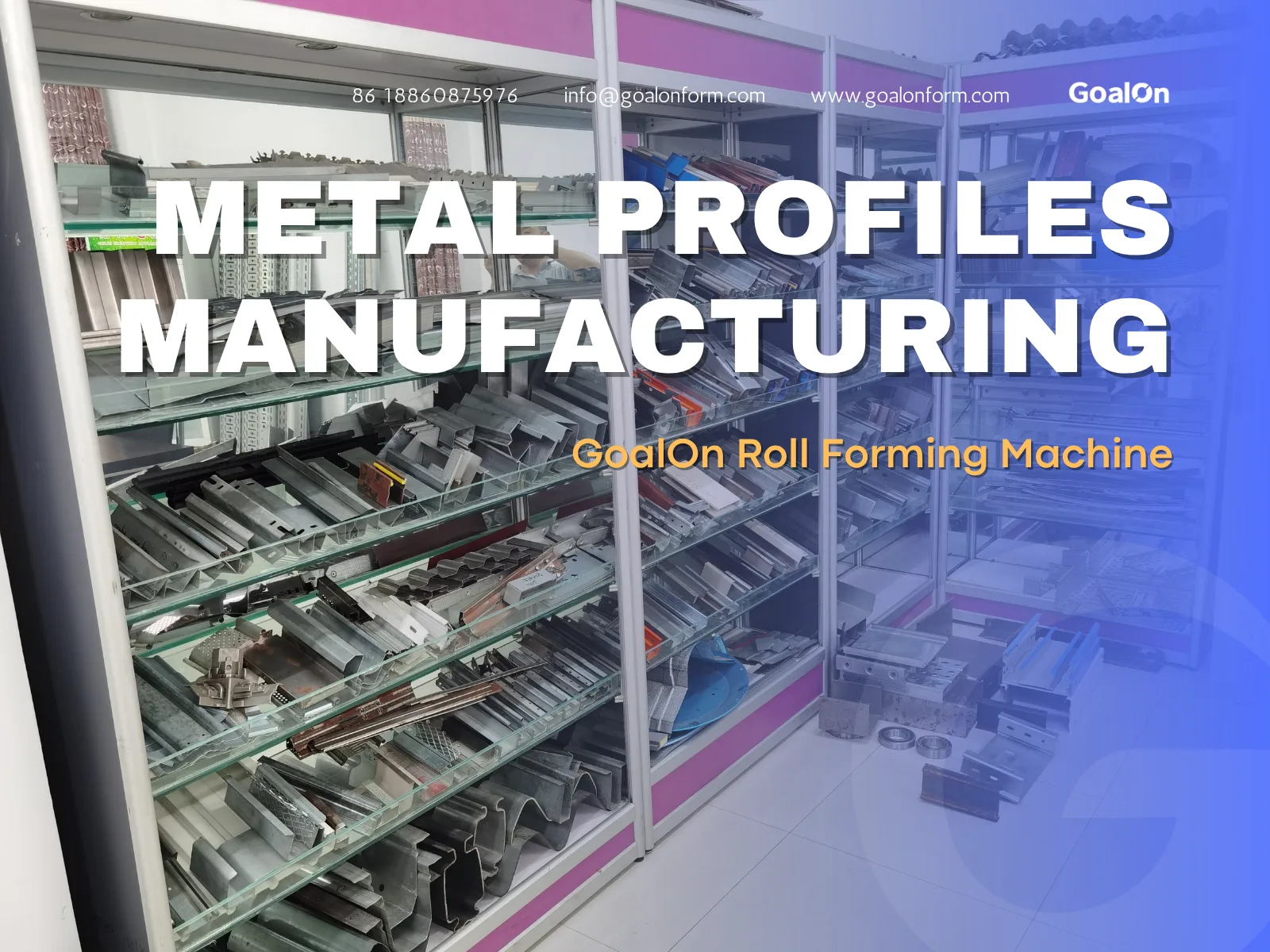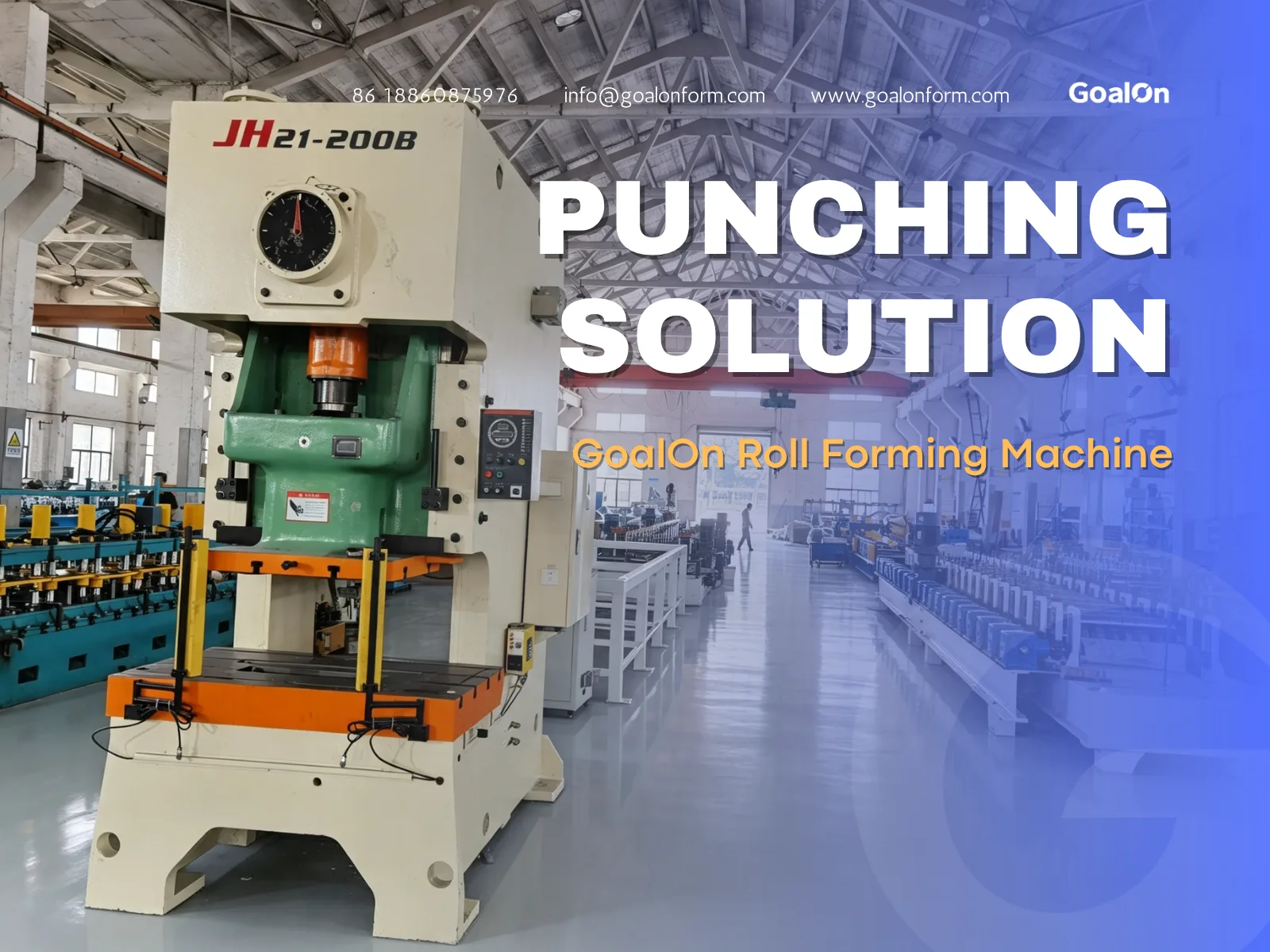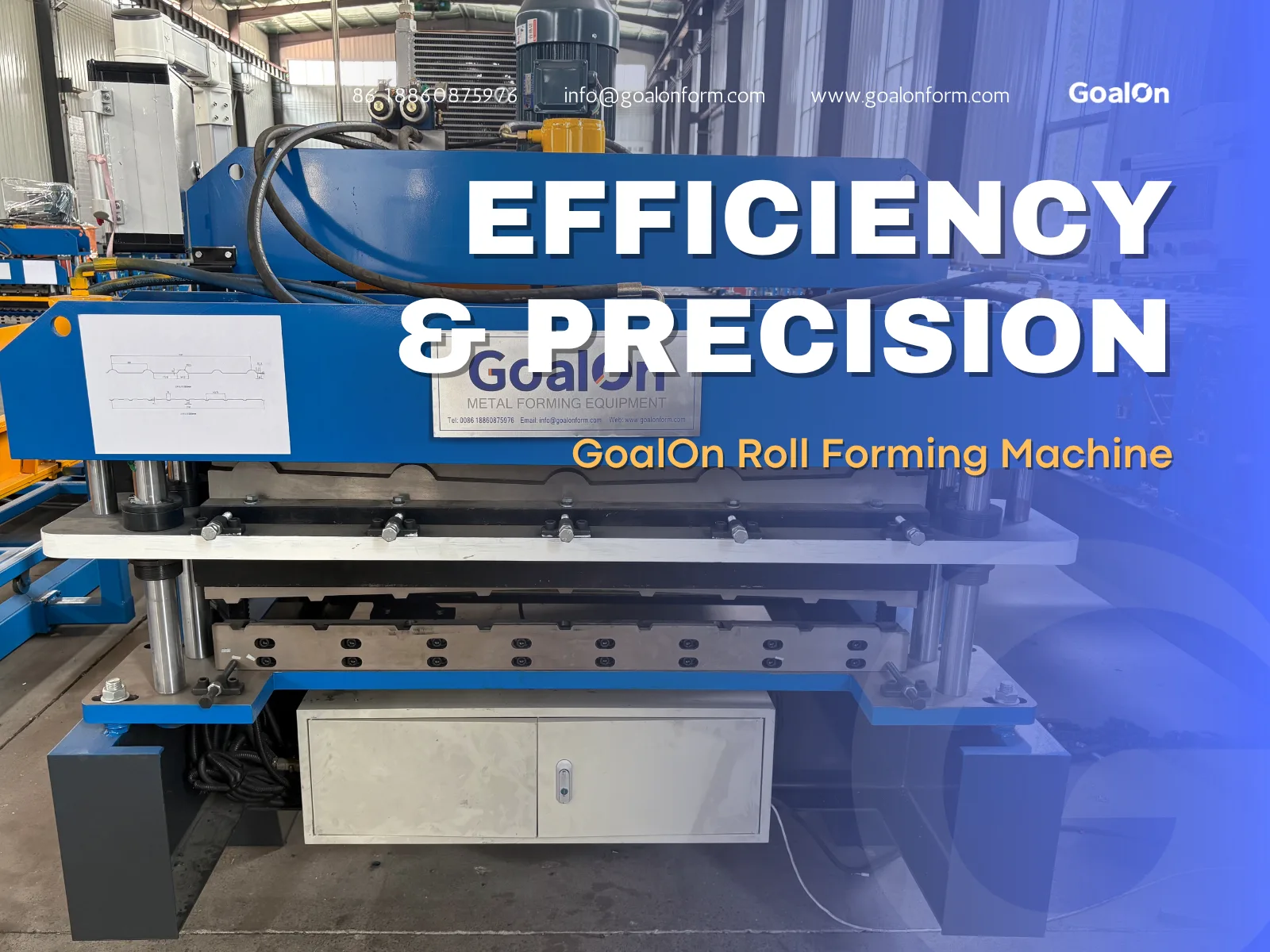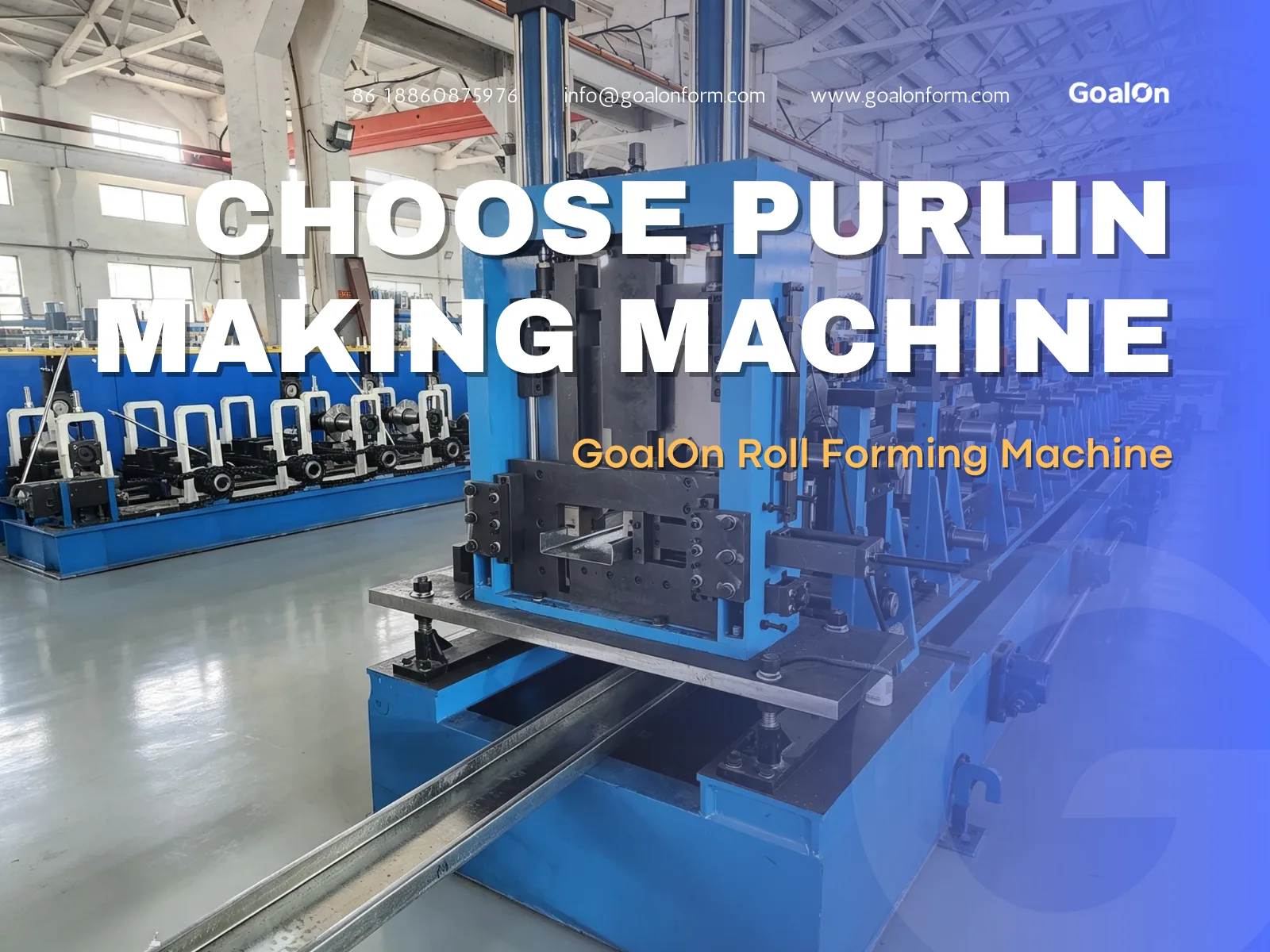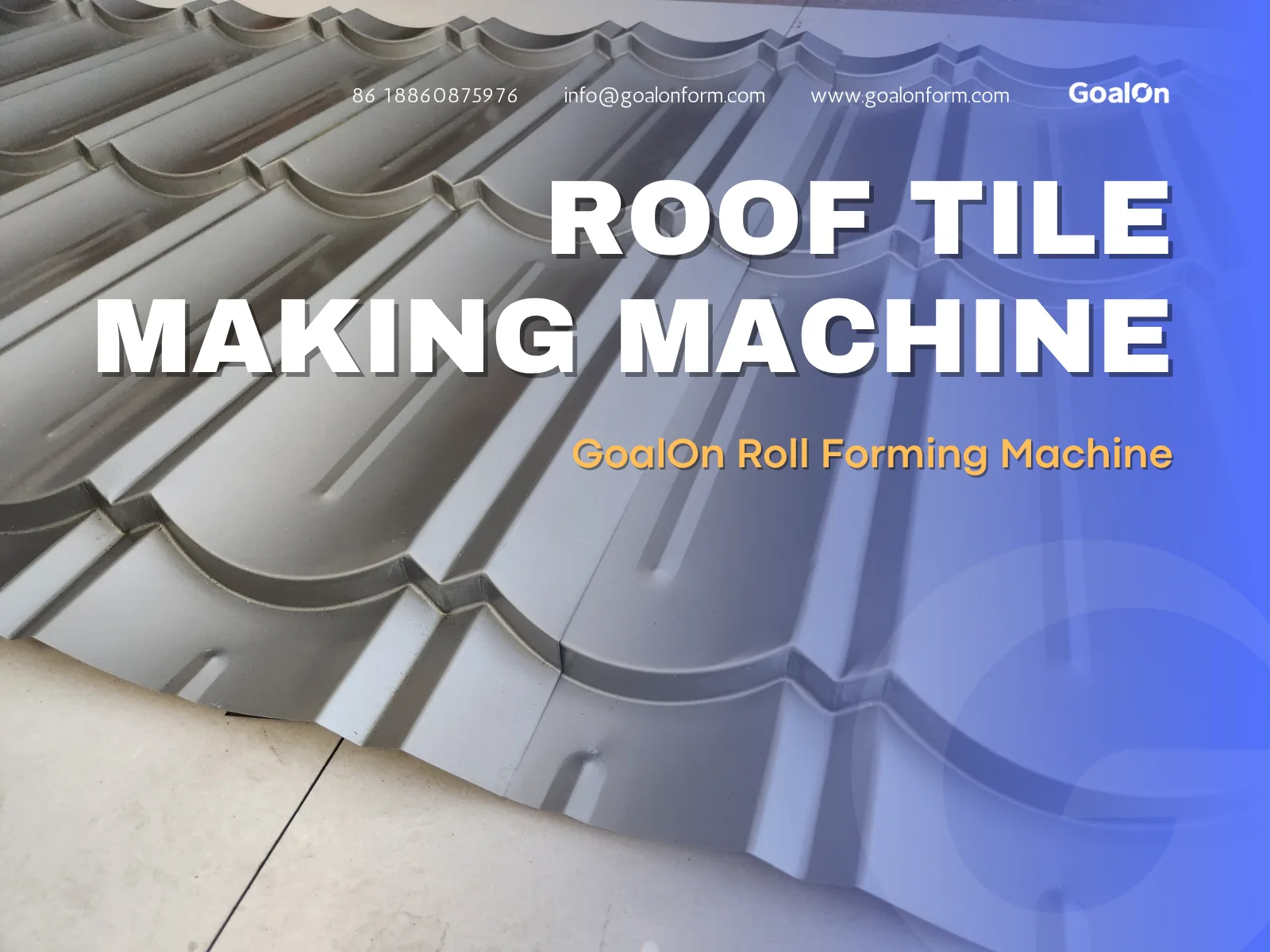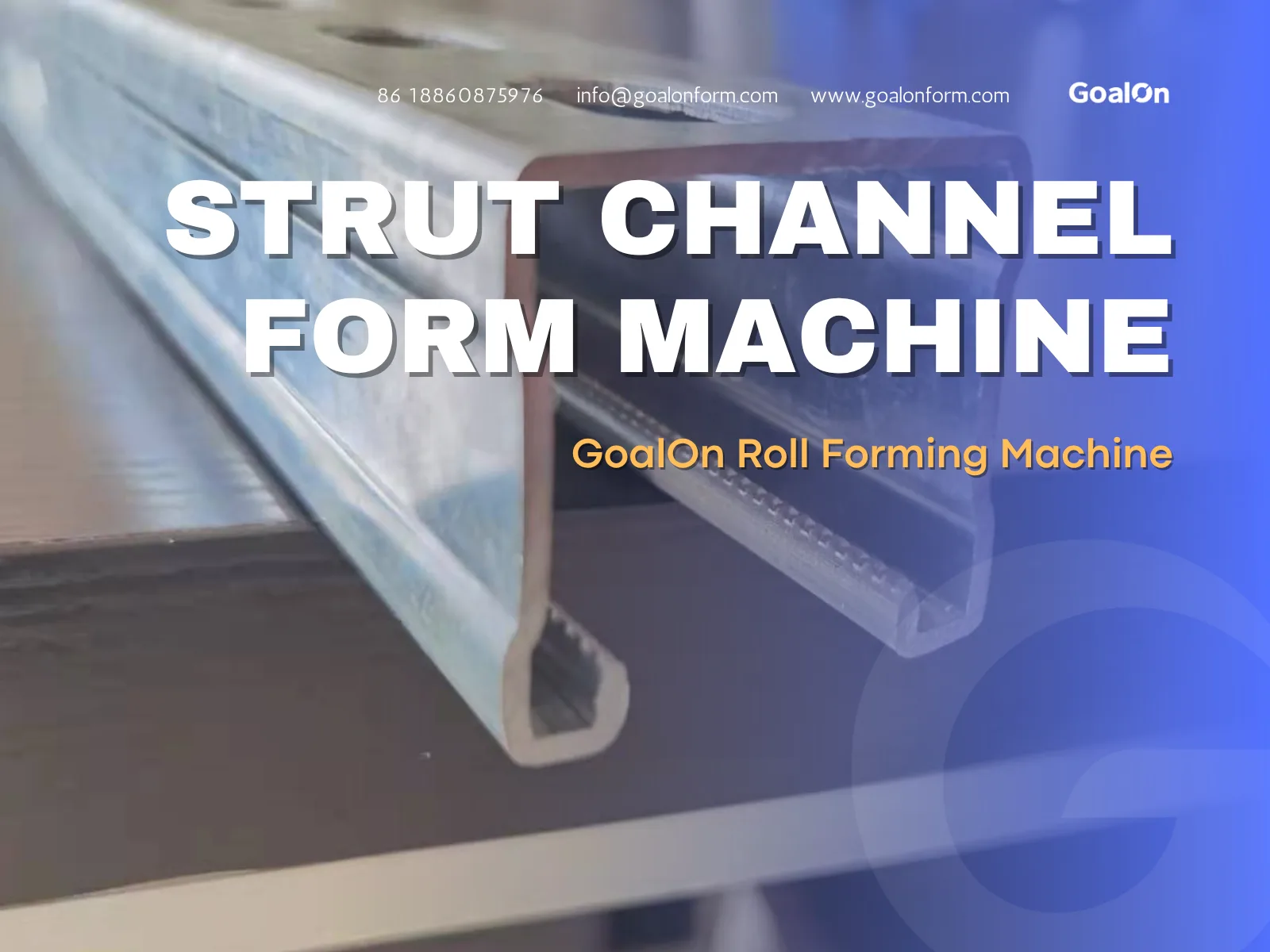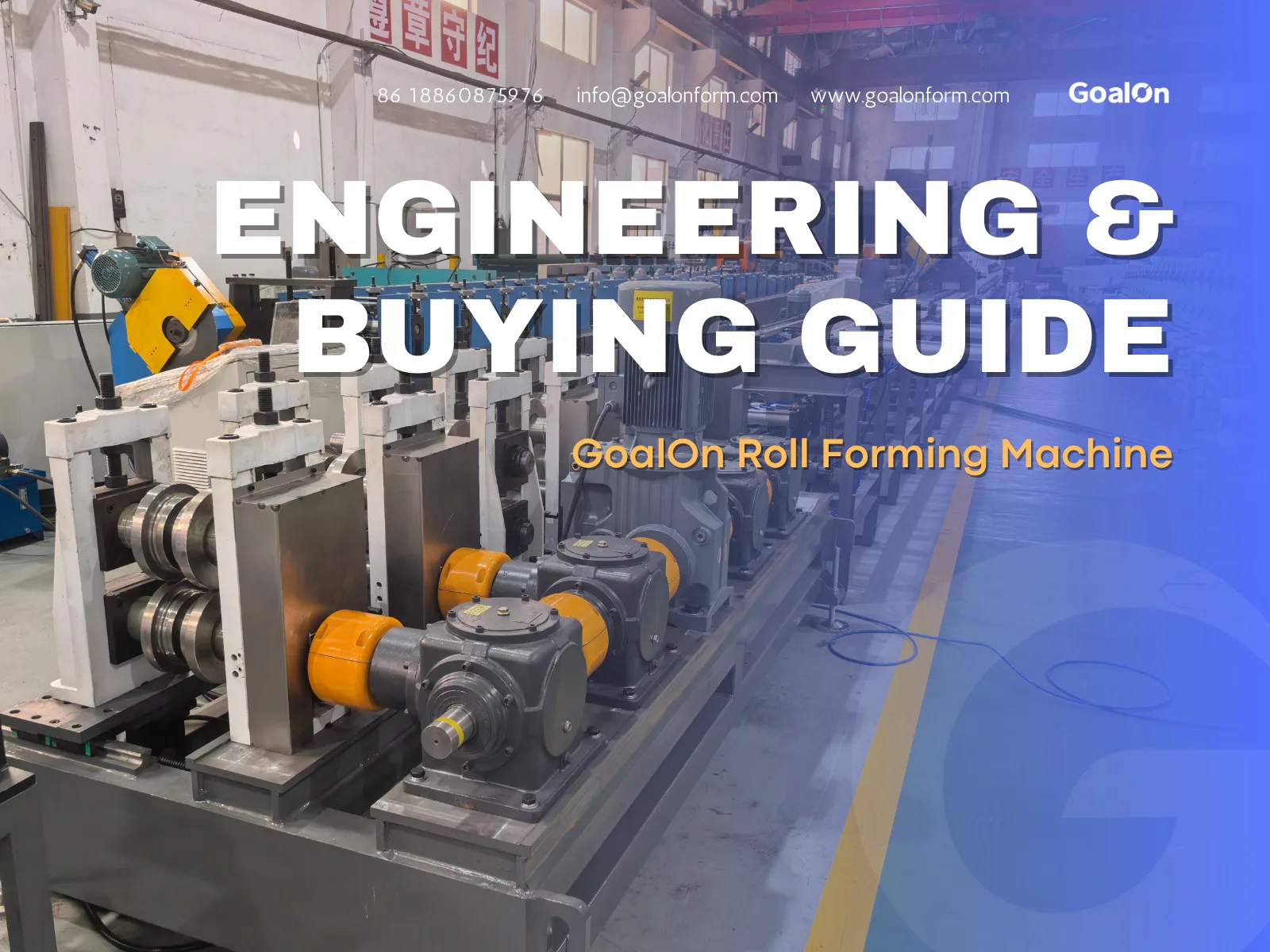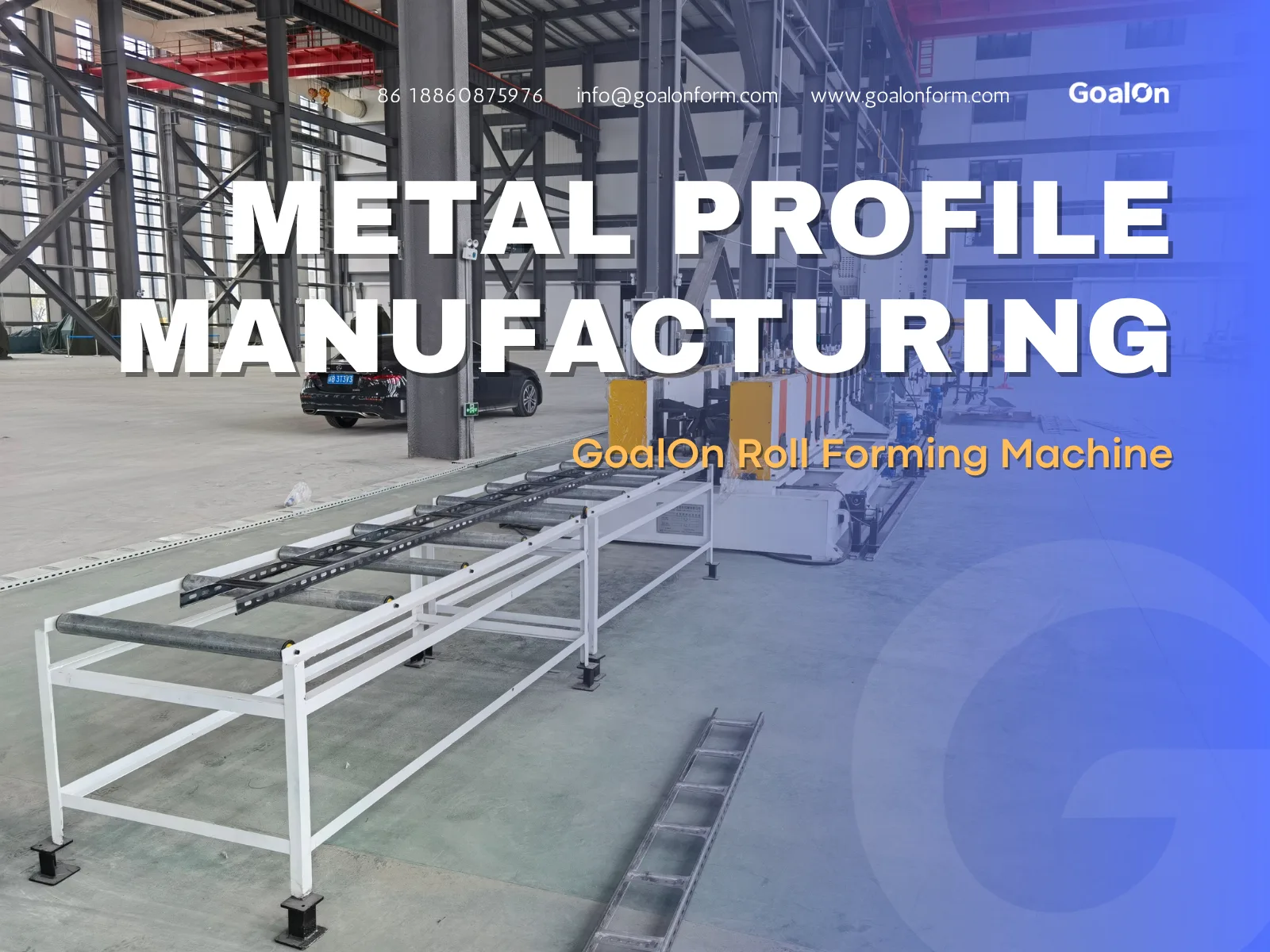
La fabrication de profilés métalliques a évolué. Aujourd’hui, les acheteurs exigent une vitesse plus élevée, des tolérances plus strictes et une automatisation intelligente pour réduire les coûts de production. En tant que leader fabricant de machines de profilage sur mesure, Goalon Machinery conçoit des solutions robustes qui surpassent l'estampage traditionnel. Investir dans un équipement moderne ligne de profilage d'acier de construction C'est le moyen le plus efficace d'obtenir des profilés métalliques parfaits sans contrainte sur le matériau.
Qu'est-ce que le profilage à froid ?
Le profilage à froid est un procédé de fabrication en continu qui permet de donner à la tôle des profils spécifiques à l'aide d'une série de rouleaux.
Le formage progressif répartit uniformément les déformations. Cela prévient le stress interne. Vous obtenez donc dimensions précises et un surface résistante aux rayures.
En tant que leader fabricant de machines de profilage sur mesure, Goalon Machinery conçoit des systèmes destinés au traitement d'un large éventail de matières premières :
| Type de matériau | Plage d'épaisseurs | Applications courantes |
| Acier galvanisé (GI / PPGI) | 0,3 mm – 3,0 mm | Plaques de toiture, bardages, montants et rails |
| Acier au carbone à haute résistance | 3,0 mm – 6,0 mm | Pannes en C/Z, glissières de sécurité routières, supports pour panneaux solaires |
| Acier de construction à haute résistance | 6,0 mm – 12,0 mm | Montants de rayonnages à palettes, composants de châssis de chariots élévateurs |
| Aluminium et acier inoxydable | 0,5 mm – 4,0 mm | Profilés décoratifs, châssis de fenêtres et de portes |
L'un des principaux atouts du profilage à froid réside dans sa polyvalence. En changeant les outils des rouleaux ou en ajustant les systèmes de cassettes, les fabricants peuvent produire une large gamme de profilés sur une même plateforme de production. Cette flexibilité permet aux entreprises de s'adapter rapidement à l'évolution des demandes du marché tout en optimisant l'utilisation de leurs équipements.
Par rapport au pliage ou à l'estampage classiques, Le profilage à froid offre une uniformité supérieure, une productivité accrue et des coûts de production nettement inférieurs pour la fabrication en grande série..
Comment fonctionne une machine de profilage à froid ?
Même si les chaînes de production modernes peuvent paraître complexes, le principe de fonctionnement d'une machine de profilage à froid est simple. La bande métallique se déplace en continu à travers une série de processus automatisés, chaque étape étant conçue pour améliorer l'efficacité de la production et garantir une qualité constante du produit.
Une chaîne de production standard comprend généralement les systèmes suivants :
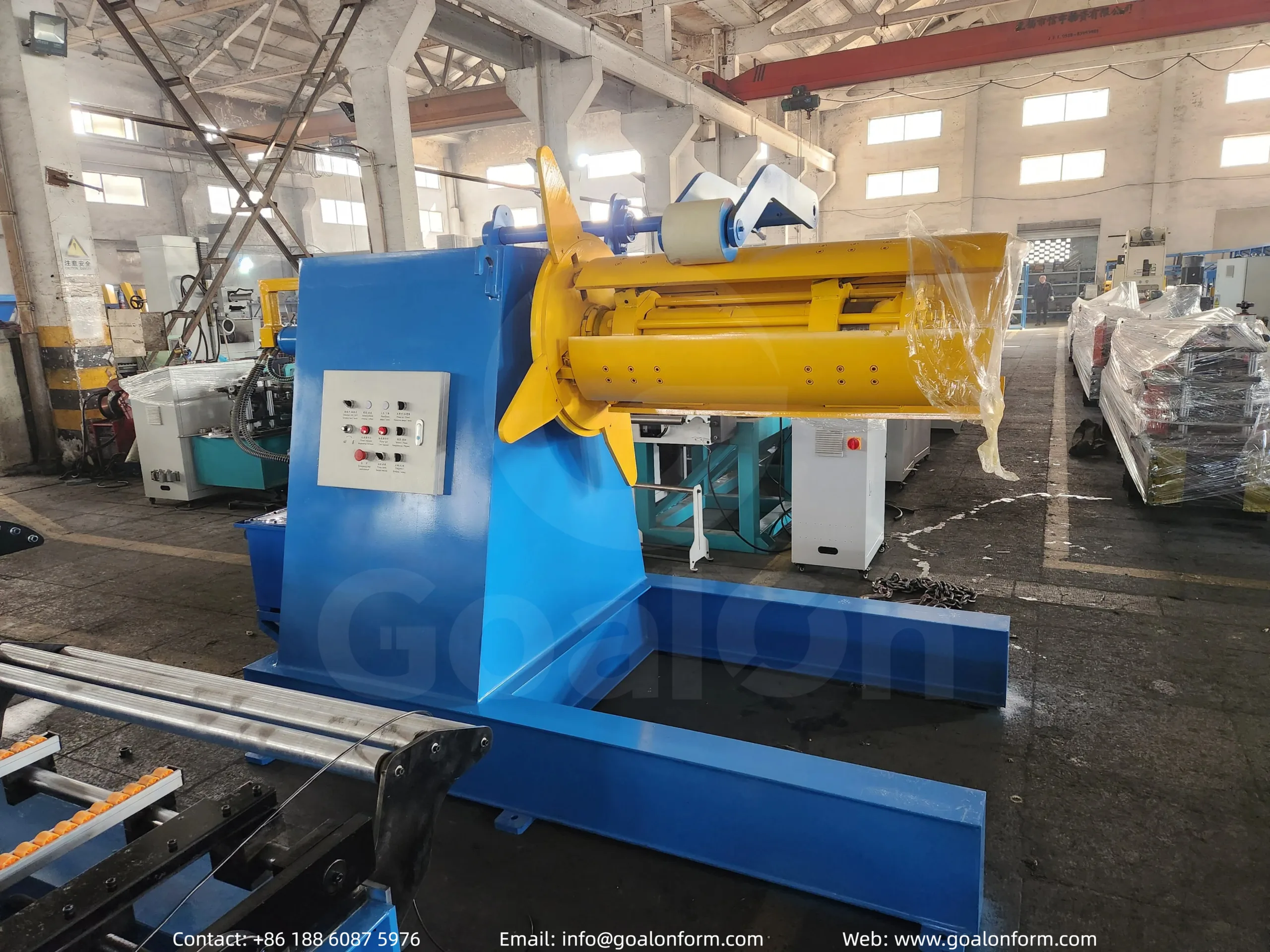
Alimentation en bobines
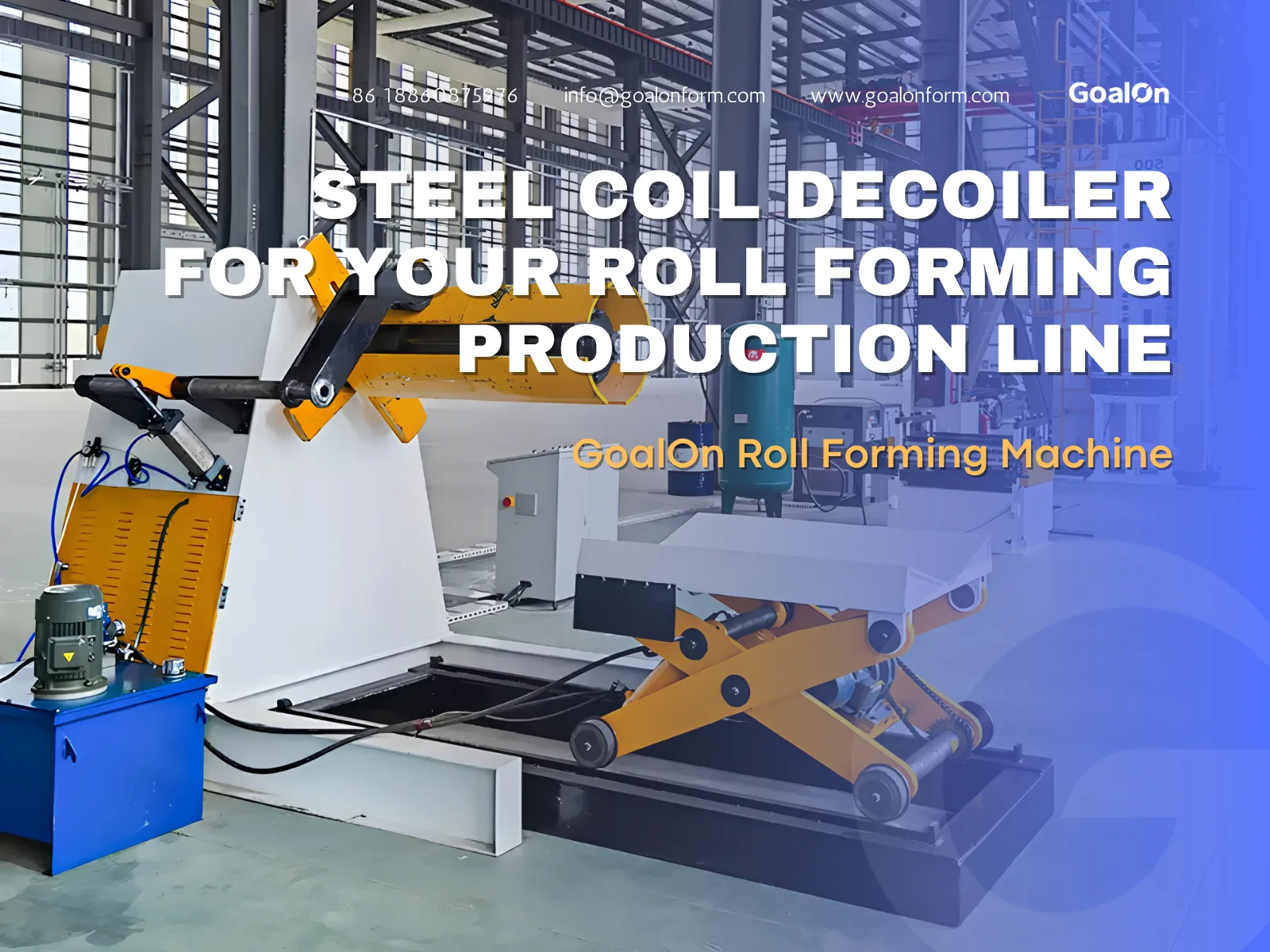
Un dérouleur manuel ou hydraulique déroule la bobine d'acier en douceur. Une tension constante permet d'éviter les erreurs d'alimentation en matériau.
Pour la production à grande vitesse, de nombreux fabricants optent pour des dérouleurs hydrauliques équipés de systèmes d'expansion automatiques, qui réduisent le temps de chargement et améliorent le rendement de production.
Nivellement des matériaux
La bande passe dans une machine à planer. Cette étape permet d'éliminer la déformation de la bobine et les ondulations de surface, garantissant ainsi que l'acier arrive aux rouleaux dans un état parfaitement plat.
Un nivellement correct est essentiel pour préserver la rectitude du profilé, réduire les écarts dimensionnels et éviter toute torsion lors du formage.
Alimentation et poinçonnage par servocommande
De nombreuses chaînes de production comprennent un système d'alimentation servo-commandé qui permet de positionner la pièce avec une précision exceptionnelle avant les opérations de poinçonnage.
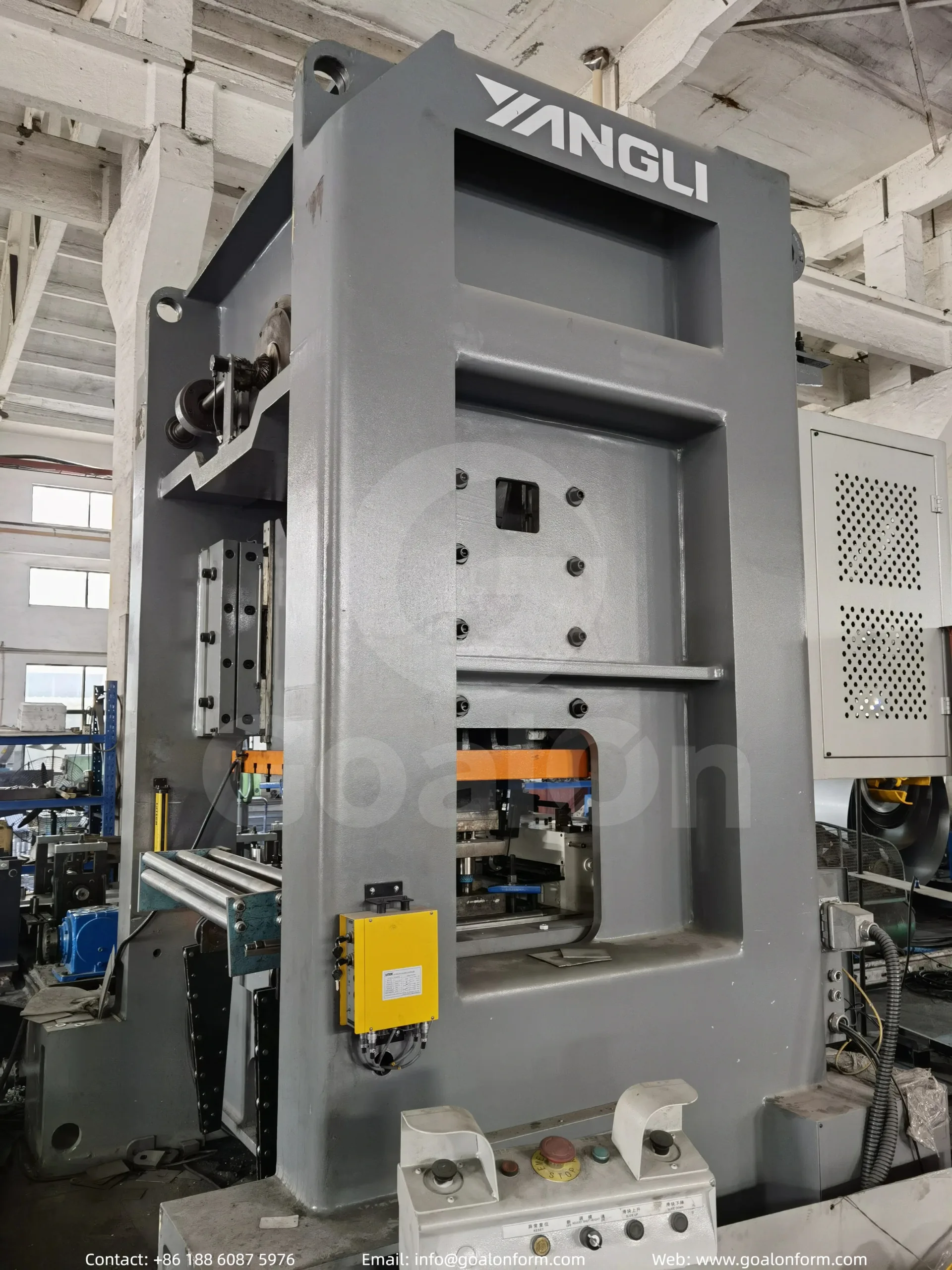
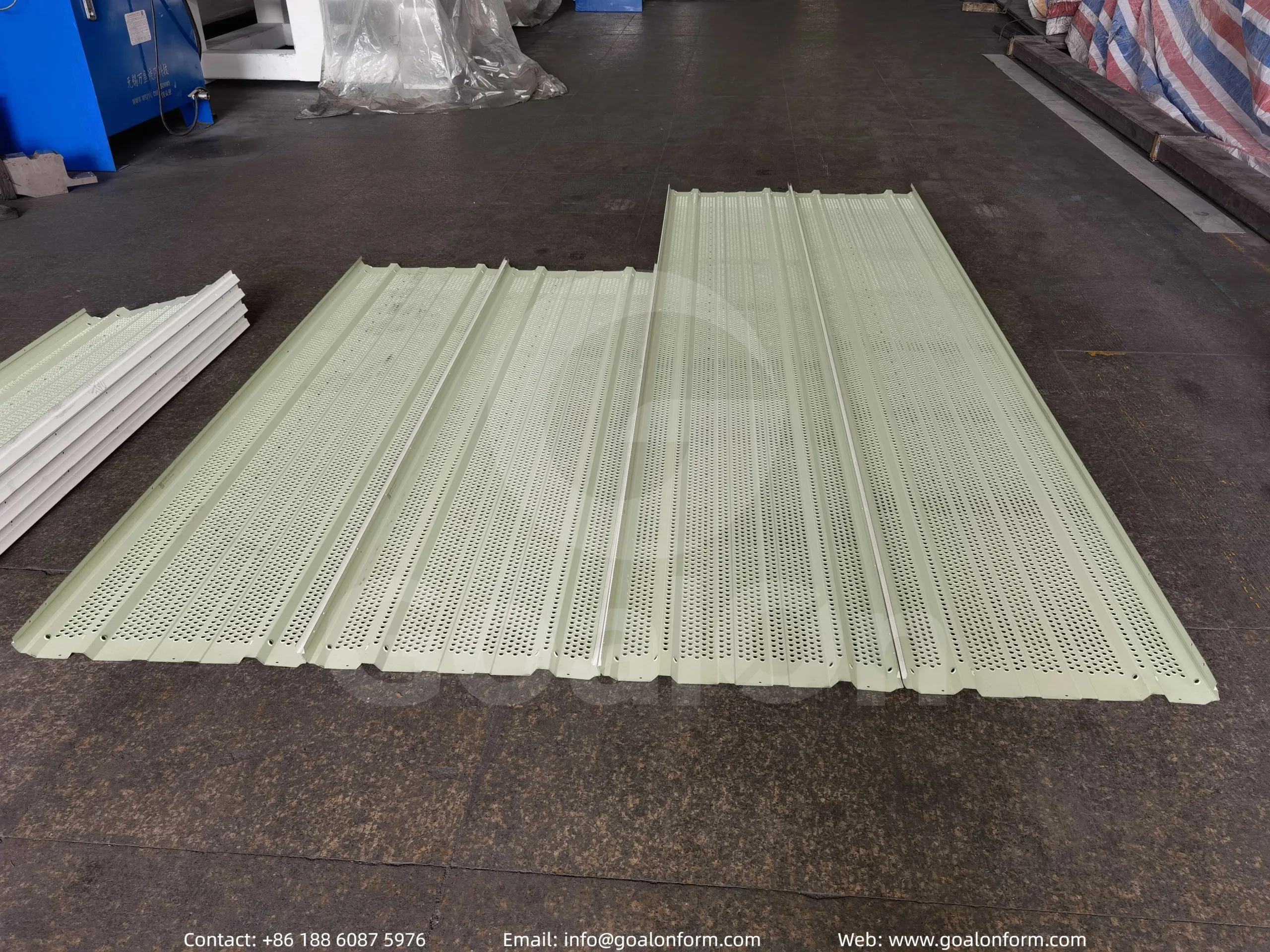
Si le produit nécessite des trous de fixation, des fentes, des reliefs ou des repères d'identification, ces éléments sont réalisés avant le début du profilage. En fonction des exigences de production, le poinçonnage peut être effectué à l'aide :
- Unités de poinçonnage hydrauliques
- Presses à poinçonner mécaniques
- Systèmes de poinçonnage servo à grande vitesse
Le poinçonnage s'effectuant automatiquement, la position des trous reste extrêmement régulière tout au long de la production en continu.
Profilage progressif
C'est là le cœur même de l'ensemble du processus de fabrication.
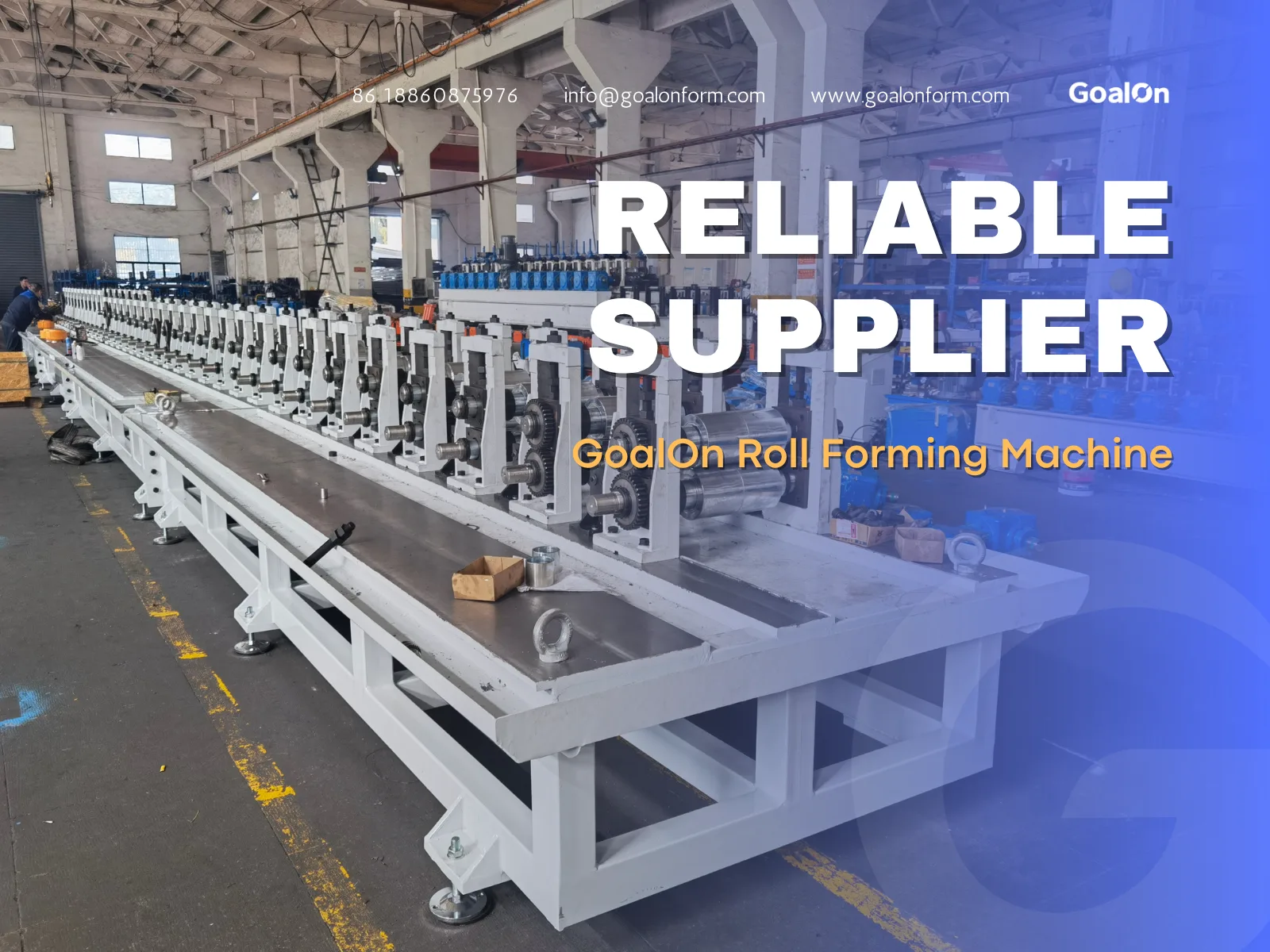
La bande passe par une série de postes de formage soigneusement conçus. Plutôt que de donner d'un seul coup au matériau sa forme définitive, chaque paire de rouleaux applique une petite déformation contrôlée. Ce procédé de formage progressif permet de réduire les contraintes subies par le matériau tout en garantissant une excellente précision dimensionnelle.
Le nombre de postes de formage dépend de plusieurs facteurs, notamment :
- Complexité du profil
- Epaisseur du matériau
- Résistance de l'acier
- Vitesse de production
- Tolérance dimensionnelle requise
Les profilés simples destinés à la toiture peuvent nécessiter moins de 20 postes de formage, tandis que les composants automobiles complexes ou les profilés en acier de construction peuvent nécessiter 30, 40, voire davantage de passages de formage.
Un procédé de profilage bien conçu assure un équilibre optimal du flux de matière à chaque étape. Une conception adéquate des rouleaux permet d'éviter les défauts courants tels que l'ondulation des bords, la torsion, le retour élastique, la déformation du profil et les rayures superficielles.
Regarder la vidéo : Machine de profilage automatique pour chemins de câbles | Ligne de production à grande vitesse avec découpe volante servocommandée
Aperçu technique : Les profilés de toiture simples nécessitent moins de 20 postes. Les pièces automobiles complexes ou les profilés en acier de construction épais peuvent nécessiter 30 à plus de 40 passes de formage pour éviter le retour élastique et l'ondulation des bords.
Découpe et collecte des produits
Une fois que le profilé a atteint la longueur requise, un système de découpe automatique sépare le produit fini sans interrompre la production en continu.
En fonction de l'application, les fabricants peuvent choisir :
- Systèmes de coupe en vol hydrauliques
- Systèmes de scies volantes
- Systèmes « Stop-to-cut »
Les produits finis sont ensuite acheminés vers un système d'empilage automatique ou une table de collecte, prêts à être emballés ou à passer à l'étape d'assemblage suivante.
Principaux avantages des machines de profilage à froid
La popularité croissante de machines de profilage à froid n'est pas simplement le résultat de l'automatisation. Leur véritable valeur réside dans leur capacité à combiner une vitesse de production élevée, une excellente précision dimensionnelle, de faibles coûts d'exploitation et une flexibilité de production remarquable en un seul processus de fabrication continu.
Par rapport aux méthodes de fabrication traditionnelles telles que le pliage à la presse, l'estampage ou le soudage, le profilage offre des avantages considérables, en particulier pour la production en moyennes et grandes séries. Vous trouverez ci-dessous les principales raisons pour lesquelles les fabricants du monde entier continuent d'investir dans des lignes de production modernes de profilage.
1. Une efficacité de production exceptionnelle
L'un des principaux avantages d'une machine de profilage à froid réside dans sa capacité à produire en continu des profilés finis à partir d'une bobine de métal. Au lieu de traiter les tôles une à une, la chaîne de production fonctionne sans interruption, ce qui augmente considérablement le rendement.
Chaque poste de formage n'effectuant qu'une légère déformation, le matériau avance sans à-coups dans la machine à une vitesse constante. Ce processus continu permet de réduire au minimum les temps d'arrêt et d'optimiser l'utilisation des équipements.
Les chaînes de production modernes peuvent intégrer plusieurs opérations au sein d'un même flux de travail, notamment :
- Alimentation en bobines
- Nivellement du matériau
- Alimentation par servomoteur
- Poinçonnage
- Profilage
- Découpe à la scie hydraulique ou à la scie volante
- Empilage automatique
En regroupant plusieurs processus de fabrication au sein d'une même ligne automatisée, les fabricants éliminent les manutentions superflues et réduisent les goulots d'étranglement dans la production.
En fonction de la conception du produit, de la configuration de la ligne de production et de l'épaisseur du matériau, les vitesses de production varient généralement entre 15 à 120 mètres par minute, certaines applications spécialisées atteignant même des vitesses encore plus élevées.
Pour les fabricants qui produisent chaque jour des milliers de composants identiques, cette capacité de production en continu améliore considérablement le rendement tout en réduisant les besoins en main-d'œuvre.
2. Précision dimensionnelle exceptionnelle et homogénéité des produits
La régularité est l'un des principaux atouts du profilage à froid.
Le cintrage manuel repose trop sur la main-d'œuvre. Le profilage utilise des rouleaux en acier de haute précision pour façonner le métal de manière automatique. Cela garantit des résultats identiques à chaque fois. Une fois la machine correctement réglée, chaque profilé est fabriqué dans des conditions identiques.
On obtient ainsi :
- Dimensions transversales uniformes
- Emplacements de trous constants
- Géométrie stable du profilé
- Excellente rectitude
- Qualité de production constante
La régularité des dimensions revêt une importance particulière pour les secteurs qui recourent à l'assemblage automatisé ou à des composants interchangeables.
Par exemple, les structures de fixation pour panneaux solaires, les systèmes de rayonnages à palettes, les chemins de câbles et les composants automobiles exigent souvent des tolérances extrêmement strictes. Même de légers écarts dimensionnels peuvent entraîner des problèmes d'assemblage lors de l'installation.
Les machines modernes de profilage à froid relèvent ce défi grâce à :
- Outillage à rouleaux usiné par CNC
- Alignement de précision des arbres
- Paramètres de production commandés par automate programmable (PLC)
- Systèmes d'alimentation servo-commandés
- Mesure de longueur de haute précision
Ces technologies permettent de garantir une qualité constante des produits tout au long de longues séries de production, tout en réduisant les rebuts et les retouches.
3. Excellente utilisation des matériaux
Les matières premières représentent une part importante des coûts de fabrication. L'amélioration de l'utilisation des matières a donc un impact direct sur la rentabilité.
Le profilage à froid est considéré comme l'un des procédés de formage des métaux les plus économes en matière, car il remodèle le matériau plutôt que de l'enlever.
Contrairement aux opérations d'usinage qui génèrent des copeaux ou des chutes de découpe, le profilage permet de conserver la quasi-totalité de la bande métallique tout au long du processus de production.
D'autres économies de matériaux proviennent :
- Conception optimisée du profilé
- Calcul précis de la largeur des bandes
- Contrôle précis de l'alimentation
- Réduction des rebuts lors de la mise en service
- Une production continue et stable
Une meilleure utilisation des matériaux permet non seulement de réduire les coûts de production, mais contribue également à une fabrication plus durable en limitant la production de déchets.
Pour les fabricants qui traitent de grands volumes d'acier galvanisé ou d'acier inoxydable, même une légère réduction des rebuts peut se traduire par des économies annuelles substantielles.
4. Réduction des coûts de fabrication
Même si l'investissement initial dans une ligne de profilage est plus élevé que celui nécessaire à l'achat d'une presse plieuse ou d'une poinçonneuse autonome, la rentabilité à long terme s'avère souvent bien plus avantageuse.
Une ligne de production moderne de profilage à froid permet de réduire les coûts de fabrication de plusieurs façons.
Coûts de main-d'œuvre moins élevés
Le processus de production étant hautement automatisé, il nécessite moins d'opérateurs.
De nombreuses chaînes de production peuvent être gérées par un ou deux ouvriers seulement, chargés de :
- Chargement des bobines
- Surveillance des machines
- Contrôle des produits
- Emballage
L'automatisation permet de réduire la dépendance vis-à-vis du travail manuel tout en améliorant la stabilité de la production.
Réduction de la consommation d'énergie
Contrairement aux procédés de laminage à chaud ou de formage à chaud, Le profilage à froid s'effectue à température ambiante.
Aucun four ni équipement de chauffage n'est nécessaire, ce qui permet :
- Réduction de la consommation d'électricité
- Réduction des coûts de carburant
- Une empreinte carbone réduite
Cette efficacité énergétique prend de plus en plus de valeur à mesure que les fabricants cherchent à réduire leurs coûts d'exploitation et à atteindre leurs objectifs de développement durable.
Réduction des coûts d'entretien
Les profileuses modernes sont conçues pour une utilisation industrielle à long terme.
Un équipement de haute qualité présente généralement les caractéristiques suivantes :
- Rouleaux trempés
- Arbres traités thermiquement
- Roulements à usage intensif
- Boîte de vitesses
- Châssis de machines robustes
Ces composants offrent une excellente résistance à l'usure et réduisent au minimum les temps d'arrêt.
Une machine de profilage correctement entretenue peut fonctionner de manière fiable pendant des décennies, ce qui en fait l'un des investissements les plus rentables dans le domaine de la fabrication de profilés métalliques.
5. Grande flexibilité pour différentes conceptions de profilés
Beaucoup de gens pensent que le profilage ne convient qu’aux tôles de toiture standard. En réalité, les machines modernes permettent de fabriquer une immense variété de profils sur mesure.
Il s'agit notamment de :
- Panneaux de toiture
- Revêtement mural
- Pannes en C et en Z
- Profilés Omega
- Cheminées à câbles
- Rails de fixation pour panneaux solaires
- Glissières de sécurité routières
- Montants de rayonnages à palettes
- Poutres de rayonnage
- Huisseries
- Châssis de fenêtre
- Rails de guidage d'ascenseur
- Montants et rails en acier
- Pièces structurelles pour l'automobile
- Profilés pour armoires électriques
Pour les fabricants présents dans plusieurs secteurs d'activité, la flexibilité de production constitue un avantage concurrentiel majeur.
Les équipements actuels peuvent également être conçus avec :
- Systèmes de cassettes à changement rapide
- Réglage automatique de la largeur
- Changements de profil commandés par servomoteur
- Outillage modulaire
Ces technologies réduisent les temps de changement de ligne et permettent aux fabricants de passer d'un produit à l'autre plus efficacement.
6. Finition de surface exceptionnelle
Le profilage à froid façonnant le matériau progressivement, sans lui imposer de déformation brusque, le profilé fini conserve généralement un excellent aspect de surface.
Un outillage à rouleaux bien conçu permet de réduire au minimum :
- Rayures superficielles
- Traces de rouleau
- Dommages aux bords
- Défauts de revêtement
Cela revêt une importance particulière lors du traitement :
- Acier galvanisé prélaqué (PPGI)
- Acier inoxydable décoratif
- Profilés en aluminium
- Matériaux de construction architecturaux
La protection du revêtement de surface d'origine permet de limiter le recours à des opérations de finition secondaires et d'améliorer l'aspect général du produit fini.
7. Intégration aisée avec la fabrication intelligente
La production moderne évolue vers l'Industrie 4.0, où les équipements sont connectés, automatisés et pilotés par les données.
Les machines de profilage à froid d'aujourd'hui ne sont plus des machines autonomes. Elles peuvent être intégrées dans des systèmes de production intelligents grâce à des technologies de commande avancées.
Les fonctionnalités d'automatisation courantes comprennent :
- Systèmes de commande à automates programmables (PLC) pour un fonctionnement stable et reproductible
- Interfaces homme-machine à écran tactile pour un réglage et un suivi intuitifs des paramètres
- Systèmes d'alimentation à servocommande pour un positionnement précis
- Enregistrement automatique des recettes pour passer rapidement d'une fiche technique à l'autre
- Suivi de la production en temps réel pour le suivi de la vitesse, du débit et des alarmes
- Diagnostic et maintenance à distance, ce qui permet aux ingénieurs de résoudre les problèmes logiciels sans avoir à se rendre à l'usine
- Interopérabilité MES/ERP pour la planification de la production et la gestion des données
Ces fonctionnalités améliorent l'efficacité opérationnelle, réduisent les erreurs humaines et favorisent la mise en œuvre de stratégies de maintenance prédictive.
Alors que les fabricants s'engagent de plus en plus dans la transformation numérique, les lignes de profilage intelligentes offrent une base évolutive pour usine intelligente initiatives.
Principales caractéristiques des machines modernes de profilage à froid
Au-delà des avantages liés aux processus, les performances réelles d'une chaîne de production dépendent de qualité de la construction mécanique. Une machine de profilage à froid n'est pas simplement un système de mise en forme. Il s'agit d'une combinaison de structure mécanique, d'outillage de précision, de conception de transmission et de systèmes de commande intelligents.
Dans la pratique industrielle, la stabilité à long terme prime souvent sur la rapidité à court terme. Une machine bien conçue garantit une précision constante des profils, un faible besoin d'entretien et un fonctionnement fiable pendant de nombreuses années de production continue.
Cette section présente les principales caractéristiques structurelles et fonctionnelles qui définissent une machine de profilage hautement performante.
Structure robuste de la machine garantissant une stabilité à long terme
Le châssis de la machine constitue la base de l'ensemble du système de profilage. Si la structure manque de rigidité, toutes les stations de profilage en subiront les conséquences, ce qui entraînera des erreurs cumulées sur le produit final.
Les machines haut de gamme utilisent généralement :
- Châssis soudés en tôle d'acier épaisse
- Structures entièrement détendues après soudage
- Usinage de précision des surfaces de montage clés
- Support de base renforcé pour une production à haut rendement
Après le soudage, le châssis est souvent soumis à élimination des contraintes thermiques (recuit ou trempe). Ce procédé permet d'éliminer les contraintes internes générées lors de la fabrication. Sans cette étape, le cadre risque de se déformer avec le temps, notamment sous l'effet d'une charge continue.
Un châssis stable garantit :
- Alignement constant des rouleaux de formage
- Réduction des vibrations lors d'un fonctionnement à grande vitesse
- Meilleure stabilité dimensionnelle des profilés finis
- Durée de vie prolongée de la machine
Pour les profilés industriels lourds tels que les poutres de rayonnages à palettes, les glissières de sécurité routières ou les pannes de charpente, la rigidité structurelle revêt une importance encore plus cruciale, car l'épaisseur des matériaux et la force de formage sont nettement plus élevées.
Les rouleaux de précision : le cœur du processus de formage
Les rouleaux constituent les éléments de travail essentiels d'une machine de profilage à froid. Leur conception détermine directement la qualité du profilé final.
La plupart des machines industrielles utilisent des matériaux pour rouleaux tels que :
- Acier à roulements GCr15
- Acier à outils Cr12MoV
- Acier allié 42CrMo
- D2 / SKD11 pour les applications nécessitant une résistance élevée
Après l'usinage, les rouleaux sont soumis aux opérations suivantes :
- Traitement thermique (trempe et revenu)
- Chromage dur (en option pour la résistance à la corrosion)
- Finition CNC de précision
La dureté typique des rouleaux peut atteindre HRC 58–62, ce qui garantit une excellente résistance à l'usure tout au long du processus de production.
Chaque jeu de rouleaux est conçu en fonction des critères suivants :
- Epaisseur du matériau
- Limite d'élasticité de l'acier
- Géométrie du profilé
- Logique de séquence de formation
Un système de rouleaux bien conçu garantit :
- Un flux de matériaux fluide à chaque poste
- Dommages superficiels minimes
- Compensation contrôlée du retour élastique
- Grande régularité des dimensions
La conception des rouleaux ne se résume pas à un simple usinage mécanique : il s'agit d'une optimisation géométrique issue de l'ingénierie.
Même de petites erreurs de conception peuvent s'accumuler d'une station à l'autre et entraîner une torsion, une ondulation des bords ou un écart dimensionnel à l'étape finale.
Perspective technique : pourquoi l'entraînement par boîte de vitesses est-il si important ?
Chez Goalon Machinery, nos ingénieurs recommandent des transmissions à boîte de vitesses indépendantes pour toute application à usage intensif ligne de profilage d'acier de construction.
Les transmissions à chaîne standard s'allongent avec le temps, ce qui provoque une déformation des profilés. Nous utilisons réducteurs en acier trempé pour maintenir un couple stable.
Principaux avantages :
- 40% : réduction des temps d'arrêt : Réduit les coûts d'entretien.
- Torsion nulle : Élimine les déchets de ferraille.
Les machines modernes de profilage à froid utilisent généralement l'un des deux systèmes suivants :
- Système d'entraînement par chaîne (usage léger, coût réduit)
- Système de transmission à boîte de vitesses (norme industrielle pour usage intensif)
Sur les machines haut de gamme, chaque poste de formage est souvent entraîné par un réducteur indépendant. Cette conception présente plusieurs avantages :
- Une répartition du couple plus stable
- Jeu mécanique réduit
- Réduction des vibrations lors de la production à grande vitesse
- Amélioration de la synchronisation entre les stations
- Une durée de vie prolongée en cas de charges élevées
Par rapport aux systèmes à entraînement par chaîne, les systèmes à boîte de vitesses conservent une meilleure précision sur de longs cycles de production, notamment lors de l'usinage d'acier épais ou de matériaux à haute résistance.
Pour des applications telles que les profilés en acier de construction ou les composants critiques pour la sécurité, la transmission par réducteur est largement considérée comme la solution industrielle privilégiée.
Système de commande par automate programmable et fonctionnement intelligent
Les machines de profilage modernes reposent en grande partie sur des systèmes de commande automatisés. Au cœur de ce système se trouve le PLC (automate programmable).
L'automate programmable gère toutes les opérations de la machine, notamment :
- Séquence de démarrage et d'arrêt de la ligne
- Synchronisation de la vitesse
- Contrôle de la longueur
- Activation du signal de découpe
- Détection des alarmes et protection de sécurité
Les opérateurs interagissent avec le système par le biais d'un panneau IHM à écran tactile, ce qui permet d'ajuster facilement les paramètres de production.
Parmi les principaux avantages de la commande par automate programmable, on peut citer :
- Haute répétabilité des paramètres de production
- Exigences réduites en matière de compétences des opérateurs
- Changement rapide de produit grâce aux recettes enregistrées
- Surveillance en temps réel de l'état des machines
La plupart des systèmes intègrent également :
- Mesure de longueur à l'aide d'un codeur
- Synchronisation des servomoteurs
- Alarmes de diagnostic de panne
L'automatisation par automate programmable (PLC) réduit considérablement les erreurs humaines tout en améliorant la régularité de la production.
Cela revêt une importance particulière dans les environnements de production de masse où des milliers de pièces identiques doivent être fabriquées chaque jour.
Système d'alimentation servo pour un positionnement de haute précision
Sur les chaînes de production de pointe, la précision de l'alimentation en matière influe directement sur la qualité du poinçonnage et du formage.
A système d'alimentation servo-commandé garantit un positionnement précis de la bande métallique avant qu'elle n'entre dans les postes de poinçonnage ou de formage.
Par rapport aux systèmes d'alimentation mécaniques, les servosystèmes offrent :
- Une plus grande précision de positionnement (souvent de l'ordre de ±0,2 mm, voire mieux)
- Vitesse d'avance réglable
- Accélération et décélération en douceur
- Meilleure synchronisation avec les opérations de poinçonnage
Cela revêt une importance particulière pour les produits qui nécessitent :
- Alignement des trous
- Positionnement des fentes
- Précision du gaufrage
- Compatibilité avec l'assemblage
L'alimentation par servomoteur améliore également la flexibilité de production, en permettant des réglages rapides en fonction des différentes longueurs de produit ou des différents espacements entre les trous, sans modification mécanique.
Système de découpe hydraulique pour une finition nette et précise
La découpe constitue la dernière étape du processus de profilage. Un système de découpe de haute qualité garantit des arêtes nettes et un contrôle précis de la longueur.
Parmi les systèmes de découpe courants, on peut citer :
- Cisaille volante hydraulique
- Système hydraulique d'arrêt et de coupe
- Système de découpe à scie volante
Parmi ceux-ci, le système de coupe en vol hydraulique est largement utilisé dans les chaînes de production en continu, car il permet de procéder à la découpe sans arrêter la machine.
Parmi les avantages, on peut citer :
- Un flux de production fluide et sans interruption
- Grande précision de découpe
- Finition nette des bords, sans déformation
- Réduction des déchets de production
Les outils de coupe sont généralement fabriqués à partir de acier à outils trempé, garantissant ainsi une longue durée de vie même dans des conditions de coupe à haute fréquence.
Conception d'outillages flexibles et systèmes de changement rapide
La production moderne exige de la flexibilité. De nombreuses usines ne fabriquent plus un seul type de profilé. Elles doivent au contraire alterner entre plusieurs produits en fonction de la demande du marché.
À cet effet, les machines de profilage de pointe peuvent comporter :
- Systèmes à rouleaux de type cassette
- Conception d'outillage à changement rapide
- Systèmes d'entretoises réglables
- Supports de formage modulaires
Ces fonctionnalités réduisent considérablement le temps de changement de série.
Au lieu de démonter l'ensemble de la machine, les opérateurs peuvent :
- Remplacer les cassettes à rouleaux
- Régler les positions de formage
- Charger les recettes de production prédéfinies
Cette flexibilité améliore le taux d'utilisation des machines et permet aux fabricants de réagir rapidement aux nouvelles commandes.
Pourquoi la conception des machines a une incidence directe sur la qualité des produits
Dans le profilage à froid, la qualité du produit ne dépend pas uniquement des paramètres du procédé. Elle est étroitement liée à la conception de la machine.
Parmi les relations clés, on peut citer :
- Rigidité du châssis → stabilité dimensionnelle
- Précision des rouleaux → qualité de surface
- Système de transmission → précision à long terme
- Commande par automate programmable → répétabilité
- Alimentation par servomoteur → précision de poinçonnage
Une conception insuffisante dans l'un de ces domaines peut entraîner :
- Torsion du profilé
- Écart dimensionnel
- Dommages superficiels
- Contrainte de formage inégale
- Taux de rejet élevés
C'est pourquoi les fabricants expérimentés évaluent toujours les deux ingénierie de conception et qualité des composants avant d'acheter une machine de profilage.
Applications typiques des machines de profilage à froid
La polyvalence d'un machine de profilage à froid C'est l'une des principales raisons pour lesquelles cette technologie est devenue incontournable dans la fabrication métallique moderne. Une fois l'outillage conçu, ce même principe de production peut être adapté à de nombreux secteurs d'activité présentant des exigences de performance différentes.
Aujourd'hui, le profilage ne se limite plus aux tôles de toiture. Il est largement utilisé dans le génie civil, les infrastructures, les transports, les systèmes énergétiques et les solutions de stockage industriel.
Voici les domaines d'application les plus courants :
Construction et systèmes de bâtiment
Dans le secteur du bâtiment, le profilage à froid est utilisé pour fabriquer une large gamme d'éléments structurels et architecturaux :
- Panneaux de toiture et tôles de bardage
- Systèmes d'ossature pour plafonds et cloisons en plaques de plâtre
- Pannes en C et pannes en Z pour les structures métalliques
- Montants et rails métalliques
- Profilés pour huisseries de portes et de fenêtres
Ces composants doivent présenter une géométrie homogène et une grande précision dimensionnelle afin de garantir une installation rapide sur site.
Étant donné que les bâtiments nécessitent souvent des milliers de profilés identiques, capacité de production en continu rend le profilage nettement plus efficace que les méthodes de fabrication traditionnelles.
Systèmes de stockage et de logistique industriels
Le profilage joue un rôle essentiel dans la fabrication d'infrastructures d'entrepôts et de logistique :
- Montants et traverses de rayonnages à palettes
- Systèmes de rayonnages de stockage
- Structures de soutien pour entrepôts
- Profilés de châssis de convoyeur
Ces produits nécessitent souvent acier à haute résistance et contrôle rigoureux des tolérances, car ils doivent supporter des charges lourdes en toute sécurité.
Par exemple, les systèmes de rayonnages à palettes reposent sur un espacement précis des trous et une géométrie uniforme des profilés afin de garantir un montage sûr et une répartition optimale de la charge.
Énergie et systèmes renouvelables
Le secteur des énergies renouvelables est l'un des marchés qui connaît la croissance la plus rapide pour la technologie de profilage :
- Rails de fixation pour panneaux solaires
- Structures de support pour installations photovoltaïques
- Cheminées de câbles et structures de support pour les parcs éoliens
Dans le domaine des projets solaires, les installations à grande échelle nécessitent des kilomètres de profilés de montage identiques. Le profilage à froid offre les avantages suivants :
- Production en série à grande vitesse
- Excellente répétabilité
- Réduction du gaspillage de matériaux
- Faible coût unitaire pour les grands projets
Transports et infrastructures
Le profilage est également largement utilisé dans les projets liés à la sécurité des transports et aux infrastructures :
- Glissières de sécurité routières
- Glissières de sécurité
- Éléments de soutien des ponts
- Profils de revêtement de tunnel
Ces applications nécessitent acier à haute résistance et performances structurelles fiables, souvent fabriqués à partir de matériaux de forte épaisseur.
La capacité à maintenir une qualité constante tout au long de longs cycles de production est essentielle, en particulier pour les infrastructures liées à la sécurité.
Systèmes électriques et mécaniques
De nombreux systèmes électriques et industriels reposent sur des composants profilés :
- Cheminées à câbles et échelles à câbles
- Châssis d'armoires électriques
- Systèmes de conduits de chauffage, de ventilation et de climatisation
- Enceintes de machines
Ces produits nécessitent des surfaces lisses, des pliages précis et une compatibilité d'assemblage constante.
Comment choisir la bonne machine de profilage à froid
Le choix d'une machine de profilage adaptée constitue une décision d'investissement stratégique. L'équipement choisi doit répondre à la fois aux besoins de production actuels et aux perspectives d'expansion future de l'entreprise.
Voici les principaux éléments à prendre en compte :
1. Complexité du profil du produit
Chaque profil nécessite une configuration de machine spécifique.
- Profils simples → moins de postes de formage
- Profils structurels complexes → davantage de postes de travail + conception d'outillage avancée
Un plan technique détaillé est indispensable avant de commencer la conception d'une machine.
2. Type et épaisseur du matériau
Les propriétés des matériaux ont une incidence directe sur la conception des machines :
- Matériaux fins (0,3 à 1,5 mm) → structure de la machine plus légère
- Épaisseur moyenne (1,5 à 3 mm) → conception industrielle standard
- Acier haute résistance (3 à 12 mm) → structure renforcée + entraînement par réducteur
L'acier à haute résistance nécessite des rouleaux plus robustes et une transmission de couple plus élevée.
3. Exigences en matière de cadence de production
La vitesse ne dépend pas uniquement de la puissance du moteur. Elle dépend :
- Conception des postes de formage
- Résistance des matériaux
- Fréquence de frappe
- Type de système de découpe
Par exemple, les systèmes de cisaillement en continu permettent une production continue à grande vitesse, tandis que les systèmes « stop-to-cut » sont plus adaptés aux applications à faible vitesse et de haute précision.
4. Niveau d'automatisation
Les chaînes de production modernes peuvent présenter différents niveaux d'automatisation :
- Alimentation manuelle (faible coût, faible niveau d'automatisation)
- Ligne semi-automatique (servocommande de base + commande par automate programmable)
- Ligne entièrement automatique (poinçonnage, découpe et empilage intégrés)
Une automatisation plus poussée permet de réduire les coûts de main-d'œuvre, mais augmente l'investissement initial.
5. Flexibilité de l'outillage
Si l'usine fabrique plusieurs profilés, il convient de tenir compte des éléments suivants :
- Systèmes de cassettes à changement rapide
- Supports de formage réglables
- Conception modulaire des rouleaux
Cela permet de réduire les temps d'arrêt lors du changement de produit.
6. Compétences techniques des fournisseurs
C'est souvent plus important que le prix.
Un fournisseur fiable doit offrir :
- Simulation de profilage et assistance à la conception
- Plans techniques détaillés des rouleaux
- Assistance à l'installation et à la mise en service
- Approvisionnement à long terme en pièces de rechange
- Formation technique destinée aux opérateurs
De solides compétences en ingénierie garantissent la stabilité de la production à long terme.
Foire aux questions (FAQ)
Quel est le principal avantage du profilage à froid par rapport au pliage ?
Le profilage à froid permet une production en continu alliant une plus grande précision et des coûts de main-d'œuvre réduits, alors que le cintrage est généralement un procédé manuel ou semi-automatique adapté aux petites séries.
Une seule machine peut-elle produire plusieurs profils ?
Oui. Grâce à une conception adéquate des outils ou à l'utilisation de systèmes à cassettes, une seule machine peut produire plusieurs profils. Toutefois, la durée et la complexité du changement de série dépendent de la configuration de la machine.
Quels matériaux peuvent être utilisés pour le profilage ?
Parmi les matériaux couramment utilisés, on trouve :
- Acier galvanisé (GI)
- Acier prélaqué (PPGI)
- Acier inoxydable
- Acier au carbone
- Aluminium
Le choix du matériau dépend de l'application et de la résistance requise.
Le profilage à froid est-il adapté aux petits volumes de production ?
En règle générale, cette méthode s'avère plus rentable pour les volumes de production moyens à importants. Pour les très petits lots, le pliage à la presse plieuse ou le pliage manuel peuvent s'avérer plus économiques.
Quelle est la durée de vie d'une machine de profilage ?
Avec un entretien adéquat, une machine de haute qualité peut fonctionner pendant 10 à 20 ans ou plus, notamment lorsqu'on utilise des rouleaux trempés et des systèmes de transmission par boîte de vitesses.
Conclusion
Les machine de profilage à froid est l'une des technologies de formage des métaux les plus efficaces et les plus stables disponibles dans l'industrie manufacturière moderne. Ses avantages ne reposent pas sur une seule caractéristique, mais sur l'intégration de production en continu, ingénierie de précision, automatisation et optimisation de l'utilisation des matériaux.
D'un point de vue technique, sa force réside dans la combinaison des éléments suivants :
- Technologie de formage progressif
- Conception à rouleaux de haute précision
- Structure stable du châssis de la machine
- Systèmes avancés de commande par automates programmables (PLC) et de servocommande
- Systèmes de transmission performants
D'un point de vue commercial, cela apporte :
- Coût de production unitaire plus faible
- Capacité de production accrue
- Une qualité constante des produits
- Réduction de la dépendance vis-à-vis de la main-d'œuvre
- Une grande évolutivité pour les développements futurs
Collaborez avec un fabricant fiable de machines de profilage sur mesure
Alors que l'industrie manufacturière mondiale continue de s'orienter vers l'automatisation et les systèmes de production intelligents, le profilage à froid restera une technologie essentielle pour la fabrication de profilés en acier dans les secteurs de la construction, de l'énergie, de la logistique et de l'industrie.
Le choix du bon équipement est une décision stratégique qui influe sur le retour sur investissement de votre usine pendant des décennies. Un équipement bien conçu ligne de profilage d'acier de construction ne se contente pas de façonner le métal : elle optimise l'ensemble de votre chaîne d'approvisionnement, garantit la précision et vous aide à réduire les coûts de production dès le premier jour.
Prêt à moderniser votre production ? En tant que professionnel expérimenté fabricant de machines de profilage sur mesure, Goalon Machinery propose une assistance technique sur mesure et des tarifs directs d'usine. Contactez dès aujourd'hui notre équipe d'ingénieurs pour bénéficier d'une analyse gratuite de votre profil et d'un devis rapide !