

Production Line
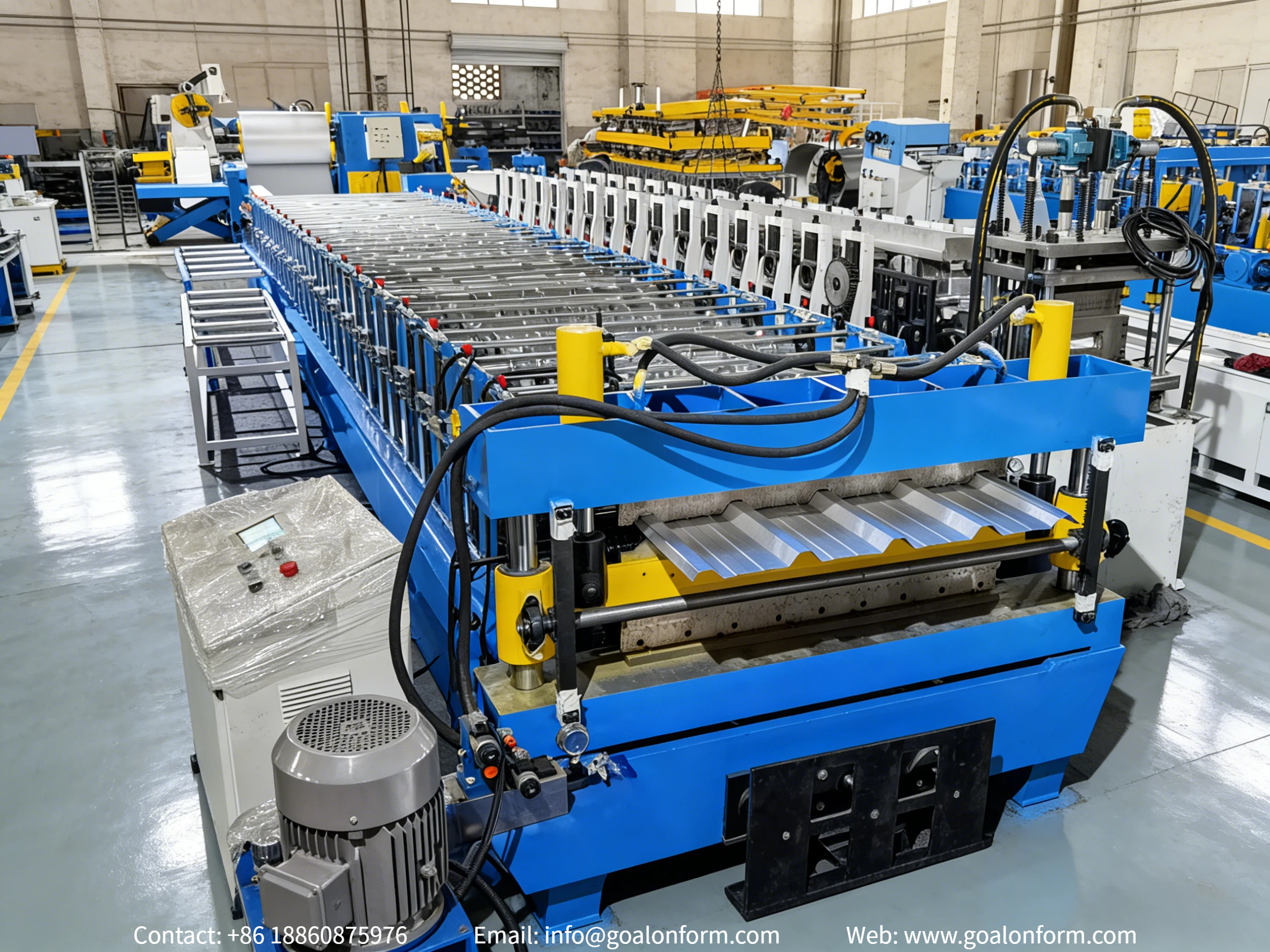
High-efficiency PBR roof panel roll forming line designed for continuous production, ensuring stable forming quality, fast output, and reliable operation for roofing applications.
- Higher speed compared to stop-to-cut systems
- Improved efficiency and output capacity
- Reduced downtime and smoother operation
Flexible design supports full customization for various PBR panel profiles, meeting different market standards and project-specific technical requirements.
Suitable for roofing manufacturers, steel service centers, and machine distributors aiming to improve productivity and expand product range.
1. Flow Chart
Decoiler → Guiding → Servo flying cut → Transport table → Roll forming machine → Out table
| 2. Basic Specifications of This Line | |||
| Speed | 15-20m/min,customizable | Operator Needed | 1-2 persons |
| Machine Frame | Wall panel | Driving System | Chains |
| Dimension | LWH 7*1.8*2m | Weight | 15T |
| Container | 1*40GP+(1*20GP) | Power Supply | Customizable |
| 3. Machine Components | |||
| Decoiler*1 | Servo pre-cut unit*1 | Roll forming machine*1 | PLC control cabinet*1 |
| Out table*2 | Tool box*1 | Spare parts | Transport table*1 |
*For reference only; subject to the actual machines.
Profile Information
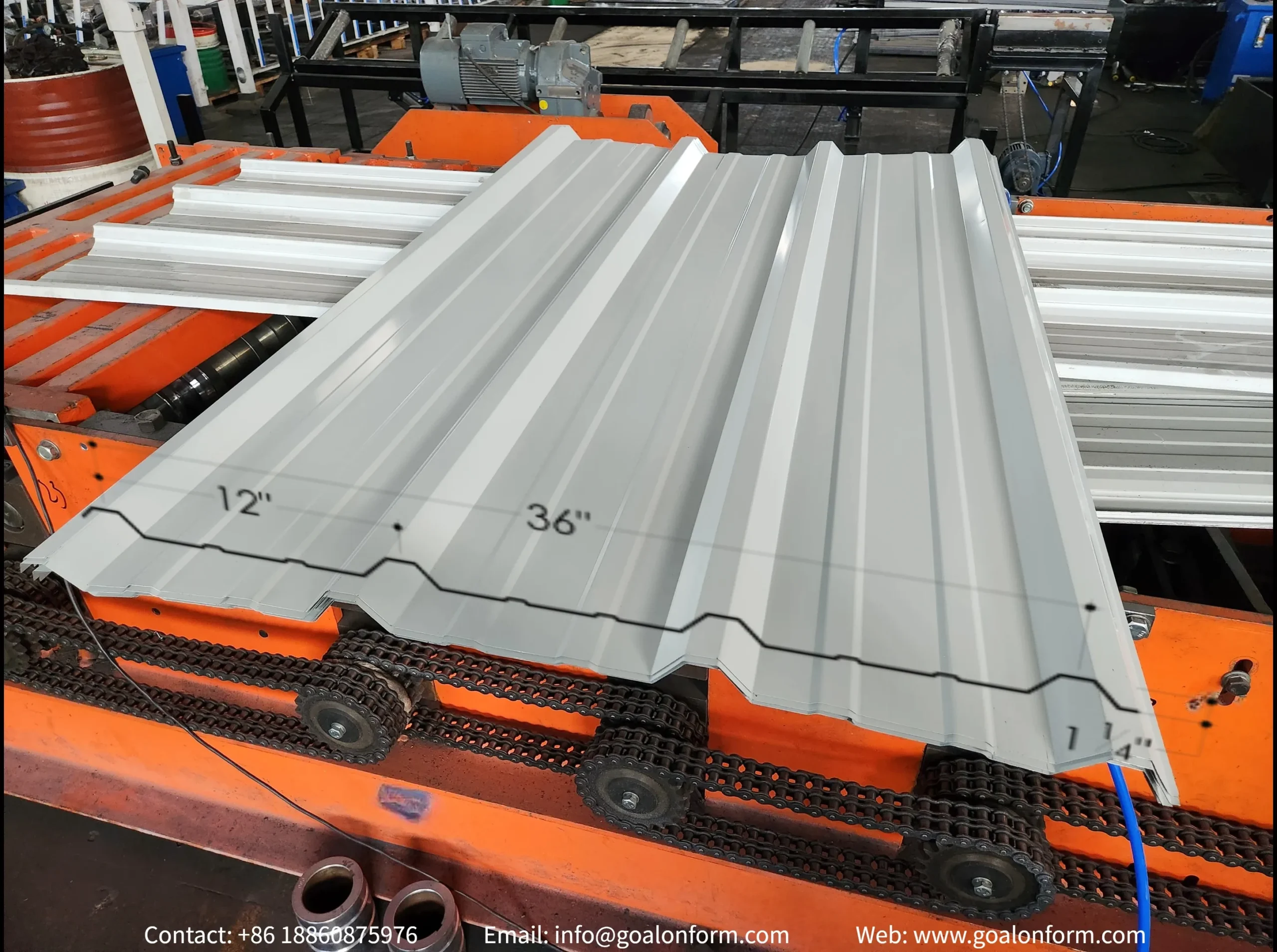
PBR roof panel is widely used for roofing and wall cladding in residential, commercial, and light industrial buildings.
It features a trapezoidal rib profile with high ribs and flat pans, providing excellent load-bearing capacity, efficient water drainage, and improved structural rigidity. This profile is especially popular in regions such as South Africa, India, and Southeast Asia.
PBR roof panel is typically made from 0.4–0.8 mm thick galvanized or color-coated steel sheets. This material offers corrosion resistance, durability, and long service life, ensuring reliable performance in various climates.
How Does The Roll Forming Machine Work?
Machine Details
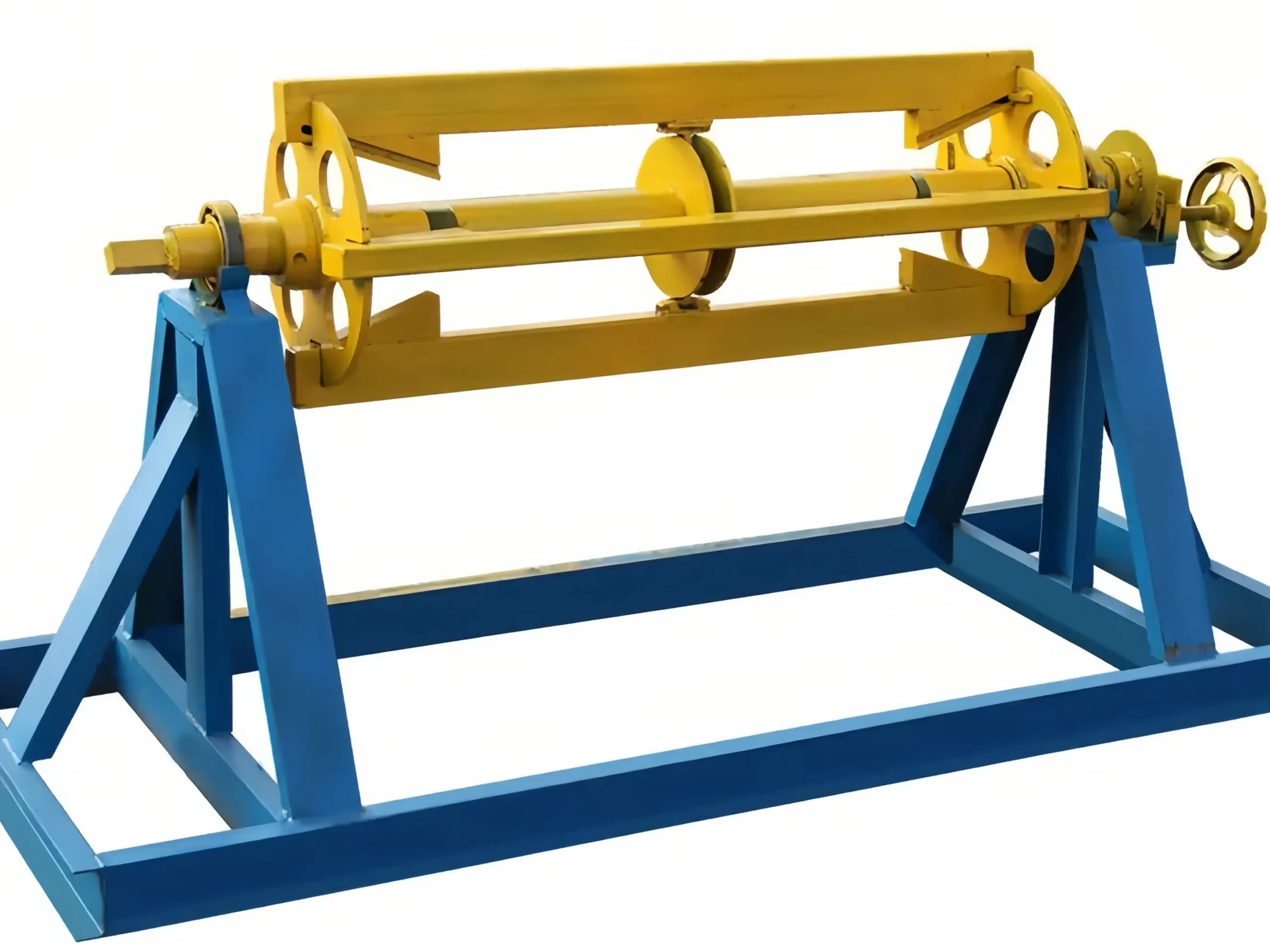
Steel Coil Decoiler
The decoiler holds and uncoils steel coils, ensuring smooth, continuous feeding into the roll forming machine and maintaining consistent panel quality.
Hydraulic decoilers provide precise tension control and stable coil handling, improving efficiency and reducing waste.
For cost-conscious buyers, manual and electric decoilers are options: manual for simple, economical operation; electric for faster, moderately automated feeding.
| Power Type | Manual | Steel Coil Width | Max 1250mm |
| Loading Capacity | 5/7/10 Ton | Expanding Range | 460-50mm |
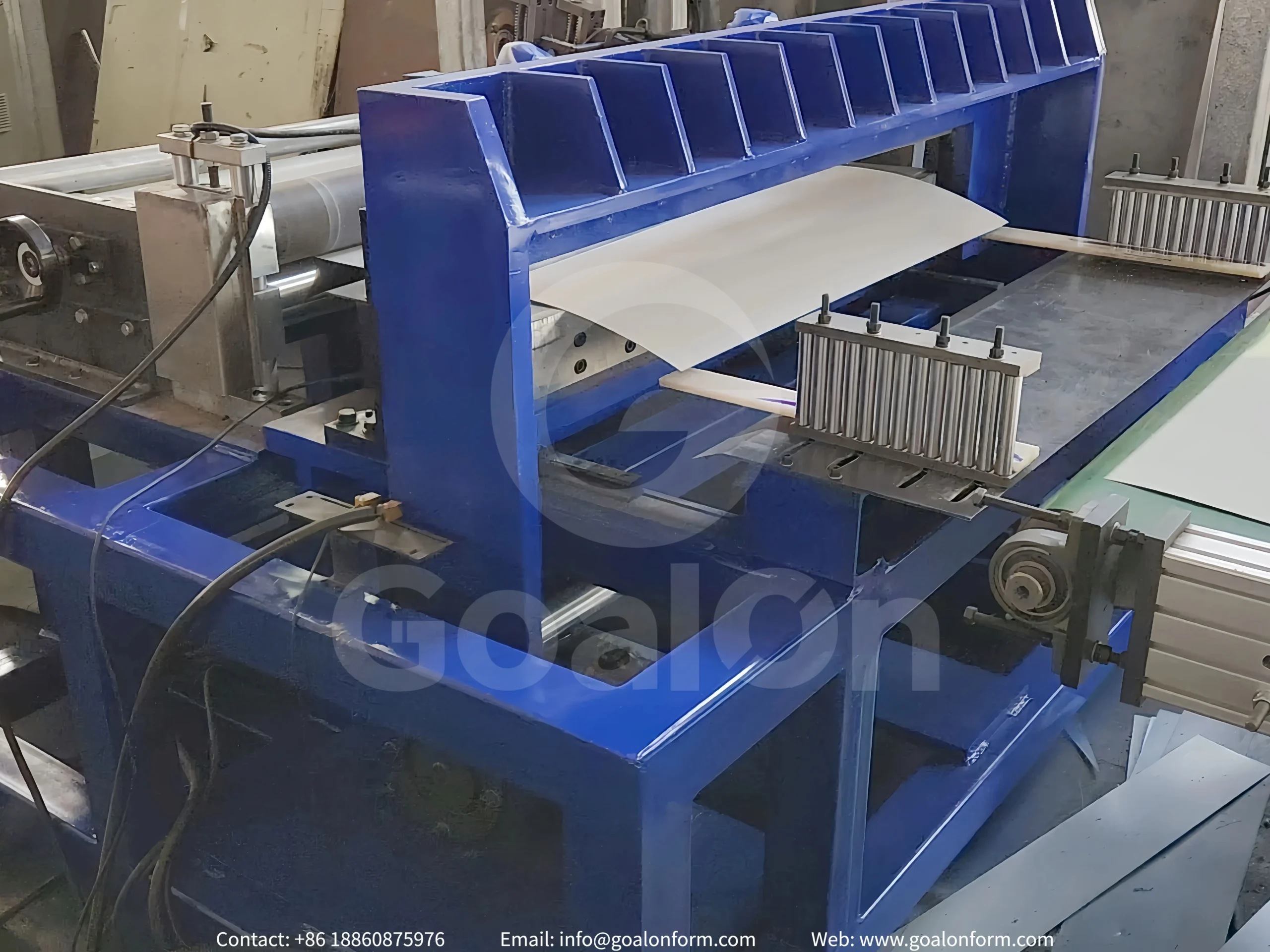
Servo Cutting Device
The servo flying pre-cut ensures clean, precise cuts with smooth edges and no burrs, maintaining high-quality panel appearance and dimensional accuracy.
Compared to traditional post-cut systems, which must match the panel profile, the flying pre-cut offers higher flexibility for different profiles, faster production, and lower maintenance costs.
| Power Type | Electrical cut |
| Position | Before forming |
| Blade Material | Cr12MoV |
| When Cutting | Forming works |
| Length Tolerance | ≤±1mm |
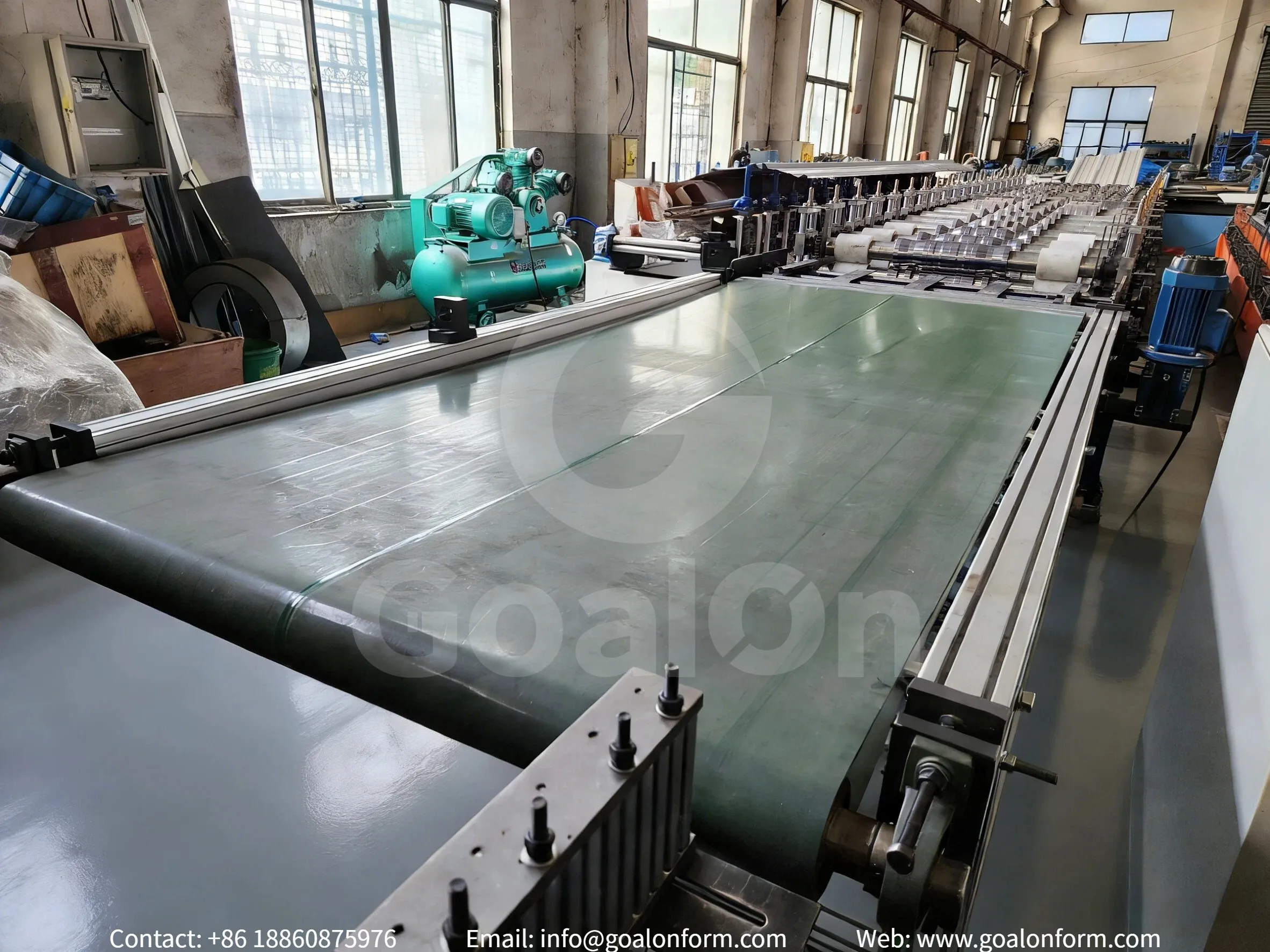
Transport Table
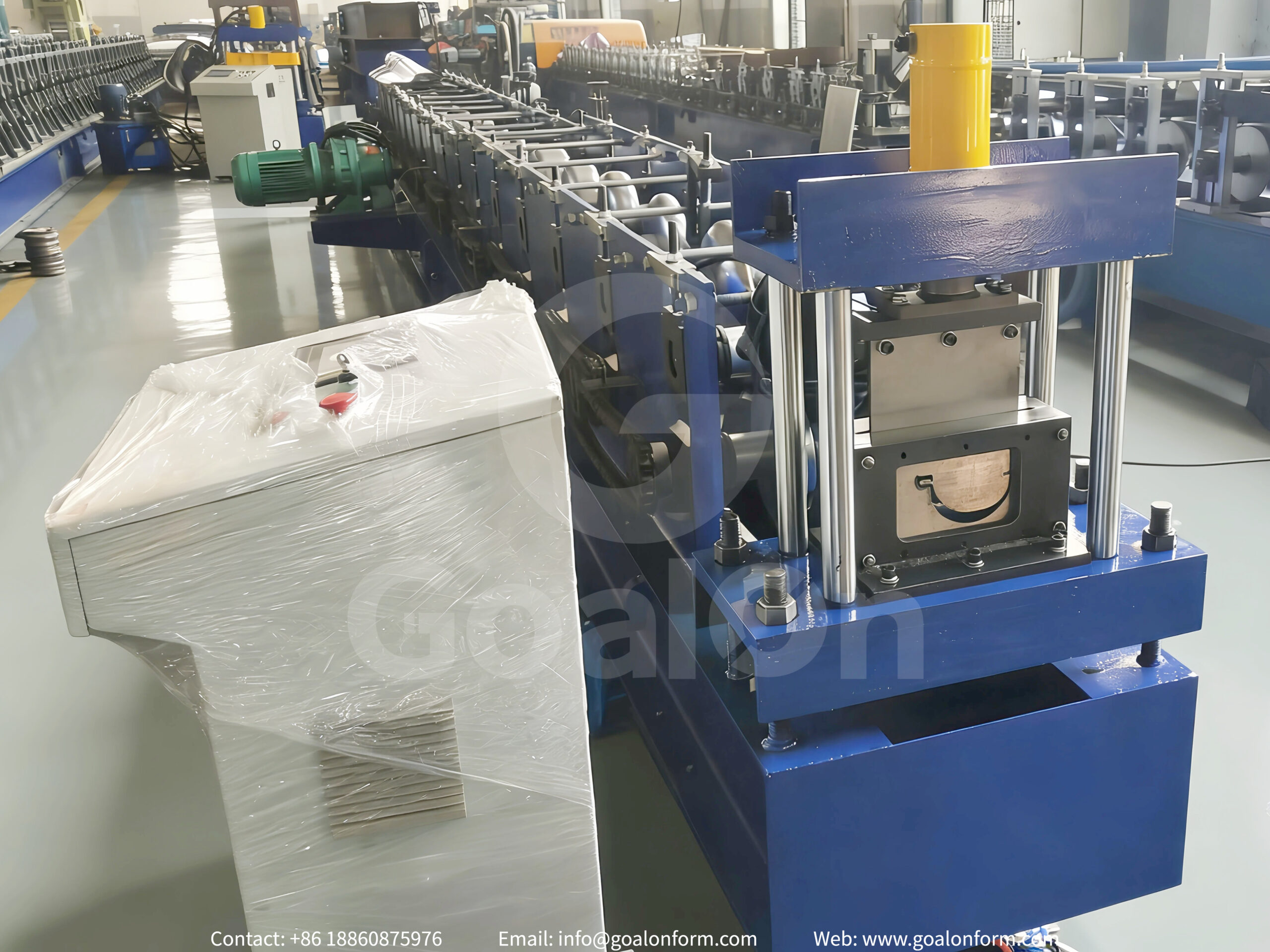
An electric transfer table is installed between the pre-cutting unit and the roll forming machine to buffer material flow.
It allows continuous operation by compensating for cutting time, preventing machine stoppage, and improving overall production efficiency and line stability.
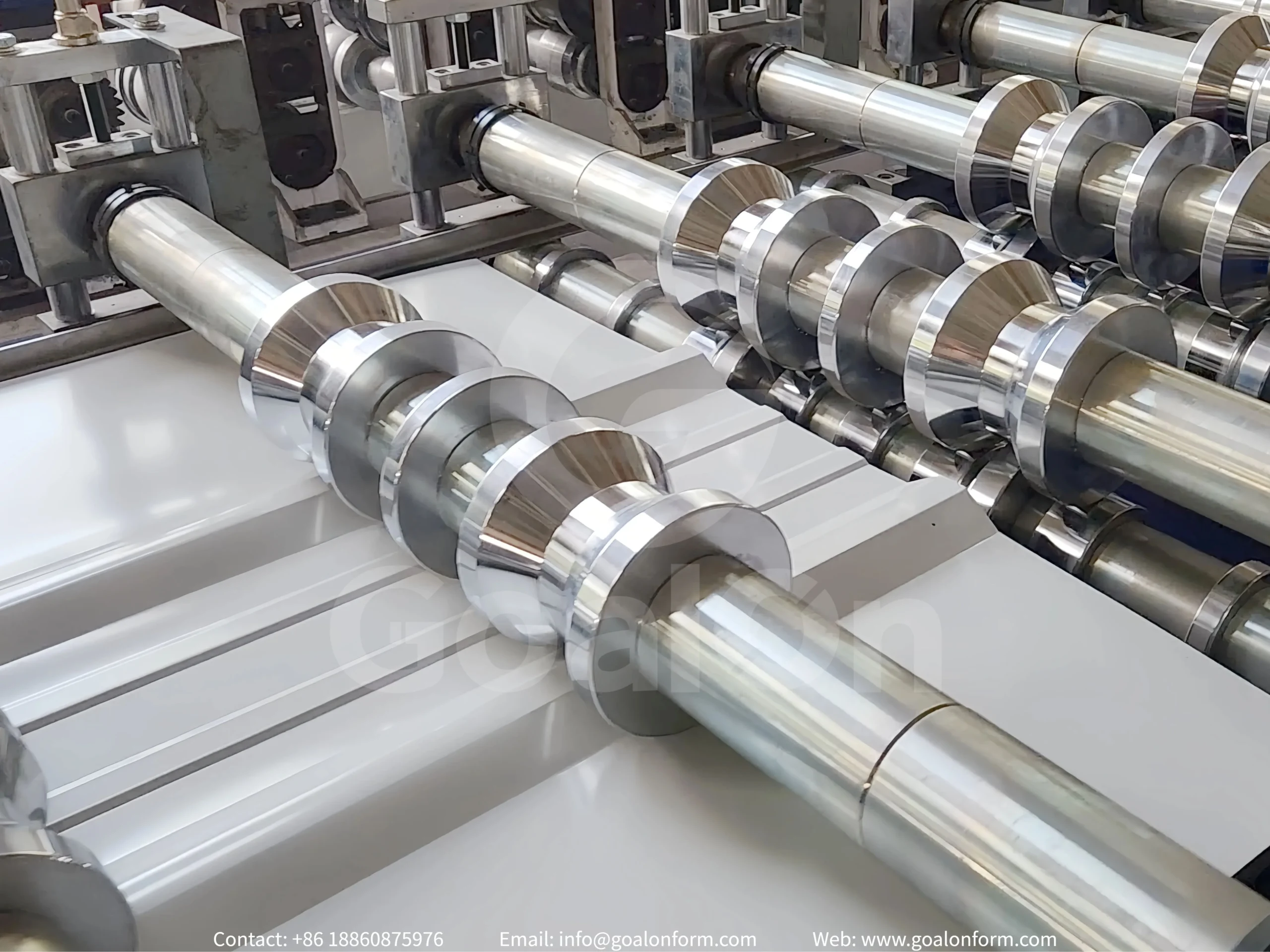
Roll Forming Machine
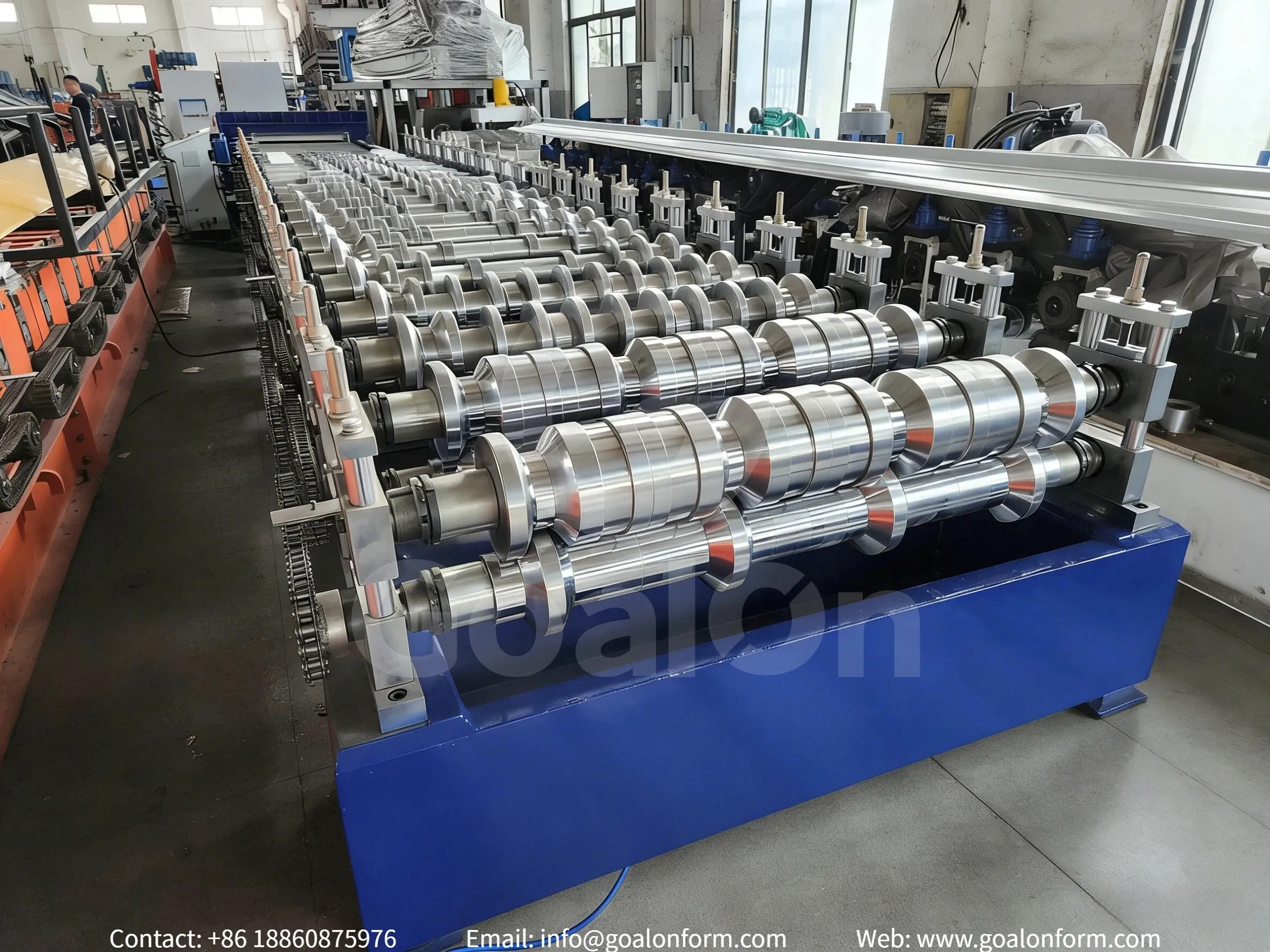
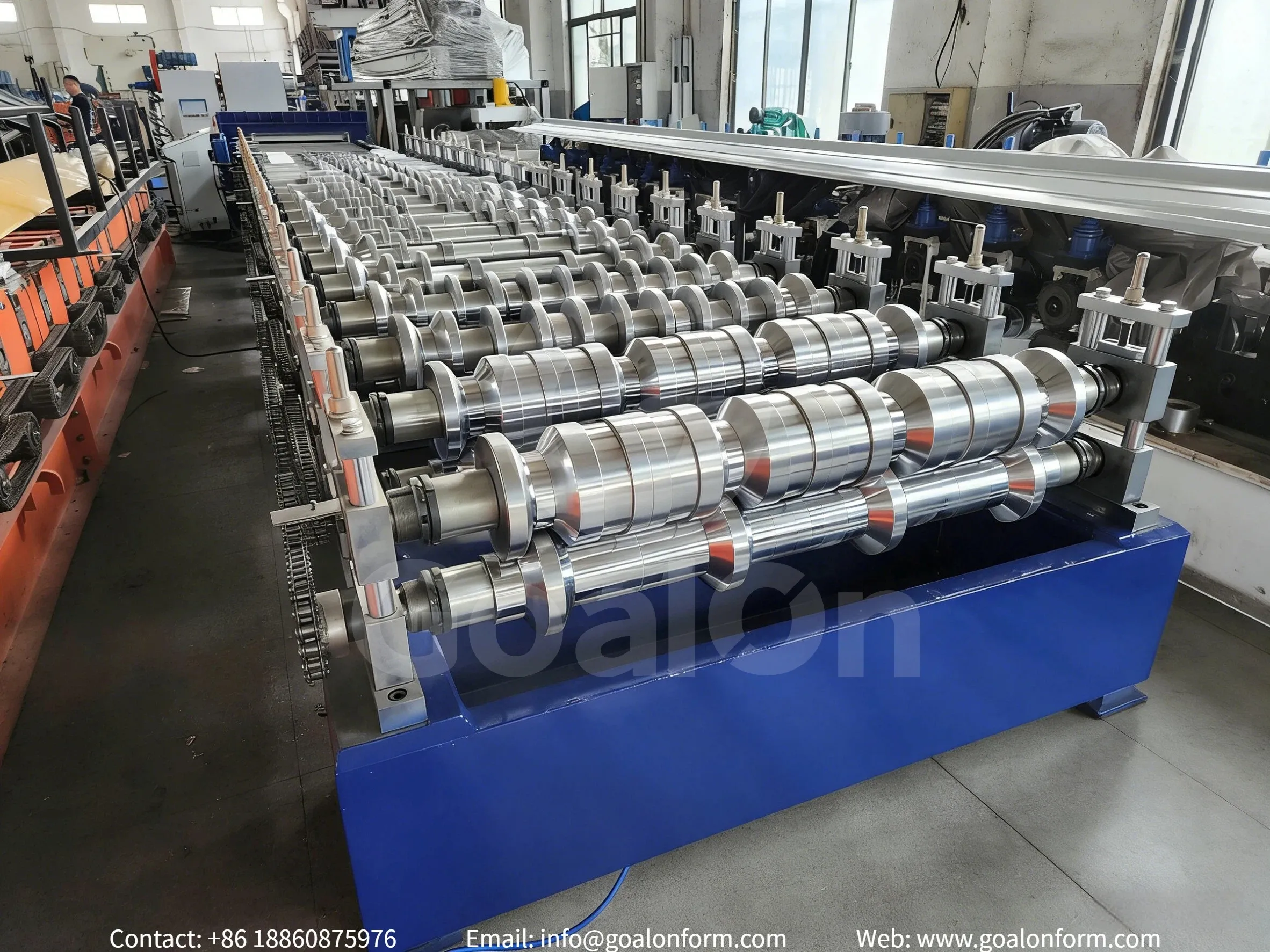
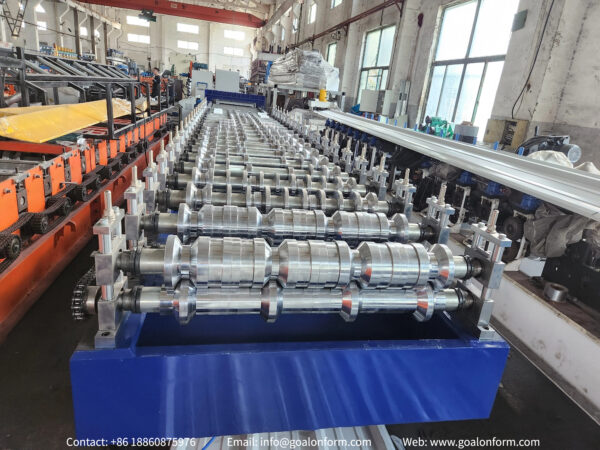
The roll forming machine is the core unit for shaping PBR roof panels, using multiple forming stations to gradually form the ribbed trapezoidal profile.
It ensures accurate dimensions, smooth surface finish, stable operation, and consistent panel quality, making it ideal for continuous, high-speed production.
| Speed | 20m/min | Forming Station | 18 Stands |
| Motor Power | 7.5Kw | Shaft Diameter | 76mm, solid |
| Driving System | Chain | Roller Material | Gcr15,HRC58-62° |
| Frame Structure | Wall panel | Shaft Material | 40Cr heat treatment |
Convyor
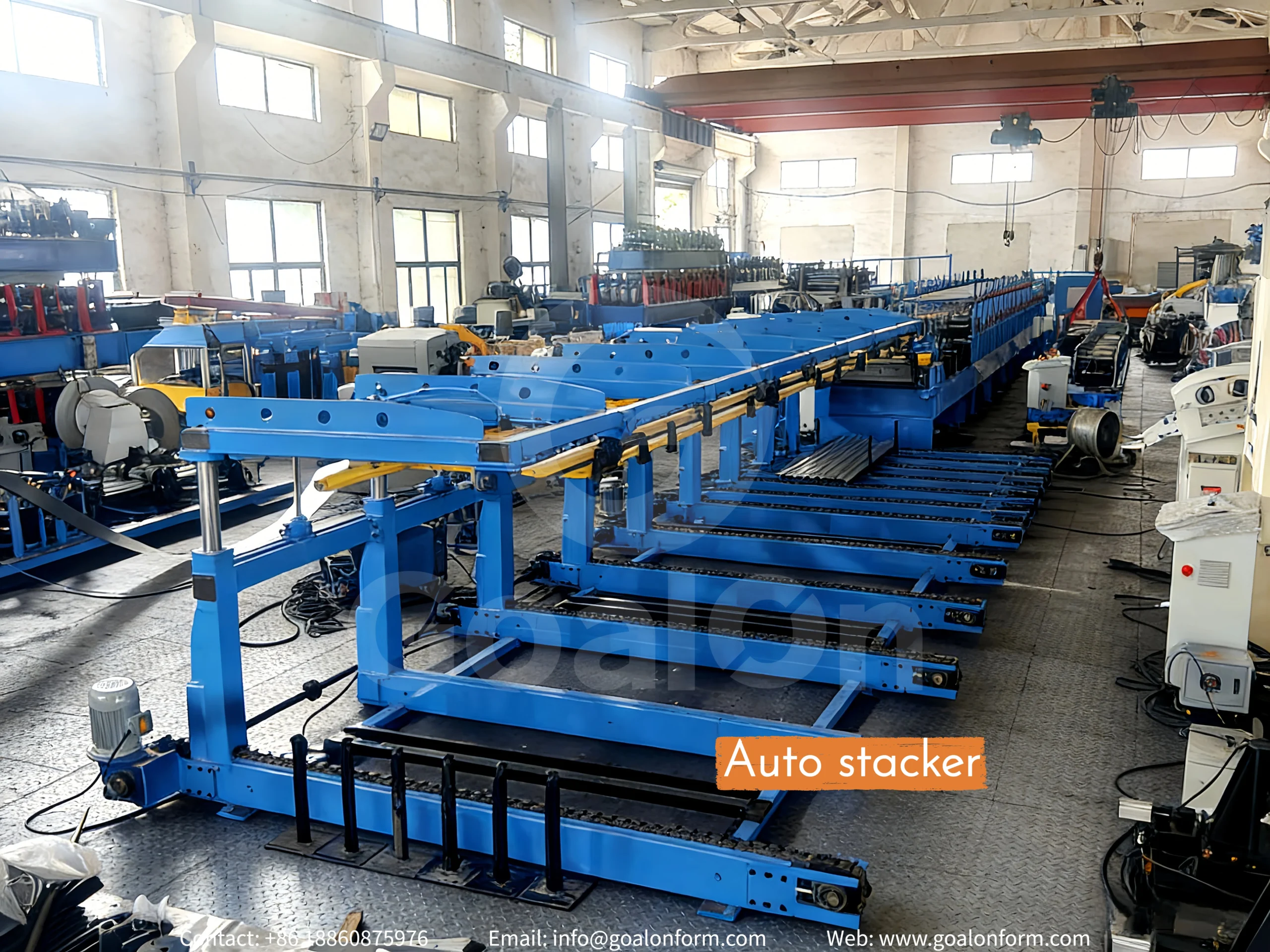
After cutting, IBR roof panels can be collected by an out table or an auto stacker, depending on production requirements.
| Item | Out Table | Auto Stacker |
| Type | Manual / Semi-manual | Fully automatic |
| Investment | Low cost | Higher initial investment |
| Labor | Requires manual handling | Reduces labor significantly |
| Efficiency | Suitable for low–medium speed | Ideal for high-speed production |
| Flexibility | High | Moderate |
| Stacking | Manual, less consistent | Automatic, neat and consistent |
| Maintenance | Simple | More complex |
| Application | Small to medium production lines | Large-scale, continuous production |
PLC Control Cabinet & Encoder
In a cold roll forming line, the encoder works with the PLC to provide real-time feedback on material position and speed, ensuring precise feed, synchronized forming, and accurate length control for cutting and punching.
Production speed, product length, and quantity can be set on the control cabinet. The display language can be customized according to customer requirements.
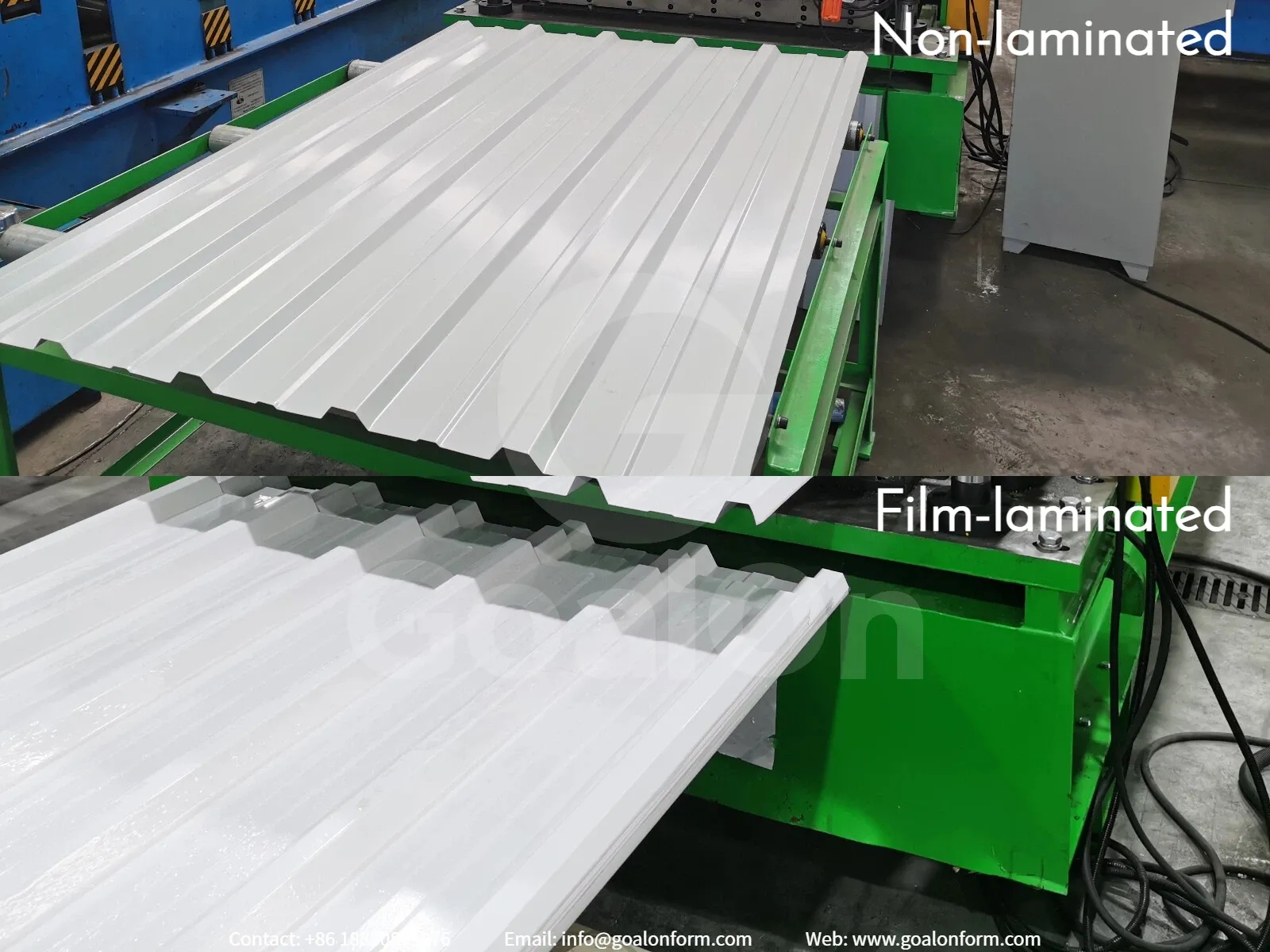
Optional Upgrade —— Flim Laminator
- Protects the panel surface from scratches during forming, cutting and stacking
- Improves finished panel appearance, especially for pre-painted and high-end roofing sheets
- Reduces rejection and rework caused by surface damage
- Provides extra protection during handling, packing and transportation
- Increases product value for premium roofing projects
Customizable Roof Panel Roll Forming Solutions
Our PBR Trapezoidal Roof Panel Roll Forming Machine offers comprehensive customization options to meet diverse roofing requirements for residential buildings, villas, commercial properties, and other construction projects.
From adjustable profile dimensions to integrated perforation and embossing units, we tailor every component for high-speed continuous production.
| Material | Thickness | Production speed | Automation level |
| Perforation | Embossing | Cutting | Machine color |
| One machine for multiple profile sizes | …… | ||
Comprehensive Services & Support
Safety Designs
Optional safety covers are available to protect operators from moving components while improving workplace safety and compliance.
Warranty
2-year warranty with lifetime technical support and after-sales service.
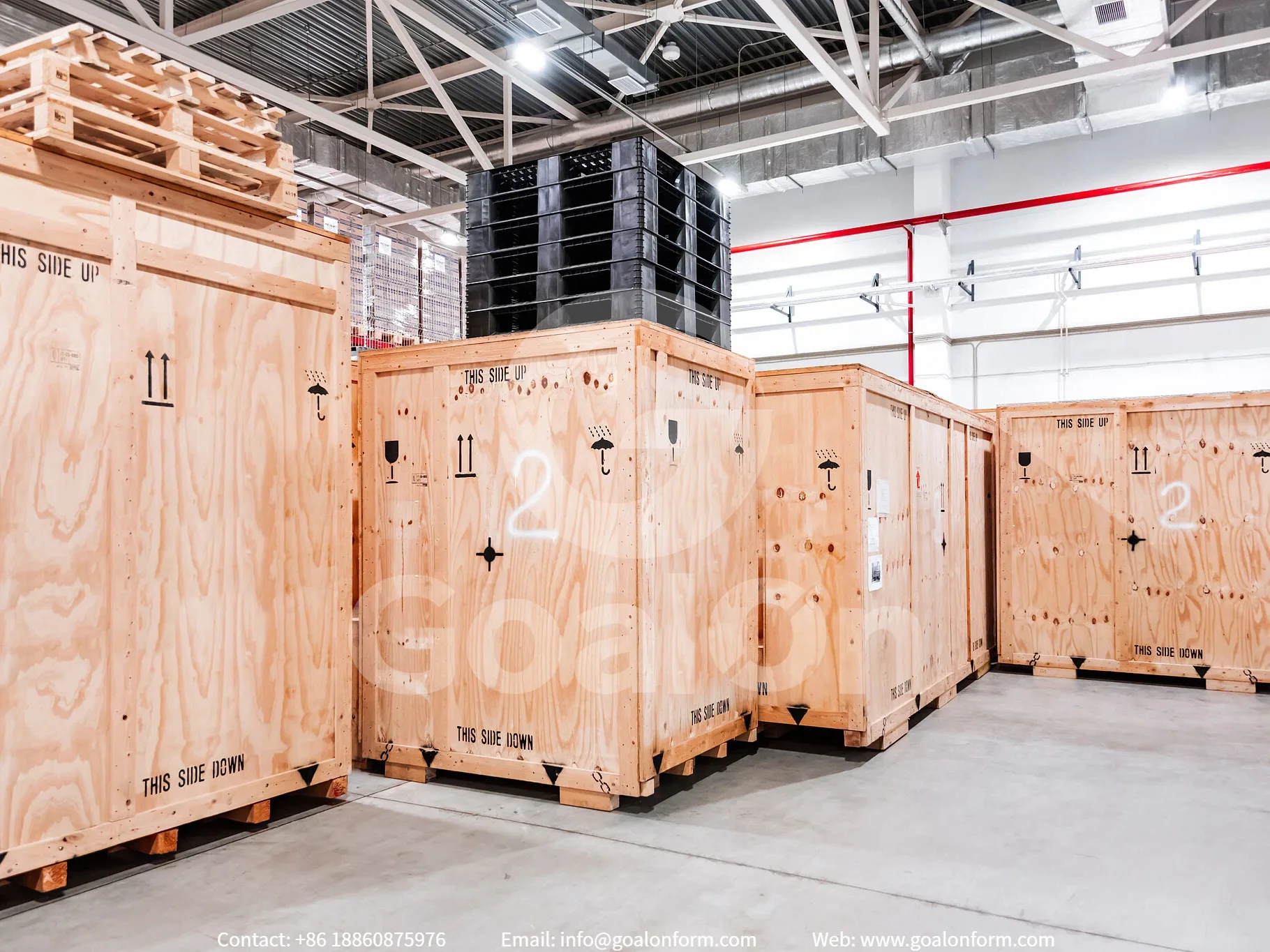
Professional Packing
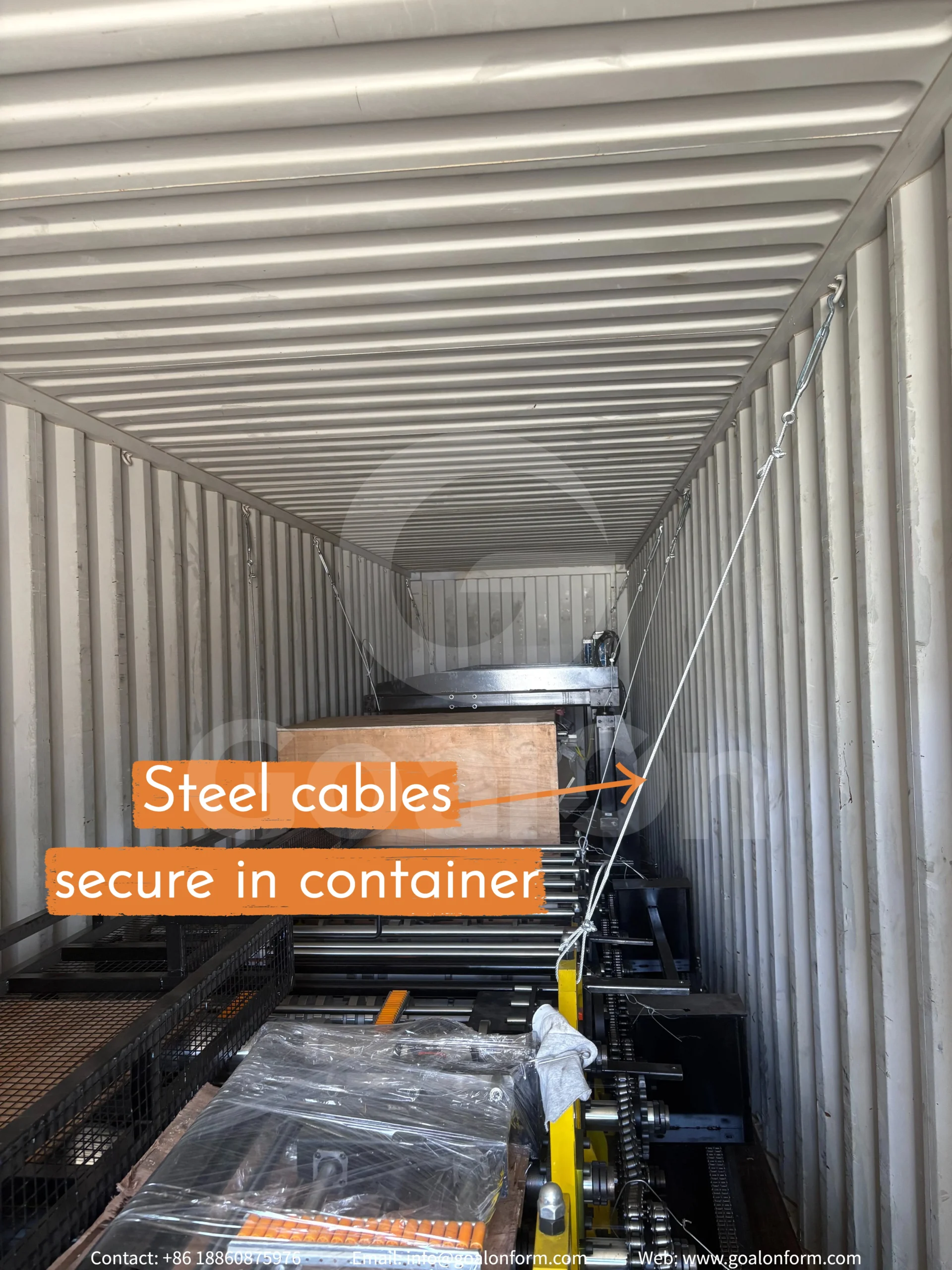
Machines are packed in plastic film and labeled for easy identification and assembly, and secured inside the container with steel cables.
Installation Guide
Besides paid on-site installation and training services, we provide installation and operation manuals, along with operation videos before shipment for guidance.
Roll Forming Machines Delivered Worldwide
From our factory to customers across the globe.
Our roll forming machines have been successfully delivered to customers across multiple countries and industries, including construction, storage systems, solar mounting, and steel fabrication.
Each project reflects our engineering expertise, manufacturing capability, and commitment to providing reliable metal forming solutions for long-term customer success.
Frequently Asked Question
The standard configuration operates at 15–20 m/min. Higher-end configurations can reach 30–40 m/min, and even higher speeds can be customized according to specific production requirements.
Lead times range from 30-50 days post-order, varying by customization level and supplier location. We typically require 45 days for standard machines.
Yes. After communicating with you about your requirements, we can first provide a quotation and a similar solution based on a profile that is close to your needs for your reference. Once the exact drawing becomes available, we can update the quotation and configuration accordingly at any time.
Yes. We are a professional manufacturer that produces both standard market profiles and customized profiles. We can also sign an agreement to ensure that your drawing will not be shared with other parties.
There is no need to worry. Our machines are designed for easy installation and operation.
Before shipment, we will finish the main assembly and testing in our factory. When the machine arrives, you only need to place it in position, connect the power supply, and it can start working.
We will also provide:
detailed installation and operation manuals
machine layout drawings
wiring diagrams
online technical support (video call / photos / videos)
If needed, we can also arrange an engineer to come to your factory to help with installation and training. Many of our customers complete installation smoothly with our online guidance.
30% deposit is paid before production, the balance paid after inspection confrmation, before shipment.