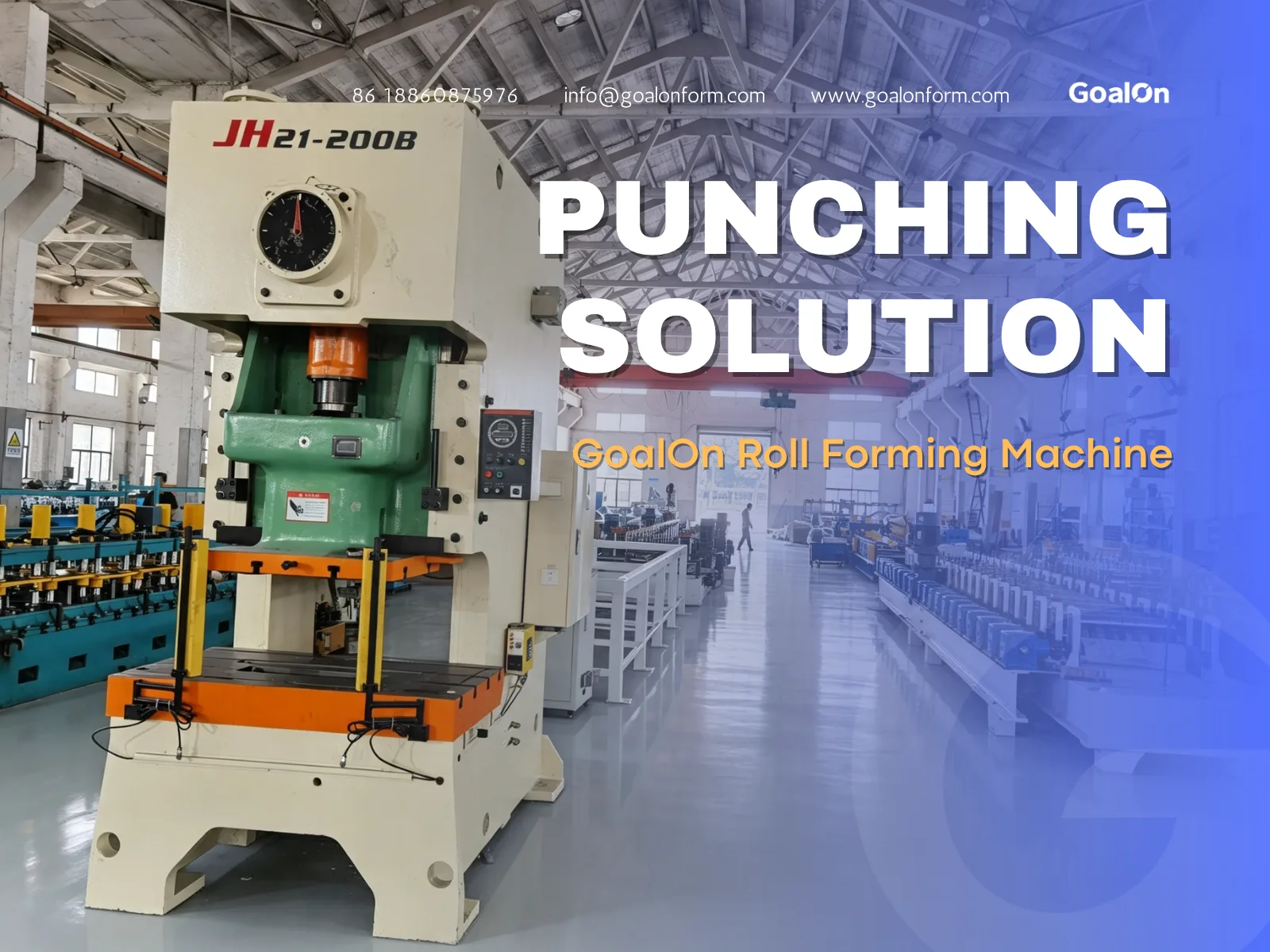
Integrating inline holes, slots, or notches into automated roll forming lines significantly reduces labor costs and cycle times. Selecting an optimized punching solution for roll forming machine setups ensures precision, prevents material deformation, and avoids costly line downtime.
As experienced roll forming machine engineers, we designed this technical guide to help factory managers choose between pre punching vs post punching in roll forming, select high-speed flying die punch system for roll forming setups, and configure custom tooling for roll form punching.
In this guide, we will explore “Punching solutions for roll forming machines: methods, tooling, and integration best practices”. We will explain the best ways to punch metal. We will look at different machines and tools. Finally, we will share tips to keep your factory running smoothly.
1. Timing the Punch: Pre, Mid, and Post-Punching
When planning your production line, you must decide when to punch the holes. The metal starts flat and ends up bent into a shape. The timing of the punch changes everything. You need to understand pre-punching vs post-punching for roll forming.
Pre-Punching Flat Metal
Pre-punching means cutting holes into the flat metal strip before it enters the bending rollers. This is the most popular method.
- The Good: It is very easy to punch flat metal. The tools are simple and cost less.
- The Bad: As the metal bends later in the line, the holes can stretch. If a hole is too close to a bend line, it will turn into an oval shape. You must design your parts carefully to avoid this.
Mid-Line Punching
Sometimes, you need to punch holes after the metal bends slightly, but before the final shape is made. This is called mid-line punching. You place the punch press between two sets of rollers. It is useful for complex shapes where pre-punching would stretch the holes too much.
Post-Punching Formed Parts
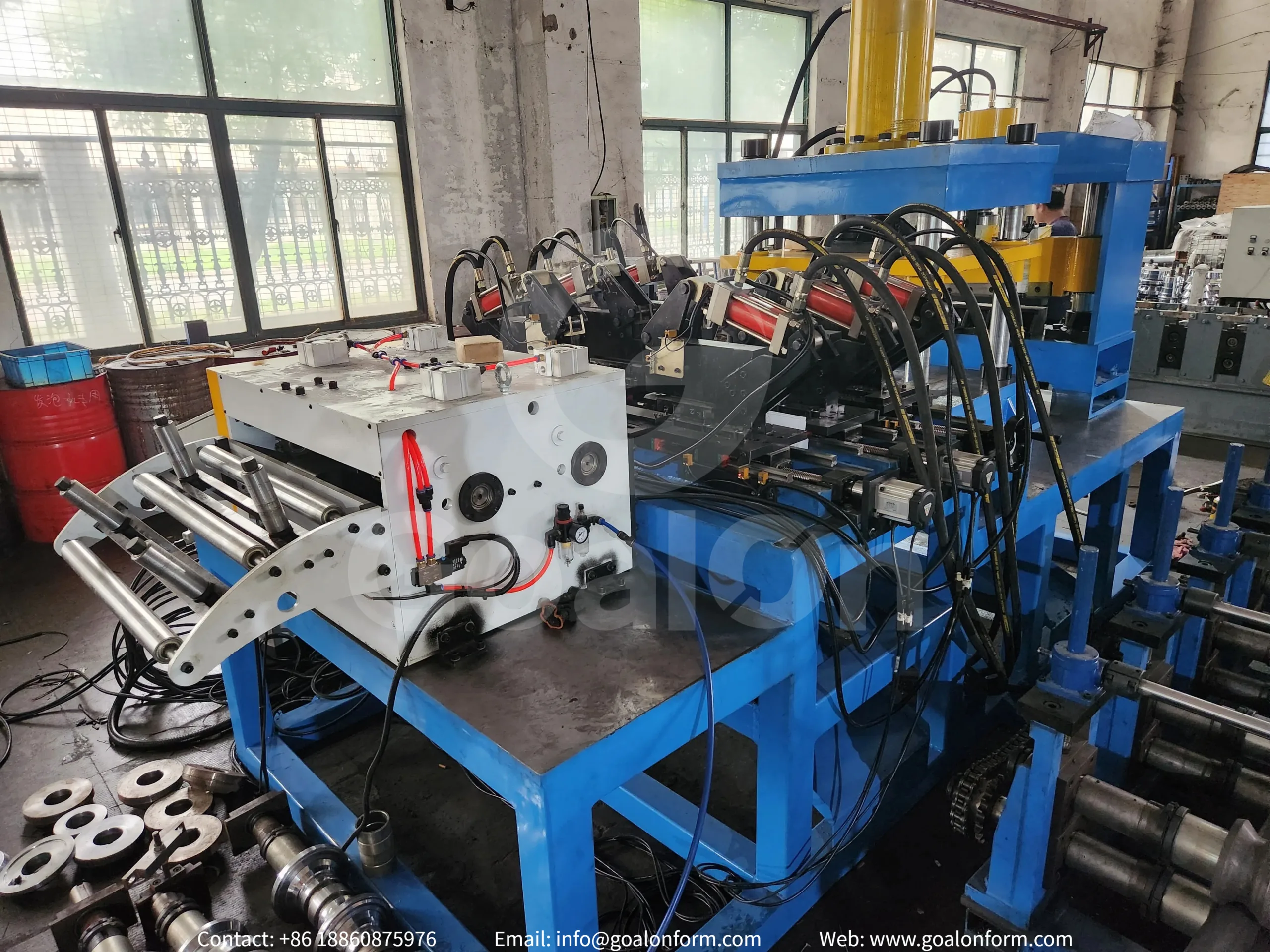
Post-punching happens at the very end of the line. The metal is fully formed into its final shape before the punch hits it.
- The Good: The holes will never stretch. This method gives you perfect hole placement every time.
- The Bad: Making tools to punch a complex, bent shape is very hard. The custom dies are expensive.
2. Choosing the Right Press Technology
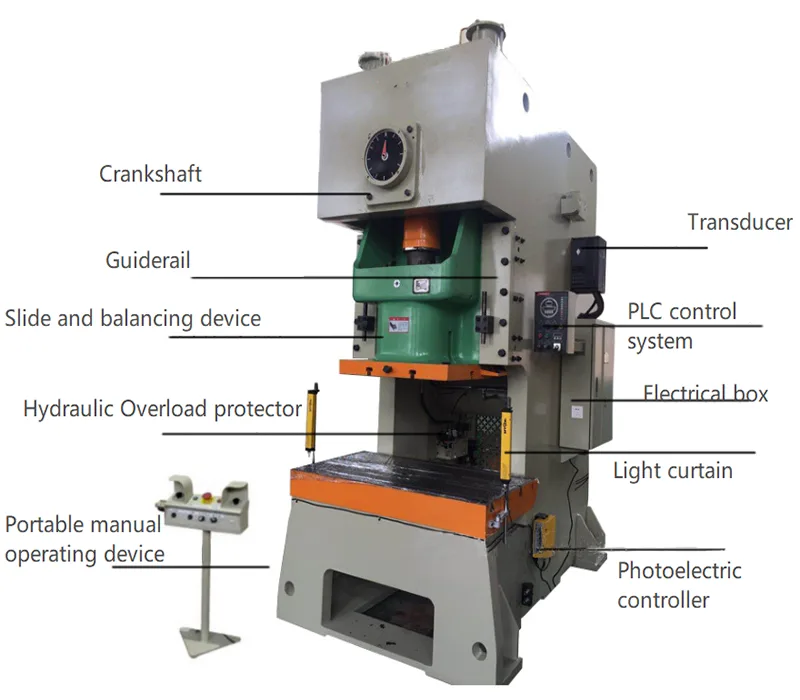
You need the right machine to drive the punch. Knowing how to choose the right punch press for roll forming is a big step. You must match the press to your production speed and metal thickness.
Roll Forming Machine with Hydraulic Punch vs Mechanical Press
Matching the press technology to your speed and strip thickness is critical for long-term ROI.
| Caraterística | Mechanical Punching | Hydraulic Punching | Flying Die Servo System |
| Ideal para | Thin gauge, high-speed lines | Heavy gauge, thick structural steel | Non-stop, continuous production |
| Line Speed | Up to 60 m/min | Up to 20 m/min | Up to 80+ m/min |
| Force & Control | Fixed stroke & energy | Adjustable force & stroke depth | Fully synchronized CNC control |
| Tool Wear | Moderado | Low (smooth hydraulic force) | Extremely Low |
High-Speed Flying Dies
If you want to make parts very fast, your metal strip cannot stop moving. This is where high-speed flying die punching systems come in. In a flying die setup, the punch press sits on rails. As the metal moves forward, the punch press clamps onto it and moves at the exact same speed. It punches the hole while moving. Then, it lets go and slides back to its starting spot. This allows continuous, non-stop roll forming.
Rotary Punching Technology
For the fastest possible speeds, look at servo-driven rotary punching technology. Instead of a punch moving up and down, this system uses two spinning metal cylinders. The punches stick out of the top cylinder. The die holes are on the bottom cylinder.
- The flat metal feeds between the spinning cylinders.
- The tools punch the holes as they roll over the metal.
- It is incredibly fast and quiet.
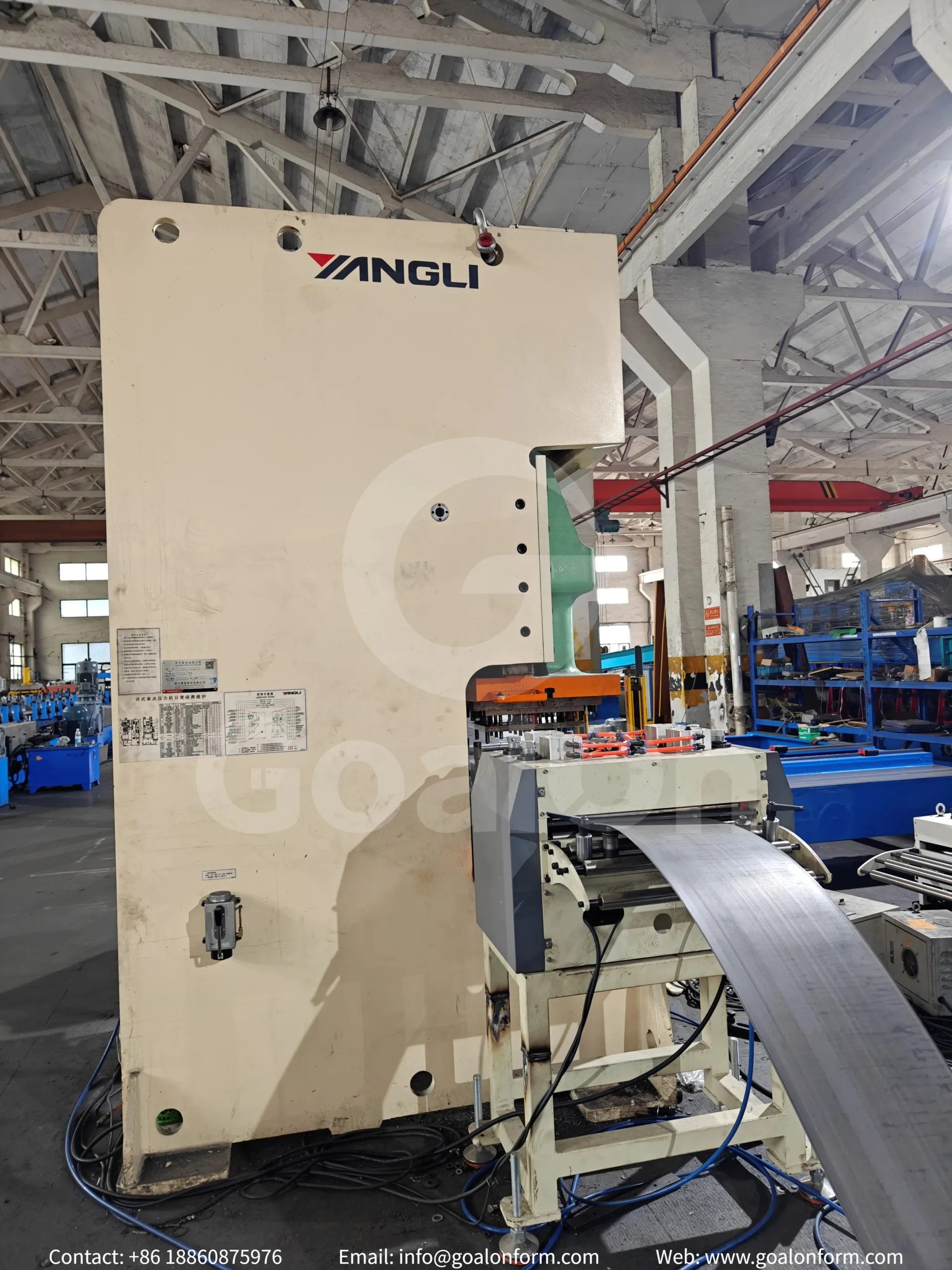
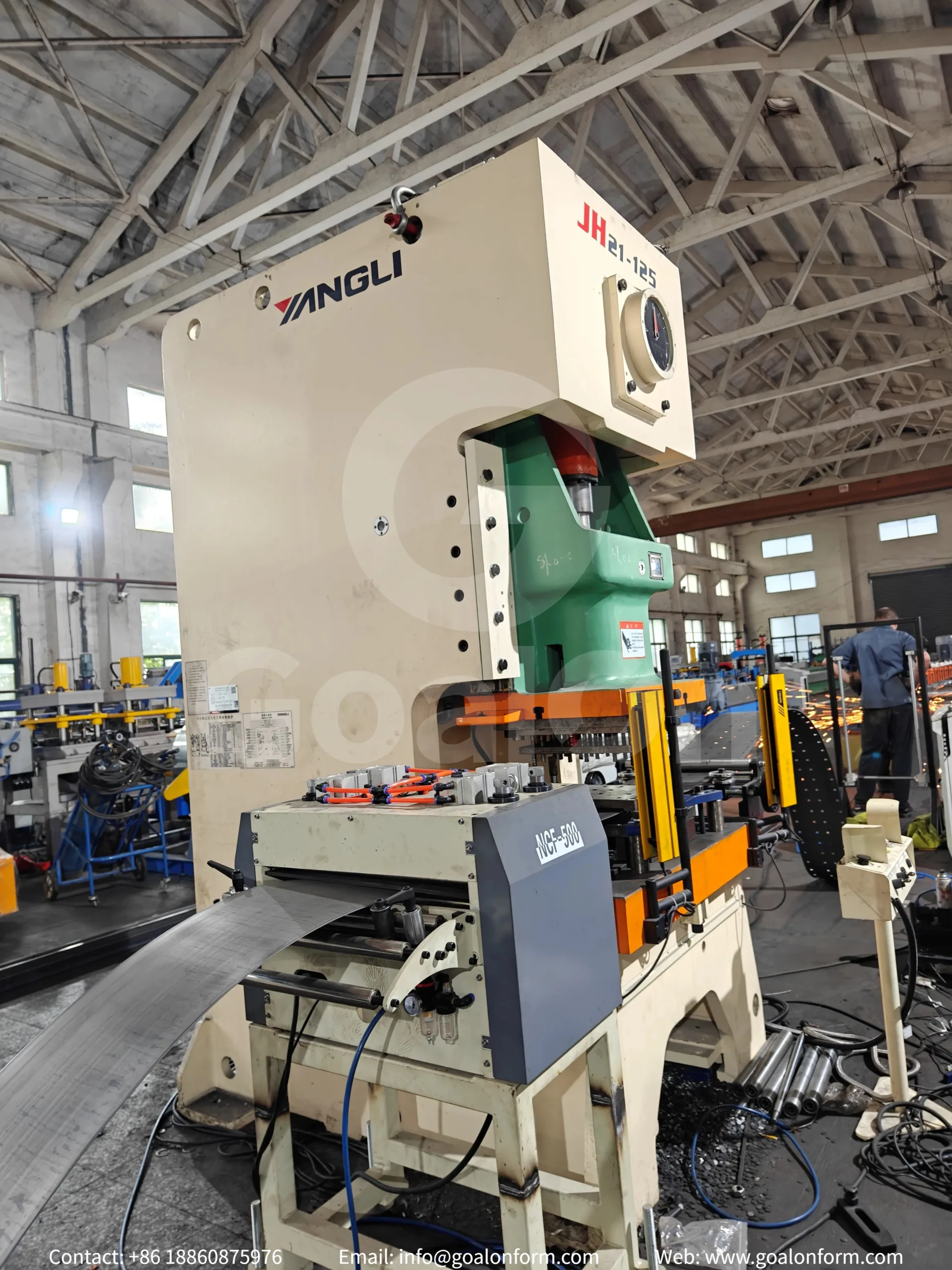
When comparing rotary punching vs stationary press integration, the choice is clear. Rotary is best for non-stop, high-speed lines with repeating hole patterns. Stationary presses are better for custom jobs where you need to change hole locations often.
3. Tooling Selection and Care
Your roll forming tools are the heart of your punching system. If your tools are bad, your parts will be bad. A high-quality metal forming punch cuts clean holes and lasts for thousands of cycles.
Upgrading Tool Materials
Standard tool steel is fine for basic aluminum or thin steel. But modern factories often work with very hard metals. If you punch tough metal, your standard tools will wear out quickly. Using tungsten carbide tooling for roll form dies is a smart upgrade. Tungsten carbide is a very hard metal. It costs more money upfront. However, it stays sharp far longer than normal steel. This means fewer line stops and lower replacement costs over time.
Using Quick-Change Systems
Time is money. You do not want your line stopped for three hours just to change a broken punch. You should use quick-change tooling systems for roll formers. These systems use pre-loaded cassettes or rafts. While the machine is running one job, a worker prepares the tools for the next job on a cart. When it is time to switch, they simply slide the old tool out and slide the new one in. It changes a two-hour job into a ten-minute job.
Maintenance for Long Tool Life
You must train your team on how to maintain punch and die sets for longevity. Good maintenance stops unexpected breakdowns.
- Keep it clean: Dirt and metal dust act like sandpaper. They ruin tools fast. Wipe down the tools daily.
- Lubricate: Use the right oil or cooling fluid. Fluid keeps the punch cold and stops metal from sticking to it.
- Sharpen early: Do not wait until a punch is completely dull. A slightly dull punch puts heavy stress on the press machine. Sharpen tools on a strict schedule to keep everything running light and fast.
💡 Facing Precision Issues or Tooling Wear on Your Current Line? Bad punch alignment can ruin expensive coils and double scrap rates. Contact Goalon Machinery’s engineering team today to evaluate your profile drawings, calculate punch clearance, and receive a customized roll forming machine with hydraulic punch solution.
[👉 Get a Free Engineering Consultation & Quote]
4. Integration Best Practices
Adding a punch press to a roll forming line takes skill. The machines must talk to each other perfectly. If they do not, you will ruin your metal.
Connecting Computers and Machines
Learning how to integrate CNC punching with roll forming lines is vital today. CNC means Computer Numerical Control. Instead of moving parts by hand, a computer runs the line.
- You type the part length and hole locations into a touch screen.
- The computer tells the punch exactly when to fire.
- It makes changing from one product to another very easy. You just load a new computer file.
Matching Speeds Perfectly
You must master optimizing punch stroke synchronization with line speed. This is especially true for flying dies. If the metal strip is moving at 100 feet per minute, the flying die must also move at exactly 100 feet per minute.
- If the die is too slow, the metal pushes it and jams the machine.
- If the die is too fast, it pulls the metal and stretches the holes. Modern lines use digital sensors called encoders. An encoder rests on the moving metal and measures its exact speed. It sends this speed data to the punch computer a thousand times a second. This keeps the speeds perfectly matched.
5. Solving Common Quality Issues
Even the best factory setups face problems. Working with sheet metal is difficult. Here is how to fix the most common punching issues.
Stopping Metal Deformation
Preventing metal deformation during in-line punching is a top priority. When a heavy punch hits a thin, flat piece of metal, the metal wants to bend or bow. To stop this, use a strong stripper plate. A stripper plate presses down hard on the metal flat before the punch cuts through. It holds the metal tight like a clamp. This stops the metal from curving or buckling under the pressure.
Fixing Sharp Burrs
Burrs are tiny, sharp edges left around the bottom of a punched hole. They are dangerous and look bad. Reducing burr height in high-tensile steel punching is very tough. High-tensile steel is hard and brittle.
- The secret to fixing burrs is tool clearance. Clearance is the tiny gap between the punch tool and the die hole.
- If the gap is too large, the metal bends down into the hole before breaking. This makes a huge burr.
- If the gap is too small, the punch works too hard and breaks.
- You must calculate the exact clearance for your specific metal type and thickness. Keep your tools sharp to keep burrs away.
Getting Rid of Metal Slugs
Slugs are the small circles of metal that fall out when you punch a hole. They are a big nuisance. If a slug bounces back up into the die, the next punch stroke will smash it into the fresh metal. This will shatter your tools instantly. You need automated slug removal for continuous roll forming.
- Gravity: Let the slugs fall down a simple chute into a bin.
- Air blasts: Set up timed air hoses. Every time the punch fires, a blast of air blows the slug out of the way.
- Vacuums: Use strong vacuum tubes under the dies to suck the slugs down safely. Never let slugs pile up near moving parts.
Keeping Hole Placement Perfect
Maintaining dimensional accuracy in multi-station punching requires rigid frames and good tracking. If your holes are drifting slightly out of place, check your machine frame. If the steel frame bends even a little bit under pressure, the hole locations will move. Also, check metal tension. If the metal strip is pulled too tightly between the roll formers and the punch, it will stretch. When you cut the final part, it will shrink back, and the holes will be in the wrong spot. Use a loop pit. A loop pit lets the metal hang loosely between machines so there is zero pulling tension.
Conclusão
Finding the perfect punching solution for roll forming machine setups takes careful planning. You cannot just buy any press and expect perfect results. You must look closely at your part designs, your needed speed, and your budget.
By understanding the best methods, you can choose between pre-punching or post-punching. By picking the right press, you balance speed and power. Using strong tungsten carbide tools and quick-change systems will keep your downtime low. Finally, by following strict integration best practices, your computers and machines will run in perfect harmony.
Take the time to train your team on tool care and slug removal. When you control these small details, your roll forming line will produce flawless parts every single day. Optimize your setup now, and enjoy a faster, more profitable factory floor.